Showing posts with label Erzsébet Báthory. Show all posts

Wednesday, June 03, 2026

Vampires of the Velvet Lounge – review


Director: Adam Sherman

Release date: 2026

Contains spoilers

Cheese… Ok, actually loads of blood (with both good and bad sfx, as I’ll explain) but a right royal portion of cheese, and this Erzsébet Báthory (in this Elizabeth) flick is great fun because of it. I have to admit I went in with low expectations but it certainly lifted me way beyond that. The cast, built in an ensemble way I felt, mostly seemed to be having a blast, especially on the vampire side.

drinking absinth

It starts, however, with a series of intertitles explaining the Elizabeth Bathory (Mena Suvari) backstory and then we see various smartphone style screens as these vampires have taken to hunting by dating app (not a new concept, but one that certainly works). Someone hunted in such a way is Eric (Timothy V. Murphy, Broil), who has arranged to fly to where Elizabeth is and meet her in an absinth bar she has mentioned. I also need to mention the cracking version of Ain't No Grave that plays over the credit sequence at the start of the film.

meeting the green fairy

When he gets to the bar he finds Joan (India Eisley, Underworld Awakening) and Helena (Sarah Dumont) working the bar (and both vampires, also). They tell him all about absinth and the green fairy and he confesses he feels he has been stood up and proceeds to get drunk… to the point he does see the green fairy, which is Elizabeth taking that shape in his perspective. She lures his very drunk ass outside and hunts him down, her now apparent bat wings occasionally looking like green fairy wings in his perspective. A point here re blood. The film uses both cgi and practical effect. The practical blood looks great and is drawn copiously into shot so that the film feels a tad splatterpunk. The cgi blood (and in this scene, neck rip) looks blooming awful.

Dichen Lachman as Cora

So Cora (Dichen Lachman), who suffers bad dreams, is a former soldier and assassin who now works for a group who hunt monsters. She is sent out on recon and observes (and films), through a crack in a doorway, Elizabeth blood bathing as three supplicants happily agree to have their heads cut off with giant scissors wielded by vampiric Chuck (Mark Boone Junior, Vampire$ & 30 Days of Night). The viewer is clear that Elizabeth knows that she is there. Cora and her superior, intelligence operator Alexis (Rosa Salazar), are ensconced nearby but are using a VPN to suggest that Cora is based a couple of States away as she chats to Elizabeth by app. They are looking to strike at the vampires, though it is clear that Elizabeth is using mojo to actually seduce her.

lawyer bros

Throw into the mix a group of corporate lawyers. Luke (Tyrese Gibson) is going through a divorce and is depressed and his buddies Randall (Stephen Dorff, Blade) and Malcolm (Lochlyn Munro, Tracers 4: Jack of Clubs, Dracula 2001, Hansel & Gretel Get Baked, Lost Girl & also Broil) want to cheer him up. He has been chatting to Joan online and they decide to all go visit (with them getting dates with Elizabeth and Helena – all three vampires having a website together). Also throw in the mix that Elizabeth is becoming worried about Joan’s behaviour; she is mixing blood with absinth (and sometimes just drinking booze straight) and interested in sex – in short becoming erratic to Elizabeth's pov.

blood bathing

There is some interesting lore in this. Cora is repeatedly taught to think happy thoughts as such thoughts can keep a vampire out of your head – if they get in there they can absolutely control you. Cora's issue is that, given her past, she has no happy thoughts. They fly, are superfast and strong but cast no reflection (in mirror or water). In fact the vampire women do each other’s makeup in a setup reminiscent of Vamp. When a question is raised as to why they then show on digital media/photography, the answer is that digital and AI are of the devil and so are they. Sunlight destroys, silver is effective, a stake and beheading will destroy the vampire (though not necessarily so) and ingestion of vampire blood turns.

bat winged

The cast seem to be having a great time in the main, Mena Suvari and India Eisley especially are chewing up the sets and their larger than life characters are great fun – unfortunately Sarah Dumont’s Helena is pretty much side-lined as a character and so she doesn’t get the same opportunity to shine. Unfortunately Dichen Lachman plays Cora as a deeply stoic character and so comes across as less fun but that contrasts nicely with Elizabeth. The story is simple and, as mentioned at the head, cheesy with comic book and splatterpunk elements that was simply great fun. My big gripe is some of the cgi work in the sfx – the obvious green screening was fine and, to be fair, I rather liked the wing effects in the main, but cgi blood looks poor generally and sat against well done practical effects showed it up even more. 7 out of 10.

The imdb page is here.

On Demand @ Amazon US

On Demand @ Amazon UK

Sunday, May 24, 2026

Blood Bitch Baby – review


Director: Donald Farmer

Release date: 2025*
*The Blu-Ray box and actual film suggest 2025, but there is no IMDb page at time of writing

Contains spoilers


Ah, Donald Farmer, with at least 41 directorial credits to his name, mostly within the low budget horror arena, his films have featured here at TMtV several times and I have to admit they haven’t scored very well when reviewed.

Jessa Jupiter Flux as Bathory

This film gets on here by dint of the primary character being Elizabeth Bathory (Jessa Jupiter Flux, Debbie Does Demons & OnlyFangs). Indeed the film begins with Elizabeth speaking to camera, not revealing her identity as such but offering Bathory’s background. As it turns out she made a deal with the devil that she could maintain youth and immortality on the proviso she find a vessel for the gestation of the devil’s child.

waking from a dream

It starts proper with a woman going down a dark street, afraid, kidnapped, vampirically terrorised... and then Jenny (Angel Nichole Bradford, also Debbie Does Demons) wakes as though this was her disturbing dream. She goes to the bathroom and we see bruising on her waist, put there we assume by abusive boyfriend Kevin (Joe Casterline). We see first-hand the abuse; she has a job interview but all he wants is for her to bring him *his* money.

fangs

The interview is with Elizabeth, looking for a caregiver for her sister Sarah (Jesse Seitz) who needs tying down before nightfall and is violently insane. Freaked when she meets her, Jenny runs to her car but is accosted by a strange man whose actions cause her to faint as Elizabeth approaches, all fangs, and rips his throat out (he seems to turn into an aged corpse when he dies). Jenny awakens in a basement as Elizabeth conducts a ritual to make her the ideal host for impregnation by the devil. Her memory is wiped but she has changed – extracting and eating Kevin’s eye when he threatens her.

meeting Iris

The police have a serial killer on their hands, though local professor Keller (Claude D. Miles) believes it is an occult case. Jenny goers to a diner and meets Iris (Mel Heflin, Queen Dracula Sucks Again), a mooch who ends up getting her away from Keller, who has spotted the blood painted sigil on her chest, and ends up in bed with her. But the devil is due to visit and gestation of a Hellspawn is hella quick…

Jenny eats an eye

At just under 70 minutes, this doesn’t outstay its welcome and there is plenty of full-throated screaming – especially from Angel Nichole Bradford. There is puppetry involved and plenty of low budget gore. This was probably the most enjoyable Farmer film I have watched – which doesn’t make it great, of course, it is still shot on a shoestring and has some really bad sfx (the bodies the police are investigating, for instance). Nevertheless, I’m giving this 3.5 out of 10 as, for some reason, it struck a chord even if the vampirism takes second fiddle.

At the time of writing there is no IMDb page.

Monday, February 23, 2026

Short Film: Voltaic Blood


On Amazon Prime as a longer run-time short film (some 50 minutes), this is listed part 1 on the actual titles and IMDb suggests a series, of which this is the only episode currently released. It was directed by Jaime Gonzalez, released in 2025, and is rather ambitious with some strange, and I assume deliberate, anachronisms.

After intertitles that give a potted history of the Angelic fall, Nephilim and vampires we move to a cyberpunk scenario in a world not quite ours, in a city called Neo-Babylon, at the tail-end of a corporate war. A vampire, Gabriel (Jake Wade) feeds on a woman (Vanessa Lauren Freeman). We hear the nearby car’s AI declare that she is losing blood and death is imminent. In the car is a baby. The woman deploys a blade implant from her arm, but the vampire prevents any attack and she dies.

the victim

Filled with bloodlust he heads to the car ready to devour the baby. However the baby wears an icon (a cross with a dragon below – being the order of the dragon) and it causes Gabriel pain, which curtails his bloodlust. He puts, what looks like, a 5.25" floppy disc into the car’s IT – this is part of the anachronism I mention, like a cassette player later – and takes over the AI, forcing a change in owner to be detected. Michael Rákóczi, however, is the baby and too young to drive. Gabriel puts the woman in the drivers seat and the car is programmed to go to an orphanage in auto-pilot mode. He contacts base to say that the target has been eliminated and is told that *she* wants to speak to him – she being Elizabeth Bathory (Claire Bermingham). He ignores this and walks away.

Sia Kravchenko as Nadia

Thirty years on and Michael Rákóczi (Aaron Groben, Nightcomer) is grown and a cop working for a corporation, PNCR. Elsewhere, Bathory turns a woman, Nadia (Sia Kravchenko), but the new vampire must kill for her turning to be complete. Michael is still eager to know about the dead woman in the car, when he appeared at the orphanage. He seeks out fellow Orphan and data broker Valeria (Victoria Myssik) in, what appears to be, that world’s equivalent to the dark-web. However simply bringing up the subject of his search triggers Bathory’s corporate alarms. Luckily, and unbeknown to him, Michael has a guardian angel in the form of Gabriel…

cityscapes

The look of this world was superb – though not perfectly executed, due mostly to working at budget. The filmmakers drew something alien in its post-modernity. Cityscapes are dominated by giant advertising holograms. The world seems to be permanently dark but lit by a million neon points of light. The heavy filtering on the photography adds to the stylised look. It is a bold, brave production choice. There is so much to explore generated in this opening episode and I do hope we get to delve into this world further.

The imdb page is here.

On Demand @ Amazon US

On Demand @ Amazon UK

Saturday, November 02, 2024

The Journal of Edwin Underhill – review


Author: Peter Tonkin

First Published: 1981

Contains spoilers

The Blurb: It all began on New Year's Eve, with a party at the Rectory, and an accident. Drunk and humiliated, schoolmaster Edwin Underhill stumbles through the local cemetery - a short-cut to his home when the ground suddenly caves in beneath him and, falling into a pit, he impales his hand on a stake.

Underhill, described by his peers as a ‘plain little man', now finds that his unprepossessing looks undergo a distinct transformation. He records in his journal the alarming changes that start to take place: his hair, tending to baldness, now becomes thick and healthy; his teeth sharpen; he finds he craves redder and rawer meat and, at the same time, he begins to avoid daylight and becomes a nocturnal wanderer. The woman on whom he has set his heart no longer shuns him but finds his change in appearance, and his mysterious air, strangely attractive. But along with these bodily changes comes a host of fantastical nightmares and new emotions which he cannot fully understand, far less control.

THE JOURNAL OF EDWIN UNDERHILL follows in the grand tradition of vampire stories from Bram Stoker’s Dracula to the more recent Interview with the Vampire, but it differs subtly from its predecessors. In this contemporary tale Tonkin looks inside the individual, to the innermost fears and feelings of a man undergoing a terrifying transformation.

The review: I stumbled over this vampire novel and discovered a great, Gothically beautiful prose that explores the change from human to vampire. Underhill starts a journal following his embarrassment at a Christmas event and subsequent accident. The accident sees him piercing his hand on a piece of wood that was a stake – removing the stake from the vampire (though her body was dissected and dispersed, so it gives her a spiritual escape but not physical form) and infecting him.

The first half of the book then follows his changes, as listed in the blurb, and the second half once he becomes actually undead. It is interesting that he uses the stake to tie a damaged rose plant, which subsequently produces corrupted flowers. The original vampire is Stana Etain, Countess Issky-Koul who brought the “white plague” to the country village Underhill is living in and, when discussing vampires, the historical figures of Báthory and Gilles de Rais are invoked. She has cursed the familial line of the one responsible for her staking. When Underhill fully turns, he is more a monstrous vampire (interesting given his physical alterations when alive) and literally sloughs his old skin. The vampires are tied to both their grave dirt and the night, and he is able to merge into shadows. He refers to a part of himself as the Dead and there is a conflict between his remaining vestiges of humanity and the Dead. Other tropes included are the use of holy objects, and a struggle is described between light and dark, along with apotropaic things such as garlic and wolf’s-bane. One aspect that was fairly cool was him not seeing some garlic flowers and wolf’s-bane as it was put out centuries before and had no tell-tale life left in it but the magic of it still being effective.

Tonkin’s writing has a definitively Gothic lilt and is wonderfully evocative and whilst the story is fairly simple the atmosphere and characters keep the reader engrossed. 8 out of 10.

In Hardback @ Amazon US

In Hardback @ Amazon UK

Saturday, July 20, 2024

Don’t Suck – review


Director: RJ Collins

Release date: 2023

Contains spoilers

A comedy about a comedian (and a vampire) to my way of thinking is either going to work for you or not. Comedy is so very subjective, as I have said in plenty of reviews. Luckily I was rather taken with this and found it genuinely funny and also quite endearing despite the primary character being deliberately drawn as a douche.

It starts with the compère of the Pioneer Saloon, a backwater little bar. Outside a man approaches Pete (Jamie Kennedy), the main act comedian for the night, calling him “funny man” as a derogatory (which immediately brought a Bill Hicks story to mind). The support act, Ethan (Matt Rife), intervenes, getting between the two but the man, after telling “Twilight” to step out of the way, doesn’t care and shoots Ethan. He buckles and stands, claiming a miss, so there are more shots and Ethan’s eyes glow as his fangs emerge…

Jamie Kennedy as Pete

Two weeks before and Pete has arrived for a regular slot he performs in the ‘Comedy Cellar’. He’s staying in the casino and footage has gone viral (posted by a receptionist) of his arrival. She badgered him to be funny and so he asked her “What’s the difference between a c*nt and a vagina”. He is unphased by the video. There are jokes backstage about him “storming the capitol” – jokes at his look, I guess. And he is told to watch the kid on stage – he bombs badly each time, he is told.

Ethan bombs

The kid is Ethan and his act is based on being a vampire. The audience don’t get it and he isn’t particularly funny. Backstage he is excited to meet Pete and asks for a tip – which doesn’t go down well. Pete is drawn as a douche; acerbic all the time, he is constantly jealous around his girlfriend Steph (Ellen Hollman) as he demonstrates when he discovers that Ethan has invited her to a party (he invites Pete too, and other people at the club, but is unaware of their relationship) but she knows he sleeps around on the road. She somehow still loves him, though later mentions him breezing into town every six weeks.

Ellen Hollman as Steph

Ethan is rich, ridiculously so, and really wants to learn comedy (later we discover he spent 200 years perfecting harpsichord and then it went out of fashion). He has the same agent as Pete and wants to be the opener on a series of small gigs. Pete opposes the idea but drunk, and with the offer of Ethan picking up all the expenses, he agrees. Of course, Ethan bombs and Pete uses his poor performance within his act but they do draw closer and eventually Pete suggests he be himself and, also, do a trick with his finger and a flame that he showed him. This leads to a watershed performance.

victims turn to dust

Ethan is bombing again and so does the trick and also shows his vampiric eyes and fangs. But the thing that really gets the audience is him turning into a bat… of course the audience think it a trick but Pete realises he is the real thing (he had been saying it all along). We eventually get back to the Pioneer Saloon and the disgruntled man (Pete had dealt with the man heckling a hen night by disparaging his manhood, he was then thrown out). Ethan does kill him and, in an interesting twist to the lore, then puts his hand to the victim and makes him turn to dust.

feeding

The film is a bit of a buddy film, with the two main characters being odd fellows. It is also a redemption film, with Pete as the central role who needs to grow (this is directly commented on in dialogue when he asks to be turned – which happens in this if the vampire wants the person he bites to turn – but Ethan suggests that as a vampire you are eternally stuck, that he is the same young man he was centuries before, implying Pete's requirement for growth). We do discover, regarding Pete's character, that the medical bills he mentions near the beginning were for his deceased eight years-old son who had leukaemia... the debt has kept him working the worst of jobs for any income he can get and the incident informed his attitude. In truth, he doesn’t grow that much, more the character grows on the viewer.

eyes and fangs

Additional lore bits are that vampires can go out in sunlight, so long as it isn’t direct, they do reflect and Ethan’s grandmother was Erzsébet Báthory. Ethan runs into a woman called Scarlett (Lauren Compton), also a vampire, who is trying her hand at being an influencer. He doesn’t recognise her at first but it becomes apparent he may have turned her, but there is no big vampire society displayed within the film and no comeuppance for him revealing himself (though there is a circular moment as he seems to become more like Pete at the end). I liked this, the two main characters amused me, worked well off each other and, as I mentioned, Pete grows on you. 7 out of 10.

The imdb page is here.

On Demand @ Amazon US

On Demand @ Amazon UK

Wednesday, July 10, 2024

The Ezzera & Gore-Girl Horror Anthology – review


Director: Brandon Rhiness

Release date: 2023

Contains spoilers

Another anthology made of shorts, although in this case the shorts were all previously directed by Brandon Rhiness and he is bringing those together into one vehicle.

The surround sees a woman looking through the belongings of her deceased parents and finding a video of a cable TV show hosted by Ezzera (Julia Van Dam) and her sidekick Hellenore the Gore-Girl (Paige Hounsome). Making the shorts fit the VHS nature and cable sourcing does help hide some of the budget issues with this and the stories tend to the interesting, though some are too short for their own good.

the date

There are two that particularly interest us. The first is Bloodbath, which sees Victoria (Julie Whelan) and her unusual condition. The first time we see her she is on a date with Roland (Rohit Kataria), which does go well. There is an unspoken timing stipulation to her dates, which we become aware of as she wakes in his bed. He asks, shocked, what has happened to her face (we don’t see).

the solution

Her condition only gets worse, first there seems to be spots or sores and eventually we see that she seems to be actively rotting. There is a cure, of course, and the clue is in the title and there is a reason why we are looking at the film here. This is, then, a riff on the Erzsébet Báthory story. Beyond that the segment does nothing new or shocking but it is always good to see this story tackled.

suffering from the hunger

The second segment that interests us is The Hunger. Cora (Sarah Louise), a young woman estranged from her mother (Cathy Long), has just split with her boyfriend (Riley Andrews). She is asked if she is ok, looking pale, and replies that she has a hunger. As the segment progresses she is eating obsessively but can’t seem to satisfy it. Strangers seem to be approaching her telling her that she is hungry and should eat… There is a way to satisfy it and, suffice it to say, this relies on The History of Sidi Nu’uman, from the Arabian Nights, and its Western reinterpretation by Hoffmann, Vampirismus.

Julia Van Dam as Ezerra

The two stories work but are not the most interesting in the film. They do belie their own low budget, especially The Hunger, which has a great sense of unease as the strangers approach Cora. I think 5 out of 10 for them is fair. The imdb page is here.

On Demand @ Amazon US

On Demand @ Amazon UK

Friday, June 14, 2024

Handbook of the Vampire: The Bloody Countess Elizabeth Bathory


Written for Handbook of the Vampire by Cristina Santos the Chapter Page can be found here.

One of the early comments in this chapter that struck me was the fact that the Erzsébet Báthory story is one of the witch/vampire hybrid. This hybrid is found scattered throughout the megatext but I had never really looked at Báthory in that way. When pointed out, it is obvious. Not only is she (in many versions of the tale) aided by a woman versed in witchcraft but the whole bathing in blood to gain youth and vitality is certainly within the sphere of magic/witchcraft.

Santos looks at a variety of texts to explore the development of the mythologisation of the historical Báthory into the Bloody Countess – primarily prose, but also touching into both films and TV series that have reached into the myth. It was only after reading this, and considering this article, that it struck me that the author did not use the film Countess Dracula within the chapter; an omission given that the Hammer film likely brought the Báthory story to a generation of cinemagoers and the conflation of Báthory with Dracula in the title. The author looks at the way “his-stories” about the countess were constructed by those with power and a vested interest in her demonisation, which make the historical documentation complex. I will mention that the author does state that Gilles de Rais did not undergo a vampiric mythologisation (10), this is not entirely true. Whilst de Rais is considerably less well known, J K Huysmans (for instance) does liken De Rais to a vampire in his 1891 novel Là-Bas.

One thing I do like, when reading reference works on vampires, is to get new media to look at. Santos has put me on the track of the series American Horror Story: Coven and Salem, with aspects in them using that Báthory-like witch/vampire hybrid and the cosmetic use of or bathing in blood. Certainly, at the time I wrote this article, Coven had an instance of energy vampirism in the first episode (and the link above goes to my thoughts on the season). As for the essay, it was a very good read, it didn’t suffer from the missing Hammer film (I only thought of it after the fact) and the de Rais comment is minor. An excellent entry to the Handbook.

Friday, May 31, 2024

Honourable Mention: American Horror Story: Coven


I have looked at two of the American Horror Story seasons here; Hotel and Double Feature. As I don’t religiously watch the series, all I knew about Coven (which is season 3 and was aired in 2013) was that it was about witches and that character Queenie (Gabourey Sidibe) recurred in Hotel (and a couple of other seasons). It was reading the Handbook of the Vampire chapter Bloody Countess Elizabeth Bathory that I discovered there were some vampire/Bathory moments in the season. Indeed, there is an energy vampire moment and something akin to Bathory.

draining his life

The energy vampire moment is the first we see and it involves Fiona Good (Jessica Lange). We later discover that she is the Supreme, the powerful witch in charge of the coven of witches that dates back to Salem. When we first see her, she is meeting with Dr David Zhong (Ian Anthony Dale, Angel) whose research into a de-aging/youth serum she has been sponsoring. It is still being trialled on animals but she demands he use it on her. In the next scene she is in her apartment, listening to In-A-Gadda-Da-Vida and taking drugs. Zhong comes in, having been summoned, and she has not seen any tangible results and demands a higher dosage. He refuses and says he’ll tender his resignation. She starts using her power, stopping him leaving and throwing him round the room. Then she gets him and sucks the youth/life out of him, leaving him aged and husked. She becomes younger but just for a moment – she can’t get the energy to stick.

using the poultice

The other scene is back in time and involves Madame Delphine LaLaurie (Kathy Bates, AHS: Hotel). She is a reprehensible character all round (she becomes a character in the present but not due to her ‘beauty regime’), who is vicious to her daughters, racist, a slaveholder and a sadistic serial killer. We discover later in the series that she tortured animals as a child, but from the beginning we realise that she imprisoned, tortured and brutalised slaves. We see her applying a poultice, red like blood, and she is running out and so makes her daughter help her cut open a chained slave. The important ingredient to the poultice is not blood, rather it is the human pancreas. The poultice, incidentally, does not work so she is more acting like a vampire.

And that is it, two fleeting visitations of (very momentary) energy vampirism and using human organs (in this case) to maintain youth and beauty. The imdb page is here.

On Blu-Ray @ Amazon US

On Blu-Ray @ Amazon UK

Wednesday, November 01, 2023

Kickstarter: Dracula: Rise of the Vampire


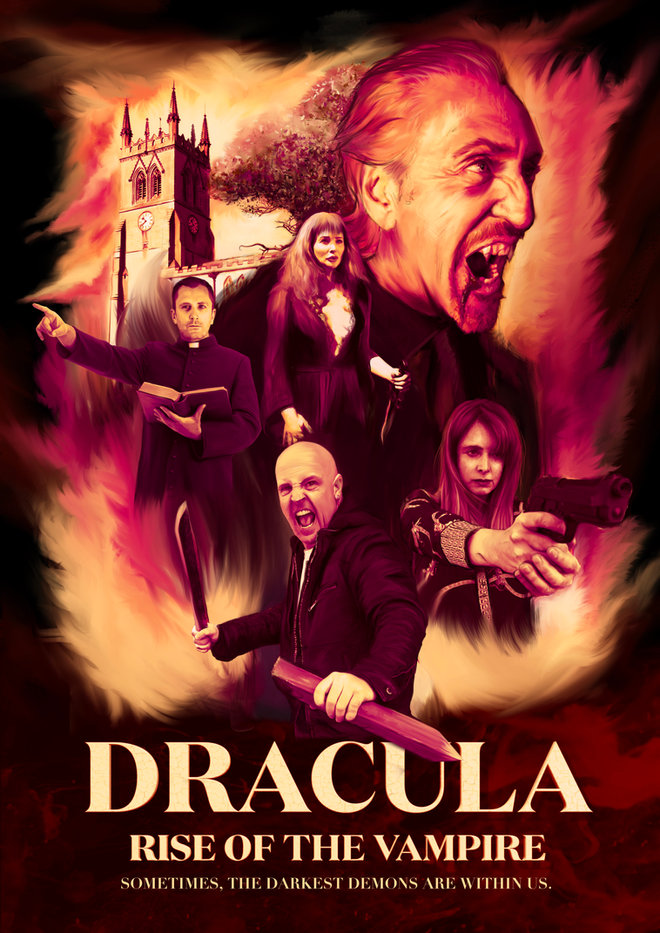
From Director Dean Meadows comes a crowdsourcing for a British film that is said to be an unofficial sequel to Dracula AD 1972/Satanic Rites of Dracula and is set to star scream queen Eileen Daly as Countess Dracula and planned to be the first of a trilogy of films.

The blurb from the Kickstarter Page:

When a satanic cult hellbent on raising the legendary Count Dracula commits a bloodthirsty massacre in a London church, former disgraced detective, Gabriel Lee, must return to the field alongside his ex-partner to battle the undead and prevent a vampire apocalypse.

Combining modern day horror and action with gripping drama and a whole host of legacy characters, Dracula: Rise of the Vampire begins a new chapter in British horror whilst delivering a heartfelt homage to the Hammer classics.

As always, crowdsourcing projects are highlighted for information, TMtV is not affiliated with the production and you back such things at your own risk.

Wednesday, July 12, 2023

Classic Literature: The Vampyre Bride


Written by Edwin Roberts and released in 1850, this was one of the stories that struck me in the excellent anthology Night’s Black Agents. The story was originally published in Reynold’s Miscellany. It is interesting because it's a fictionalised version of the Erzsébet Báthory story.

This is hinted at, at the start of the story, by it saying, “The events of which the following story derives its origin had their genesis in certain terrible facts which occurred in Hungary in the beginning of the last century” – or “based on true events” as many a modern movie might claim. This was, of course, inaccurate as Báthory lived 1560 to 1614 and her acts (if they happened) did not occur in the 18th Century.

Nevertheless, this is recognisably Báthory though she is renamed Countess Gouvina, a socialite who is famed for her lavish entertainments. Eventually, however, her social events begin to be avoided and she finds herself in love with a Prince Wladimir – a younger man who does not seem to reciprocate her feelings. She looks to find a methodology of becoming younger and consults witches and, having been told some secrets, discovers the truth of them as she gets blood on her hand, having smashed a mirror into a young maid, in a fit of rage.

Unlike the death count attributed to the historical Báthory, Countess Gouvina is listed as having killed no less than 300 maidens. Her undoing comes when her men kidnap a young peasant woman, but the girl's plucky suitor realises where she has been taken to and decides to rescue her. He gets the authorities involved after the rescue, having seen the Countess’ depravity. From his perspective we get the commentary: “To the brink of that murder pool, where the vampire-woman—as the frenzied youth thought her—drank of living blood, and bathed her limbs in its sanguine tide.” This connects the Countess with blood drinking as well as the more famous pastime and it is a very early connection, of course. Just a note that I checked the quote in a digitized version of the Reynold’s Miscellany,* the modern book actually typos this, replacing “tide” with “title”.

*The linked document is the 1851 collected Reynold’s Miscellany volume V.

Wednesday, May 31, 2023

Night's Black Agents: An Anthology of Vampire Fiction – review


Editor: Daniel Corrick

First published: 2023

Contains spoilers


The Blurb: The vampire is the most glamorous and iconic of Gothic figures. In Night's Black Agents, editor Daniel Corrick assembles a baker's dozen of tales that trace the sanguinary path of this thirsty, mythical creature from the early nineteenth century, where it acted as an incarnation of fears of libertinism and diabolism, appearing as the Satanic villain in penny dreadfuls, through to the early twentieth century, where it appeared as both femme fatale and homoerotic bloodsucker.

The Review: To use the colloquial, vampire anthologies are a dime a dozen and so if you are starting out with your vampire collection any one will likely be worthwhile, as you get longer in the tooth there needs to be something special about the stories contained within.

All I can say about Night’s Black Agents is… wow. Editor Daniel Corrick has dug up some vampire gold within these pages. There were only three stories within I already had, Polidori’s The Vampyre is a commonly anthologised tale but, of course, as the first English language vampire prose it earns its place. The other two stories are more obscure, those being Dumas père’s the Pale Lady and Ulrichs’ Manor, both interesting and important vampire stories in their own right. However, the book has many more stories, with the volume containing nine Nineteenth Century stories and four from the early Twentieth Century in total.

I’m not going to go too deeply into details but there are some great early use of tropes within. For instance, I have argued that William H G Kingston’s the Vampire; or, Pedro Pacheco and the Bruxa from 1863 represented a pre-Stoker use of transformation of vampire to bat (which others have refuted, I’ll let the reader decide). However Corrick has found an earlier Kingston story from 1846, entitled the Bruxa and featuring the vampiric witch and Portugal again, which has a definitive transformation from (living) vampire to bat (or bat-like creature), making it the earliest example I am aware of to be published in English. Likewise, Edwin F Roberts’ The Vampyre Bride, from 1850, changes the Countess’ name but essentially uses the Báthory story. Both of these will be subject to their own ‘Classic Literature’ blog post in the future.

My congratulations to Daniel Corrick for this collection, it is absolutely essential for anyone who enjoys 19th (and early 20th) century vampire stories or is a student of such stories. 9 out of 10.

In Paperback @ Amazon US

In Paperback @ Amazon UK
Friday, May 05, 2023

V is for Vampire – review


Director: Paul Knop

Release date: 2000

Contains spoilers

A straight to VHS film, this is a washed-out looking affair but, despite amateur acting and a simple storyline, there is something amusing to this and a good nugget of an idea. It had a very short run on Blu-Ray but don’t expect any remastering, if you can track it down.

It starts in Eastern Europe in 1599 and Mi Lady (Michele Mattert) is taking a bubble bath as the, maid, Greta (Lori Boyd), comes upstairs carrying a lamp. She brings a towel and Mi Lady gets out to be dried but Greta slits her throat and allows the blood to pour into the bath. The real mistress of the house is the Countess and her bath has been prepared.

photoshoot

In the modern-day Marty Larson (Amy Luciano) is an agent and one of her clients is portrait artist turned photographer (and whinger) Carlo (Greg Dukes). She has an idea for him – world famous vampire novelist Laura Manning (Vicki DiSalvo) is running a photography competition and the winner will get to photograph the cover of her new novel – V is for Vampire. Carlo is enthused and talks model (and girlfriend, it seems) Stacy (Josalyn Steele) into posing.

bubble bath shoot

We get quite a long sequence of his photoshoots and, unusually, there is no nudity thrown in this flick. Unfortunately, Marty doesn’t think the shots are good enough. Even worse, her boyfriend is Zach (Tony McDowel) and he is also a photographer and, having seen what Carlo produced, he decides to enter the competition also. He asks model Kristy (Jenny Tarnowski) to pose but she refuses due to the place she is in her career. He gets her into a bubble bath, shoots her with a crossbow (the shaft looking like a stake), Marty adds fangs and this becomes his entry.

Vicki DiSalvo as Laura

So, the photo wins the competition and they get to meet the reclusive Laura Manning, who confides that her Countess Karnstein character was based on a real aristocrat who bathed in blood to stay young and also drank it. So, we have a conflation of Carmilla (through name) and Bathory through action. Funnily enough, Marty suggests that the novel ‘the Countess’ reads almost as though it was actual memoirs… Could Laura be a vampire? What will happen to Marty and Zach if she is?

fangs

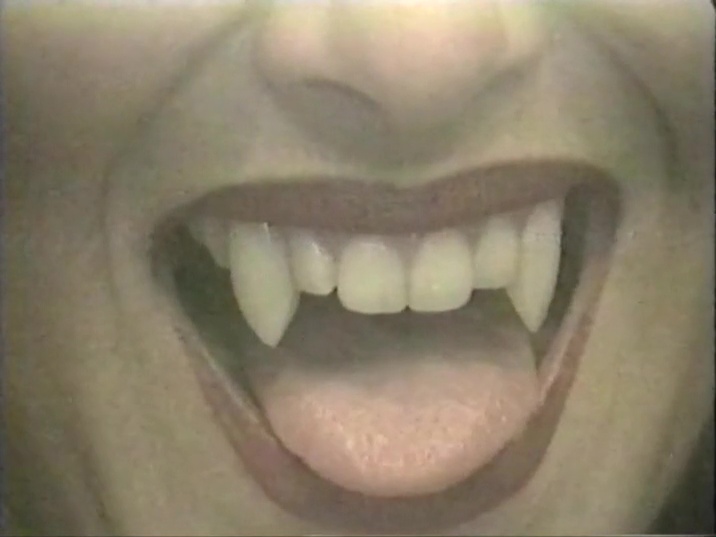
We don’t get much in the way of lore – simply that a vampire cannot be photographed. The film is very short (less than an hour) and looks dreadful in its washed out, VHS print way – in fact the poster for the film is probably the best looking part of it. But I liked the (very basic) story and despite the amateur acting (or over-acting) I was kind of taken by the characters. Not that the film is brilliant, it isn’t by any stretch of the imagination, but it amused me whilst on. 4 out of 10 is probably overly generous but less feels churlish.

The imdb page is here.

Saturday, July 09, 2022

Dracula: Into the Mouth of Death: The Legend of Dracula Book 4 – review


Author: Perry Lake

First Published: 2022

Contains spoilers

The Blurb: Featuring the greatest names in vampire literature...

The beautiful vampiress Carmilla seduced the daughters of the noble houses of Europe. Lord Ruthven did the same. What happens when they meet?

On their latest vampire-hunt, Baron Vordenburg and his son find themselves the guests of a Serbian baron, Latos. More guests are due to arrive, but whom? And from where?

The Lady Lenore, searching for the source of a telepathic blast, becomes the muse for a drunken poet. Will she drain him dry or turn him into a vampire?

When Lenore returns to Europe, she finds herself in the clutches of ghouls... and forced to submit to their demands!

A new Baron Vordenburg takes up his family's crusade—but what is he to do when all of Europe erupts in revolution? Is Dracula behind the chaos?

Mircalla has found a charming playmate. She hopes to transform her into a vampire. What will she do when Dracula refuses her?

At long last, Dracula is prepared to face his greatest enemy in the blood-soaked streets of Paris. Is he nuts? How can he hope to defeat the deadliest and most powerful vampire of them all?! Watch Dracula take on LILITH, the Blood Goddess!

Every king requires a queen... or three. How will Dracula go about assembling a trio of brides with which to rule the Night?

In the foggy streets of London's slums lurks a vile murderer. Behind him is a fiend even darker and deadlier, guiding his every move. What unholy conspiracy can they have in mind?

And finally, the action and horror leads right up to the minute when Dracula meets Jonathan Harker! See how it all came together!

Dracula, Elizabeth Báthory, Carmilla, Lord Ruthven, Lenore, Countess Dolingen... All of them, together at last, in the pages of The Legend of Dracula, Book IV: INTO THE MOUTH OF DEATH!

The review: So this is the fourth in Perry Lake’s recently revised series (you can look at my review for book 3 and that links to the other two reviews). This is, by far, the strongest of the series. The author’s style really strengthened from the last volume to this, with a confidence evident that carries the reader. For the early parts of the book, Dracula is more a shadowy figure pulling strings whilst other vampires take centre stage. This makes for a satisfying dark overlord and then it shifts as the book develops, and whilst his presence is fleeting in the story that runs parallel to Le Fanu’s Carmilla, following that he becomes more front and centre in the volume generally, as we approach the timeframe of Stoker’s novel.

One nagging doubt I had about the series was the power imbalance between Lake’s Dracula and Stoker’s especially given his many minions but the author deals with that neatly and logically within the strictures of his worldview and, rather than running a story parallel to Stoker he offers a brief synopsis of the Dracula plot (with a suggestion of reading the novel if you haven’t already). With some Lovecraftian overtones, this is the best of the series thus far. 8 out of 10.

In Paperback @ Amazon US

In Paperback @ Amazon UK

Monday, May 30, 2022

Dracula: Plots & Schemes: The Legend of Dracula Book III – Review (& Revisit)


Author: Perry Lake

First Published: 2021 (2nd Edition)

Contains spoilers  


The Blurb: Dracula and his vampire hordes plot and scheme to enslave the world and rule the Night!

Dracula hacks and slashes his bloody way to the top of the undead hierarchy as he wages his final battles against the seductive Nycea, and the cunning Erlik Iblis, and the slithering Sethos. Plus the origins of Varney the vampire, Lord Iorga, Lady Lenore, and Countess Dolingen. Will Dracula be able to stop any of them?

There's further clashes with the Vordenburg family in the tale of the son of Dracula—a dhampire! Can the heroic Vordenburgs trust a man in whose veins flows the blood of Dracula?

Then in a novella-length trilogy, set on the eve of the French Revolution, Dracula allies himself to the sorcerer Cagliostro—whose powers are equal to his own! But how long will the alliance last when Dracula sets his sights on Cagliostro's beautiful young wife? Can even the powerful Cagliostro stop Dracula's plans?

Find out in these seventeen stories.

The Review: The revision of Lake’s Dracula Arisen in this volume, like book 1 and book 2, there is modification, changing of order and new stories – a volume in which Dracula perhaps appears less (at least in some stories), becoming more the shadowy force manipulating the board.

The writing in this is Lake’s strongest thus far, with a pleasant crispness to the prose. He throws the kitchen sink concept wise and the blurb above covers a lot of these but doesn’t mention the inclusion of Frankenstein also. The use of Lenore adjusts Gottfried August Bürger’s Lenore (1773), which was quoted within Dracula, and makes it a vampire story, indeed making Dracula the embodiment of death portrayed within.

One aspect I particularly liked was the description of the internal changes when someone is turned, of the growth of a parasitic other within the body (particularly the heart) taking the personality and memories of the victim from the brain but dislodging the soul.

I do need to mention the essay the author has put in the rear of the book, which argues the idea that Stoker was much more aware of Vlad Ţepeş than current thinking suggests, and based the character on him (rather than simply borrowed a name and a paragraph of biography). My own thoughts are in detail here and align with those of the late Elizabeth Miller and there is nothing within the thesis that would shift that position. Ţepeş is a part of the Dracula megatext and thus it is legitimate to use the character within the author’s contribution to the megatext, ie the stories, but the coincidence he focuses on as evidence (between an aspect of Ţepeş’ life and the broad brush of the novel) is more pareidolia than alignment I’d say (sorry Perry) and – in honesty – neither enhances nor detracts from what Lake did with his prose. For that prose (and not impacted by my view on the essay conclusion), a solid 7.5 out of 10.

In Paperback @ Amazon US

In Paperback @ Amazon UK

Friday, May 06, 2022

Dracula: His Women: The Legend of Dracula, Book II – review (& revisit)


Author: Perry Lake

First Published: 2021 (2nd edition)

Contains spoilers

The Blurb: No woman can resist Dracula—and some will love him forever!

Meet the many brides of Dracula—seductive, inhuman beauties who serve him to spread his unnatural dominion. You will feel their crimson lips glide across your skin, softer than a summer’s breeze. You will feel their fangs pierce your throat.

Gretchen, a common peasant, but of rare beauty—what will she do to gain Dracula's love?

Addhema feeds not on blood, rather, she takes the scalps of beautiful girls, draining them of life and supplying herself with endless disguises!

Katya, a beauty who could seduce any man. But dare she defy Dracula?

Despina, a witch whose powers even vampires fear. How will she deal with the Lord of the Undead?

Elizabeth Báthory, the infamous Blood Countess of Hungary, said to have bathed in the blood of virgins to retain her youth and beauty—forever! Eager to gain power equal to Dracula himself, she strives to enslave and control an army of werewolves.

Clarimonda becomes the courtesan to the most powerful man in France, only to catch Dracula's eye.

Plus the novella-length origin of Countess Mircalla Karnstein—the title character of Sheridan LeFanu's classic tale of horror, “Carmilla”. Desired by both the evil Dracula and the brave Baron Vordenburg, Mircalla finds herself the prize they would both kill to possess. These women will love you to death!

The Review: This is the second revised volume in Perry Lake’s The Legend of Dracula series, following His First Centuries. Like that volume this has been reworked and contains additional stories, and like its previous iteration this strengthens the foundation that was built by the previous volume. I do like the inclusion of Addhema, who was the primary and titular character in Paul Feval’s the Vampire Countess with her peculiar vampirism, where she scalps her victims and wears their hair, through which she takes their lifeforce. Just like the first time around, I really enjoyed the prequel (novella length) entry of Carmilla, which works really well. It is admittedly good to be able to report that the volume held its own, to the first read, and actually was improved by the author's revisit.

The style of the stories is centred round a sense of brevity and yet, partly due to using known characters and partly due to the author’s crafting, the brevity works in the book's favour. It should be noted that the stories do, rightly given the title, concentrate on the female vampires, though Dracula is a consistent presence even when he is not directly in the spotlight.

I noted one continuity error that creeped into one of the new stories but it was minor and hasn’t impacted the score (and I’ve informed the author). A strong volume in the series 7.5 out of 10.

In Paperback @ Amazon US

In Paperback @ Amazon UK

Friday, January 28, 2022

Dark Tales – review


Directors: Jason Figgis & Lomai (segments)

Release date: 2017

Contains spoilers

Yet another anthology film that stitches together disparate shorts. It isn’t quite a portmanteau – there is a conceit that the films were the last viewing before a suicide, an intimation that the films caused the act, but it is given in intertitles and not expanded on. The vampire segments are the first two.

First up is Friends Forever and I can’t understand why director Jason Figgis is so intent on mutilating his film the Ecstasy of Isabel Mann by cutting it into shorts.


Previously we have seen a section turn up in 60 Seconds to Di3. Friends Forever takes another section of the film – Isabel (Ellen Mullen), covered in blood and accidentally killing a friend before an initial interview with a garda inspector. In the feature it is a pivotal point, in this it is meaningless to a viewer who hasn’t seen the original film. The viewer doesn’t know why she is covered in blood, nor who the various missing are. It doesn’t sell the actual film, which deserves to be seen. It isn’t the best opening to this anthology due to it feeling like an unexplained moment suspended in celluloid.

being bled

It is followed by B is for Bath – interesting in what it examines implicitly, it is a take of the Báthory legend. There is a man (Joseph Cranford) and a woman (Adria Dawn) in a room. It becomes readily apparent that she is a star and he a fan. As he lies on a medical bed he wonders how many it takes – normally three, sometimes two she confides. He is the third that day, therefore the last, She cuts a small entry hole in his neck with a scalpel and fixes a tube – his lack of fightback indicates he is happy to do this. His blood is siphoned into a bath – which she then gets in.

Báthory moment

The Báthory aspect is obvious, she is thankful for the sacrifice of those who maintain her but in some respects this is all about devoted fanhood – and had this been part of a longer piece that may have been a fascinating exploration. Unfortunately, it is actually a very short section that looks stylistically interesting (though the red of the blood is very fake) and as a standalone piece difficult to offer a high score to (one of the reasons that I dislike scoring shorts generally is because the raison d'être is often very different to a feature). However, I feel compelled to offer a score for the anthology based only on the vampire segments. B is for Bath is interesting but contains little narrative (it is more peaceful and certainly consensual but not as well done as the much more violent Báthory moment in Hostel: Part 2, for instance), the excerpt before it suffers for being orphaned – 3.5 out of 10 reflects the interesting fanhood aspect of the second short but also reflects that it deserved more exploration when included in a feature, plus the frustration with the first 'short'.

The imdb page is here.