Showing posts with label draugr. Show all posts

Tuesday, February 11, 2025

The Damned – review


Director: Thordur Palsson

Release date: 2024

Contains spoilers

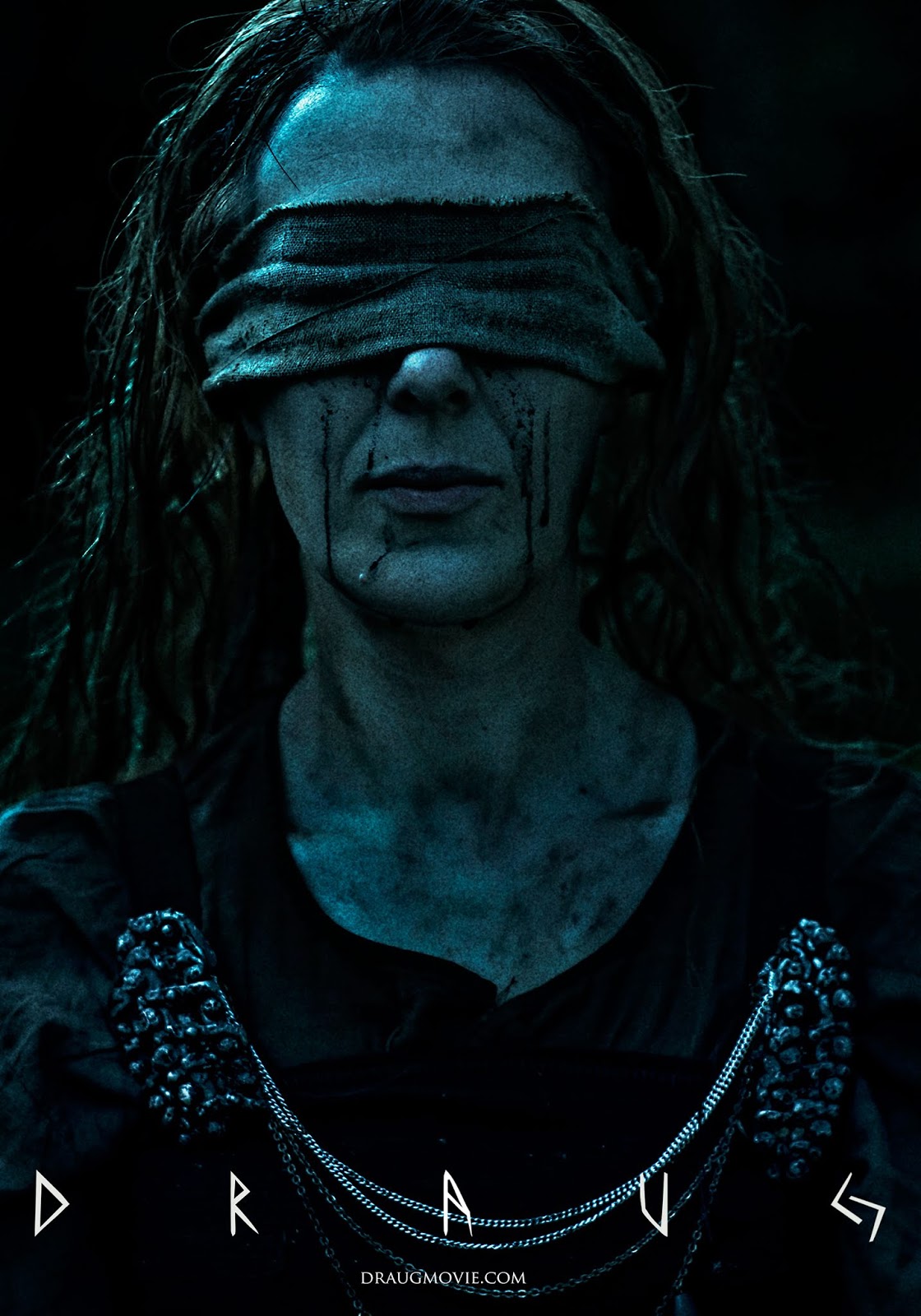
I thought long and hard on whether to review this supernatural tale set in Iceland. The main thrust of the tale surround draugr, which are a type of Scandinavian revenant. If you fancy an in-depth exploration of them then I can highly recommend the section on them in Keyworth’s Troublesome Corpses. When relaying the saga of Grettir in a volume (in 1876), Sabine Baring-Gould translated draugr as vampire. Depending on the legend they sometimes do drink blood but in others they are more obsessed with guarding their tomb and grave treasure or seeking revenge. They can be split into land and sea draugr. In the case of this film, one might say it is seeking revenge but any classic vampiric activity is unseen. As such I considered having this as being of genre interest but ultimately settled on reviewing. I accept that many might disagree with the provenance.

Odessa Young as Eva

As I mentioned, the film is in Iceland in 1871 at a fishing station. A small outpost, fishing through the winter while the routes back to settlements are blocked. The outpost is owned and run by Eva (Odessa Young), whose husband had owned it and who died the year before. Also in the outpost is cook Helga (Siobhan Finneran) and a group of fishermen. The helmsman of Eva’s boat is Ragnar (Rory McCann), who clearly is the leader of the men. The year is proving particularly hard and the start sees Eva outside at night, checking a ledger. When she returns Ragnar questions her and she admits he was right – there are only a couple of winters that seemed as harsh and he points out they made it through those winters. Her concern is lack of food and the fact that men died during those particular lean years.

the shipwreck

The next day, as they prepare their boat, they spot a ship wrecked on rocks called the teeth. There is a call to rescue the sailors, but Ragnar opposes it. The men turn to Eva, as it is her boat but she, after clearly pained deliberation, agrees with Ragnar – they potentially do not have enough food to last the winter as it is and more mouths will surely lead to the loss of some of the fishermen. They don’t fish that day out of respect. The next day Eva finds a rope on the beach and, following it, finds a barrel from the ship. Ragnar checks the contents and it is a preserved meat and is still good. Eva suggests checking the other beaches, but he suggests it is unlikely anything else will wash up, given the tides. They decide to take the boat out to see if they can find any floating flotsam and jetsam.

Siobhan Finneran as Helga

They have to go out quickly and it is dark by the time they get out. They find one small crate when they hear cries – some of the crew of the lost ship have climbed on the rocks. In desperation many jump in the water, trying to swim to the boat. The boat is full as is and they are pushing the sailors back violently, Ragnar is pulled overboard and lost and when one sailor grabs Eva then a hand, Danny (Joe Cole), – who had been vocal about saving them – kills the sailor with an axe. When back on shore there are arguments – they got very little in the form of supplies and lost Ragnar. Danny stops the argument and Eva names him the new helmsman.

seeing the draugr

Ragnar was proven to be wrong about the tides, when the bodies of several sailors wash up (not including his corpse). After a scene of one stomach moving and, when slit open, an eel emerging from the torso they put the sailors in coffins. It is at this point that Helga starts mentioning draugr, with a worry that they will return as the revenants. She has rope and Eva is told that the dead can’t break free if their arms are bound by knotted rope, they lose direction if the coffin is turned three times and they can’t walk in a person’s dreams if iron nails are hammered in to their feet. None of these apotropaic things are done. However, it does seem that a draugr walks among them.

driven mad

Eva sees a figure in the dark, dreams are invaded and division breaks out amongst the men. At first it seems that it could be a combination of fear, superstition and guilt, with Helga suggesting it will get in their heads and drive them mad. Eva is dismissive of the actual idea of a draugr at first but as things continue to occur, with Helga going missing, their food stocks being stolen and a coffin being found to be empty, she becomes more convinced. They do the three methods mentioned earlier to the other corpses but the disasters continue.

the ward

Other lore we get is that the draugr will stay close to its grave during the day, that a runic ward (carved from the wood of the shipwreck) should prevent it entering the communal building and fire is the only way to destroy it. The film works well in its own folkloric space and the performance by Odessa Young is strong, with her character being believable and evoking empathy from the viewer. If I have an issue – and I do – it is in the very ending of the film, which I disliked intensely but I will not spoil. However I can divorce the rest of the experience from that and am not allowing it to spoil my overall impression. 7 out of 10.

The imdb page is here.

On Demand @ Amazon US

On Demand @ Amazon UK

Sunday, June 16, 2024

Use of Tropes: The Northman


As I sit, anticipating Robert Eggers’ new version of Nosferatu, it felt the right time to revisit his earlier films. I am a huge fan of The VVitch and The Lighthouse and I really did enjoy the Northman but had only watched it the one time at the cinema.

Rewatching the 2022 film I noticed (remembered more so) that within the story of Amleth (Alexander Skarsgård, True Blood), whose father King Aurvandil War-Raven (Ethan Hawke, Daybreakers) is murdered by his Uncle Fjölnir the Brotherless (Claes Bang, Dracula), there is a vampire genre trope. Having escaped from his Uncle, he grows to be a berserker and then discovers that his Uncle, who has lost his stolen kingdom, is in Iceland.

draugr

Infiltrating as a slave, he aims to avenge his father and rescue his mother (Nicole Kidman) and is directed by a he-witch (Ingvar Sigurdsson) to a specific sword in a barrow. That sword is named as Draugr. Of course “the typical Scandinavian revenant, at least in the medieval period, was the reanimated corpse, or draugr, of a deceased individual” (Keyworth, 2007, p. 28). There might be some debate to their vampire nature (though not that they are restless, troublesome corpses). They are mentioned in detail within Bane’s Encyclopedia of Vampire Mythology and, more classically, in the 1886 edition of Curious Myths of the Middle Ages, by Sabine Baring-Gould, there was reference to vampires (rather than use the word draugr) within the saga of Grettir. The draugr is often guarding a treasure or seeks to gain revenge and in this we see both the guarding of treasure and the desire for revenge.

The Mound Dweller

The guarding of treasure in this is by the Mound Dweller, an undead giant who holds the sword and who Amleth has to fight to gain it (though the fight may be hallucinatory as, on being defeated, the Mound Dweller reappears in his seat. It needs mentioning, however, that the film has a lot of Norse mysticism layered into it). The Mound Dweller is defeated by being paralysed by moonlight, allowing Amleth to behead him. The sword itself is, of course, the actual draugr (with the name being said to mean undead) but is used by Amleth for revenge fulfilling one of the purposes of a draugr. The sword can only be drawn at night or at the Gates of Hel and will not be drawn from its sheath during the day – giving it a curiously vampiric nature by having it hidden from the sun.

Alexander Skarsgård as Amleth

The story of the sword suggests that it is immortal (it never dulls) and the blade had to be quenched in human blood, in fact Amleth says that he “will enjoy feeding Draugr… …in everlasting night.” So, there are vampiric tropes around the blade and that, for me, makes the film of genre interest.

The imdb page is here.

On Blu-Ray @ Amazon US

On Blu-Ray @ Amazon UK

Saturday, October 05, 2019

Draug – review

Directors: Karin Engman & Klas Persson

Release date: 2018

Contains spoilers

I have been looking forward to this Swedish folk horror film for a while now and it has just received a wide streaming release. Shot on a small budget this story set 1000 years ago is remarkable, before anything else, for its ambition. However, before we discuss the film let us discuss the vampire type within.

So, what are we talking about? Well “the typical Scandinavian revenant, at least in the medieval period, was the reanimated corpse, or draugr, of a deceased individual” (Keyworth, 2007, p. 28). Keyworth mentions two primary types – land and sea draugr. There might be some debate to their vampire nature (though not that they are restless, troublesome corpses). They are mentioned in detail within Bane’s Encyclopedia of Vampire Mythology and, more classically, in the 1886 edition of Curious Myths of the Middle Ages there was reference to vampires (rather than use the word draugr) within the saga of Grettir by Sabine Baring-Gould. The draugr is often guarding a treasure or seeks to gain revenge.

Nanna and hakon
This film begins with young Swedes being trained in a lake. One of them, Nanna (Elna Karlsson), seems to be in trouble and later her guardian Hakon (Ralf Beck, Sinister Visions) asks what happened, rightly suspecting that she had a vision (we see these in flashes, perhaps as - deliberately - confusing for the viewer as the character) and commenting that it was a sought after trait once. He has to go on a mission and gives her belongings that were with her when he became her guardian (including a key) but then desides to take her on the mission with him.

Deja and Kettil
The mission is to search out a group of Christian missionaries, travelling with one of Hakon’s old warrior brethren, who never reached their destination. As they enter the initial village, following their boat journey, Hakan tells Nanna to keep her head down as Swedes are not popular. They enter the feasting hall and, after some initial banter, it becomes apparent that Hakon is also old friends with local sheriff Kettil (Thomas Hedengran, Frostbite & Marianne) and he uses this as leverage to get Kettil to journey with him. Kettil brings his slave, Deja (Nina Filimoshkina) and they also have the warriors Gunder (Urban Bergsten) and Odd (Matti Boustedt) with them.

grandmother's vision
They stop at a farmhouse – the last before the trail – at which Kettil extorts some ale, sends Nanna to meet the grandmother (who is deathly ill with ulcers rotting her legs and deemed crazy but actually probably has some insight and herbalist knowledge) and asks about the brother-in-law, local rebel Kol (Oscar Skagerberg) who is known to be whipping up anti-Swede fervour. The farmer, Are (Ola Ljung), denies seeing the missionaries. Later Kol leads an ambush on the group who retreat deeper into the woods, after Odd is badly wounded, but capture Kol in the process.

a draugr
It is, of course, not the rebels who have killed the missionaries but something worse – draugr. They are portrayed as blue-skinned, which Bane says is traditionally “described as being… …hel- blar (“death- blue”)” (p55) and their movements at times are somewhat spiderly owing a tad to the wider horror genre. They are corporeal but also seem separate to their actual corpses. Described as the living dead, a memory of another draugr occurrence suggests the way to kill them is to disinter them from their grave, behead them, burn them and scatter the ashes into a river (binding them to the water).

drawing Odd's life?
They can cause visions and we see one of the group distracted and, apparently, blissful as they see a child no-one else sees. Another group member is caused to dash their own brains out against a rock. As for vampiric activity… its difficult to say. We see one on the chest of the injured Odd and he arches his back and wide-mouthed it might be that his life is drawn out. Whether that is what the filmmakers were portraying or whether it is my interpretation, coloured by my knowledge of the wider genre, I can’t say. What I can say is that these Draugr are after revenge and, whilst one character describes them as filled with rage and hate until there is nothing else, it is secrets within the group that prove the key to their story.

a tad too dark
The film itself is really nicely put together for a low budget effort with an authentic look and atmosphere that works well. There is a nice layer of background story added through the film that makes the plot more three-dimensional and draws the viewer in. The characters perhaps aren’t drawn too deeply but the actors imbue them with unique personalities and build a viewer sympathy. Not everything is perfect, some of the horror aspects are a tad too dark, probably to help hide the joins as much as for atmosphere. There are gaps deliberately left for viewer interpretation and this works. All in all this was an enjoyable delve into Scandinavian myth and impressive given the budget. 7.5 out of 10.

The imdb page is here.

On Demand @ Amazon US

On Demand @ Amazon UK

Friday, January 26, 2018

The Cambridge Companion to 'Dracula' – review

Editor: Roger Luckhurst

First published: 2017

Contains spoilers

The blurb: Bram Stoker's Dracula is the most famous vampire in literature and film. This new collection of sixteen essays brings together a range of internationally renowned scholars to provide a series of pathways through this celebrated Gothic novel and its innumerable adaptations and translations. The volume illuminates the novel's various pre-histories, critical contexts and subsequent cultural transformations. Chapters explore literary history, Gothic revival scholarship, folklore, anthropology, psychology, sexology, philosophy, occultism, cultural history, critical race theory, theatre and film history, and the place of the vampire in Europe and beyond. These studies provide an accessible guide of cutting-edge scholarship to one of the most celebrated modern Gothic horror stories. This Companion will serve as a key resource for scholars, teachers and students interested in the enduring force of Dracula and the seemingly inexhaustible range of the contexts it requires and readings it might generate.

The review: The first thing I noticed about this volume was the inclusion of some of (for me) the genre’s heavy hitters: Stacey Abbott, Ken Gelder and Carol Senf. However, before I look at the volume specifically I beg your indulgence as I touch on a tangent thought reading the volume spawned.

Many of the articles noted the place held by Dracula as part of the fin-de-siècle (that is related to, or characteristic of, the end of a century and, in art, most specifically the end of the nineteenth century) and rightly so; but this made me think about dates.

Dracula is an epistolary novel but the documents that make up its body of text are dated to the month and day but nowhere is the year mentioned. In the New Annotated Dracula Klinger admits that the years 1882 and 1893 had the corresponding day/date combination (p517), before choosing a different date. Personally I subscribe to the 1893 theory as Charcot died on 16/8/1893 and, in a diary entry dated 26/9, the novel references his passing.

So, as well as written, published and being part of the fin-de-siècle, it was set within it, and it struck me that the coda to the novel, which begins, “Seven years ago we all went through the flames,” was significant. Stoker imbued Dracula with all the trappings of modernity and, consciously or subconsciously, addresses many of the moral and social concerns of the late Victorian period. However his optimistic coda to the horror revealed is set in the new century. Perhaps a subject for exploration?

Enough of that, however. What I did like about the collection of papers in the book was that, until the final section on adaptations, most of the writers attempted to look firmly at the novel, rather than allow themselves to be swamped under the various re-interpretations.

The one who, comfortably, stepped out of that mould was Ken Gelder whose paper explored the transnational vampire, reconnoitring the American South, Sweden and Japan. This was interesting but too vast a subject for a short paper/chapter. Gelder also missed some tricks. Talking about vampires and slavery in the American South, a reference to the first US vampire story the Black Vampire: A Legend of Saint Domingo would have been poignantly ironic calling, as it did, for universal emancipation, given the slavery associations he highlights.

The other missed trick was around Japan. There were other Japanese vehicles that could have been mentioned, in which Dracula (and in some Draculina for the feminine) has become a genus and this would have brought the discussion back around to the novel that was the focus of the volume and its enduring impact. To miss the Toho Bloodthirsty series, and their loose affiliation to Dracula, was a grievous omission. However, criticism aside, Gelder was as fun to read as ever.

A volume highlight for me was Matthew Gibson’s Dracula and the East. I did not necessarily agree with the idea that Stoker made the Count a Székely as a deliberate change for premeditated reasons but rather it was further evidence that his amalgam character was a pastiche of sources, but the paper as a whole was a joy.

The weakest chapter for me was Nick Groom’s Dracula’s Pre-History; The Advent of the Vampire. If, later, Stacey About repeated the conflation of Count Dracula with Vlad Ţepeş, she at least recognised that many scholars disagree with the depth of the conflation (I would say have outright debunked). Groom did not touch on this.

Indeed he associated both Ţepeş and Báthory with Count Dracula stating “Elizabeth Bathory was reputed to bathe in the blood of young girls in order to retain her youthful beauty, and the fifteenth-century Wallachian warlord Vlad Ţepeş allegedly executed tens of thousands by torture and impalement: roasting children and feeding them to their mothers, forcing husbands to devour wives, and ultimately impaling all of his victims. Stoker would have been familiar with this material through Victorian surveys such as Sabine Baring-Gould’s Book of Werewolves (1865)” (pp 11-12) I take issue with this.

Whilst Stoker did use Baring-Gould’s book as reference (and took some of the Count’s appearance from the book) what are these other surveys? Groom doesn’t say. Báthory (named only as Elizabeth ------) is described by Baring-Gould but Ţepeş is not. Given we know Stoker's research volumes, we know that the only reference he had to Ţepeş was from Wilkinson and the paragraph I have quoted above might be described, if one were being harsh, as academic sleight of hand. As an aside, given that he mentioned Baring-Gould, it is a shame that Groom – when mentioning Draugr – didn’t mention that Baring-Gould specifically named them vampires in Curious Myths of the Middle Ages (1876).

However, in the main I was impressed with the argument and academic rigour in the volume as a whole. I did think, as I read, that Roger Luckhurst might have mentioned Psychopathia Sexualis in his paper/chapter Dracula and Psychology but this is picked up in the next chapter as Heike Bauer discussed Dracula and Sexology. Likewise Bauer might have picked upon the continental (or French, at least) association of vampirism and necrophilia as highlighted in volumes such as Là-Bas.

As a whole, however, this volume is necessary for all serious students of Dracula and the wider genre. 9 out of 10.

Tuesday, April 05, 2016

V-Wars: Night Terrors – review

Editor: Jonathan Maberry

First published: 2016

Contains spoilers

The Blurb:


  • The war is tearing our world apart. Instead of big armies with tanks in the field, the Vampire War is fought in the streets, neighbor against neighbor, family against family. Anyone can turn at any time. The blood hunger can suddenly appear in the middle of a kiss. The person who sleeps next to you every night could wake up in the dead of night...hungry. So hungry...


  • V-Wars: Night Terrors collects all-new stories from the reporters embedded with the beats (humans) and the bloods (vampires). Each tale explores the nature of terror and peels back another layer of our comfort. Each tale bares our throat to the bite.


  • New York Times Bestseller Jonathan Maberry and his team of front-line storytellers bring you all-new tales of horror and heroism, of pain and delight, of deadly despair and soaring courage. The war between beats and bloods is blazing. Pick a side.


The review: Regular readers will know that I am a huge fan of V-Wars as a concept and a series and you can find my reviews of the first two volumes here and here. Whilst arguably the first V-War never really ended, this volume is set during the second V-War and one of the great things about the volumes is how the various authors pull your loyalties one way and another. One moment you may root for a human and the next a vampire. There are multiple shades of grey drawn and, even with a hint that there is a corruption within human Government encouraging the ethnic cleansing of the V-War, we are given the warning that even the most benign seeming V organisations – the court of the Crimson Queen – may not be the ideal it makes itself out to be.

This is underlined when, through the eyes of a truly innocent hybrid, we see the grassroots organisation Unity, which espouses mutual living and yet thinks nothing of holding humans prisoner as food for their interpretation of greater good.

Again it is a joy playing spot the vampire type. We are told there are 300 vampire species and 5800 known hybrids (plus hydra, a never before classified species and a one off. Hydra being a teenage girl whose regenerative powers are so strong she may be truly immortal). Lycanthropes generally are vampire types but there is a known (through DNA) true lycanthrope who has human and dire wolf DNA – this may be the person known only as Rancid and certainly Rancid is something else.

One interesting idea was allowing us to meet a male White Lady of Fau. Normally female this ethnically French type of vampire is a seducer and the male one we meet is gay. We meet a vampire (wurdulak) turned vampire hunter as she tries to stop the monsters she perceives herself and her kind to be. There are characters we have met before and new characters too.

V-Wars is begging for a TV series. It’s clever and sassy and there is a wild variety of vampire types that could be played with in that format. In the meantime we have the books and this one holds its own against the others in the series, the use of multiple writers with Maberry’s overall control allowing the series to remain fresh and yet follow its path without irrelevant meandering. 9 out of 10.

Friday, March 18, 2016

The Universal Vampire: Origins and Evolution of a Legend – review

Editors: Barbara Brodman & James E Doan

First published: 2013

Contains spoilers

The blurb: Since the publication of John Polidori’s The Vampyre (1819), the vampire has been a mainstay of Western culture, appearing consistently in literature, art, music (notably opera), film, television, graphic novels and popular culture in general. Even before its entrance into the realm of arts and letters in the early nineteenth century, the vampire was a feared creature of Eastern European folklore and legend, rising from the grave at night to consume its living loved ones and neighbors, often converting them at the same time into fellow vampires.

A major question exists within vampire scholarship: to what extent is this creature a product of European cultural forms, or is the vampire indeed a universal, perhaps even archetypal figure? In this collection of sixteen original essays, the contributors shed light on this question. One essay traces the origins of the legend to the early medieval Norse Draugr, an “undead” creature who reflects the underpinnings of Dracula, the latter first appearing as a vampire in Anglo-Irish Bram Stoker’s 1897 novel, Dracula.

In addition to these investigations of the Western mythic, literary and historic traditions, other essays in this volume move outside Europe to explore vampire figures in Native American and Mesoamerican myth and ritual, as well as the existence of similar vampiric traditions in Japanese, Russian and Latin American art, theatre, literature, film, and other cultural productions.

The female vampire looms large, beginning with the Sumerian goddess Lilith, including the nineteenth-century Carmilla, and moving to vampiresses in twentieth-century film, literature, and television series. Scientific explanations for vampires and werewolves constitute another section of the book, including eighteenth-century accounts of unearthing, decapitation and cremation of suspected vampires in Eastern Europe. The vampire’s beauty, attainment of immortality and eternal youth are all suggested as reasons for its continued success in contemporary popular culture.

The review: I do like books like this but they come with two problems. One is the price tag – though I understand that an academic piece is not going to sell as well and that influences the tag. The second is a variance of quality between contributors’ pieces and the Universal Vampire is no exception when it comes to that.

Looking at the blurb, for a moment, the premise of the book is looking for universal roots within the vampire genre. The book doesn’t actually do that, in totality at least, though it does take us on an international journey.

However the first chapter, Draugula by Matthias Teichert, certainly did this and I find the exploration of both Draugr and Revenant myths and legends fascinating. It is clear that there are heavy similarities to the vampire myth that developed amongst the Slavic nations. The biggest difference was the vampire seemed to have a fixed focus on blood drinking (often, it seems, assumed due to the corpse state when exhumed) and the other types not so much. Blood drinking and flesh eating do appear within some of the myths, but not so much in this essay, which nonetheless was informative and thought provoking.

Flying to the other end of the spectrum, the piece Biomedical Origins of Vampirism by Edward O. Keith could have been left out of the book altogether. A tired re-hash of the discredited porphyria theory (with an almost embarrassed admission that the theory does not fit) is followed by equally tired looks at Pellegra and Rabies. This misses the point that illness as a source of the myth does not rest with a condition suffered by the accused vampire (as they are dead by the time an assumption of vampirism is reached) rather it is with the victims. As such this chapter managed to completely avoid tuberculosis – a disease that we know certainly did influence folk opinion in the 19th century American panics. It was amusing, therefore, that the next chapter, Evidence for the Undead by Leo Ruickbie, shot down Keith’s chapter in a couple of paragraphs. The Keith Chapter also showed a lack of remembrance or knowledge of Dracula with suggestions that the Count avoided daylight (he certainly was abroad in daylight and one of the supporting quotes for this assertion is misattributed to the Count when it was Van Helsing’s dialogue) and only preyed on women prior to their marriage (Mina was married before she attracted the Count’s nightly visitations).

If that chapter is the low point in the book there was a Lilith chapter that was pretty light and a view that Stoker (and subsequently Dracula scholars) got details of Transylvanian society and cuisine wrong was met with a mighty shrug of the shoulders as it is clear that Stoker only used travel books to research that setting. In honesty the argument was very sound but the point of the debate was lost on me.

As well as the Draugula chapter and Ruickbie chapter particular favourites included a chapter by Ridenhour comparing Carmilla and Let the Right One In and Ruthner’s look at Visum et Repertum, the report of the Arnold Paole case.

All in all, for the full volume 7.5 out of 10.

Wednesday, March 18, 2015

Honourable Mention: Dead Snow 2: Red Vs Dead

When I originally looked at Dead Snow I did so on the basis that, whilst it looked like a zombie film, it really wasn’t. The Z word was used once all film and these intelligent, tool using creatures appeared to be draugr. In the Encyclopedia of Vampire Mythology, Bane suggests that “A draugr jealously guards its treasures and viciously attacks anyone who enters its tomb” and the Nazi restless dead came after the folks of the first film because they had taken the Nazi’s gold.

attacking Martin
This film, released in 2014 and directed by Tommy Wirkola, gives us a brief recap of the previous film and we see survivor Martin (Vegar Hoel) lose an arm – he is bitten and, not knowing that bites do not infect, he cuts it off at the elbow with a chainsaw. Martin is allowed to leave as he returns the gold but when he gets to his car there is one gold coin unreturned... The new story starts here as this causes a renewed attack. Martin manages to drive off with the Nazi commander, Herzog (Ørjan Gamst), clinging to the side of his car. A brush with a truck pulls the Nazi off the car – but he leaves an arm behind. Martin throws the coin onto the road and speeds off.

Herzog and his men
The truck stops and, whilst trying to give cpr, the trucker (Lars Sundsbø) gets his lips bitten off. Herzog retrieves the coin but the truck has the name of the town Tolvik written on it. As the film develops we discover that, before they were killed, Herzog and his troop had been given orders to kill all the residents of the town by Hitler in revenge for the sinking of a German destroyer. So the name of the game in this film is revenge, rather than greed.

the Zombie Squad
Martin crashes the car and wakes up in hospital, handcuffed as the police believe he killed his friends. The good news, he is told, is that they have reattached his arm – actually Herzog’s arm. At first this arm has a will of its own, for instance killing people, but eventually Martin gets control of it. He ends up escaping and in contact with a US anti-zombie group, the zombie squad – actually a group of well-meaning nerds who manage to get the fastest flight from the US to Norway ever (it would seem) and with them Martin looks to stop Herzog.

a new arm
The Z word is used lots in this film but, I will say again, they are not zombies (at one point the zombie squad’s Daniel (Martin Starr) suggests Martin has created “a whole new genre” of zombies). Herzog has Martin’s arm attached to his body by a Nazi doctor and it attaches through supernatural means. His men are depleted but he is able to raise further draugr. When he tries this in a German war graveyard it fails (the area is too warm and the bodies have rotted) and so he raises victims found en route – who all obey him. Martin later discovers that his new arm can both kill draugr and also raise the dead (and so he raises a troop of Soviet POWS killed by Herzog, hence the Red Vs Dead in the title). So we have necromantic, speaking, tool using, tank driving dead creatures – really not zombies.

weeping blood
But nor are they vampires, either. The reason for including this is more out of genre interest as draugr are often conflated with vampires in a mythology sense. I do wish the Norwegian characters had called them draugr and left the zombie descriptor to the American characters, as that is what they would seem to be. There is an interesting moment when Herzog enters a church and all the stained glass icons begin to weep blood – but nothing further was done with this. However there is plenty of gore and a streak of black humour a mile wide. Recommended.

The imdb page is here.

Wednesday, December 03, 2014

V-Wars: Blood & Fire: a Chronicle of the Vampire Wars - review

Editor: Jonathan Maberry

First published: 2014

Contains spoilers

The blurb: When anyone can turn.

When every street is a war zone.

Our world will burn.

Our world will bleed.

There is nowhere to run!

It's been one year since a virus triggered junk DNA and people all over the world started changing. Becoming something else. Craving blood.

It's been 10 months since the word "vampire" stopped being something from old monster stories and Hollywood movies.

It's been six months since our world and theirs erupted into war.

It's been two months since an uneasy peace was signed.

It's been one hour says that peace was shattered.

War is here again.

The Vampire War.

The review: Regular readers will know that I thoroughly enjoyed the first V-Wars volume and also enjoyed the first V-Wars graphic novel, though admittedly less so than the prose. For those unaware of the series, V-Wars is set in a world where a virus, released from ice drilling, has activated junk DNA in certain people around the world mutating than into vampires. There are a whole range of vampires dependent on genetic background. Indeed in this volume we discover that in this world they have seen and 92 species, including 18 subtypes not in literature. Folklorist Luther Swann postulates that could leave nearly 200 species from folklore as possible new species and further hybrids are possible beyond this.

Like the first volume, this volume is made up of short stories by different authors set in the universe and interspersed between each other. The writing is tight throughout, and the stories entertaining. As somewhat of a vampire geek part of the joy is the wide variety of vampire types used, although purists who prefer their vampires Slavic may be a little disappointed. In this volume I noted the following vampire types: draugr, kyonsi, a snake vampire whose species is not named (but the character has featured in both volumes), upor, cihuateteo, mandurugo (with aswang mentioned in passing), craqueuhhe, neuntöter (which are said to be covered in pustules containing pathogens, making them a plague carrier), nelapsi (with alp mentioned in passing) and kallikantzaros.

Werewolves do feature in this, but as a creature born of the ice virus it is suggested they are a subspecies of vampire. In the V-Wars universe the humans had only come across a few werewolves including a loup garou, and were hunting a vampire killing werewolf serial killer of another variety. Swann does list folklore variants including vampire/werewolf hybrids such as the pryccolitch or the Haitian loogaroo, who were said to be witches that shed their skins at night to become vampire/werewolf hybrids. Others mentioned are the mjertovjec (said to become a vampire on death), the lobishomen and the farkaskoldus.

Whilst many vampires in the V-Wars universe are blood drinkers or flesh eaters the broader definition is a person who has an abnormal need to feed on one of several vital substances including energy. I liked the explanation of the mandurugo being thought to split in half due to their excellent chameleon-like skills, thus only revealing part of themselves to attack.

As I intimated earlier this is a superb volume, as good as the first volume. I do like the short story style breaking the book into vignettes. This could easily translate itself into episodes for a TV series or chapters in a portmanteau film. I think there is perhaps also room for dedicated single focused novels. That, of course, is a fan boy’s wish list, and for now I'll happily sit and wait for the next V-Wars volume. 9 out of 10.

Tuesday, February 19, 2013

Honourable Mentions: Dead Snow

It is an aim of mine to look at areas that touch onto the vampire genre even if they are 'not quite' vampire. Now, when it comes to this 2009 Norwegian horror comedy that was directed by Tommy Wirkola, you may well say to me that you know that the modern cinematic zombie genre came from the vampire genre. You may equally say that it created a genre in its own right and that, as fun as zombie films are, they generally do not belong on the pages of TMtV (unless there is a zompire cross-over).

Normally I’d agree, but you know what… these aren’t zombies (Haitian mythology or Romero derived). Now I say that knowing full well that the DVD box has the word zombie plastered over its blurb, that the IMDb page says it is a zombie movie and that the word is used in movie (once). You see, zombies don’t tend to work in unison (other than clumsy mobs), they don’t check out the field of battle with binoculars and they certainly do not shout “arise” as they summon a fresh horde of the dead. So, what are they? Well, according to Watching the Dead they are draugr.

the draugr
The draugr were a type of restless dead hailing from Scandinavia, and much can be read about them in the excellent book Troublesome Corpses. Dr Bob Curran also has a section dedicated to them in Vampires: A Field Guide to the Creatures that Stalk the Night. Now, despite the inclusion in several vampire mythology books there is some debate as to whether a draugr could be classed as a vampire (or vice-versa). The big difference between the draugr (and, similarly, English medieval revenants) and the 18th century vampire seems to be blood drinking was a must for the vampire whereas it is only occasionally mentioned in draugr/revenant folklore.

driving to the cabin
However, even though the word draugr (as far as I noticed) was not mentioned in film, these are draugr (not zombies) and we should take a look at the film. It begins with a woman, Sara (Ane Dahl Torp), being chased through the snows of a sparse forest area. We see little of her pursuers but enough to know that they are the draugr we are going to meet later. The composition "In the Hall of the Mountain King" juxtaposes against the chase as she falls, smashes her leg and becomes fodder for the dead. Cut to two cars in daylight. We visit the car with four men first and then the car with three women. They are all medical students going to spend Easter break at Sara’s cabin in the woods.

the doom-saying stranger
They go as far as they can by car. Sara isn’t with them (they think she is skiing her way to the cabin, but we know she is dead). Sara’s boyfriend Vegard (Lasse Valdal) takes a snowmobile to the cabin and uses it to leave a trail for the others who are hiking. The nerdy Erlend (Jeppe Laursen) mentions horror films based on groups of young people going to a remote cabin out of mobile phone range. At first they have fun but in the night a stranger comes to the door. He seems unimpressed by the students and tells them the legend of Oberst Herzog (Ørjan Gamst), a sadistic SS officer and his men who stole all the valuables of the locals, towards the end of the war, killing any who resisted and the demise of him and his troops in the mountains. The man leaves (and is killed at his encampment by draugr) and Vegard has a dream of a bloodstained Sara hiding something in a floor space in the cabin.

Nazi tomb
The next day he goes to find Sara but finds the stranger’s body instead and then falls through the ground into a cavern that later turns out to be the place the nazi’s got as far as before dying. The other friends find a box of treasures in the floor space (the items stolen by Herzog and his men). The inference being, of course, that Sara found the treasure, took it and awakened the dead who want their treasure back. Let us just have a quick quote from Bane’s “Encyclopedia of Vampire Mythology”: Land draugr are created when a very greedy and wealthy man is buried in a barrow with all of his possessions… … A draugr jealously guards its treasures and viciously attacks anyone who enters its tomb. It uses its supernatural strength to crush them to death or strangle them with its bare hands.

back from the grave
Which is pretty much what we have. The Oberst is pretty much still in command, the nazis attack with bare hands rather than weapons – though they rip their enemies apart rather than strangle or crush. This is despite the fact that they can use equipment (we see the Oberst use binoculars and we see a draugr clearly recognise and worry when a grenade has been activated). They are after the gold and the destruction of the kids. A bite from one does not seem to turn the victim despite Erlend’s movie lore warning. One bite does lead to an amputation just in case, however.

I rather liked this, the premise was perhaps thin and it felt as though some exposition was missing but it was good fun and unusual in that it depicted draugr… not zombies, people, draugr. The imdb page is here.

Monday, January 28, 2013

Troublesome Corpses: Vampires & Revenants from Antiquity to the Present – review

Author: David Keyworth

First Published: 2007

The Blurb: Since earliest times man has feared troublesome corpses – the bodies of the dead which do not lie still and decompose, but rise again to revisit the living. European folklore is particularly rich in tales of vampires and reanimated cadavers. The Undead take many forms, as do precautions to avert an attack and methods of destruction should precautions fail.

What distinguishes vampires from other revenants? What metaphysical agencies empower the Undead and how do theological contortions help explain them? And why did popular belief in the existence of the undead wane during the eighteenth Century? These and other vampiric questions are addressed in David Keyworth’s encyclopaedic survey of troublesome corpses.

The Review: It is difficult to review this book without using words such as seminal, wonderful and necessary: so there you go, I got them out of the way.

Heyworth’s book explores the concept of corpses who just won’t stay still and the main question within the book is, “what is the difference between a vampire and the other types of undead?” This is not an etymological question and the simple answer seems to be blood. The vampire panics of the eighteenth century had revenants that were not only called ‘vampire’ for the first time (in print at least) but drank the blood of victims. Blood did come into earlier folklore but it was not as central as it was in the eighteenth century vampire reports/folklore.

To take us on this journey Keyworth takes us from Antiquity, through Medieval writing all the way to the Eighteenth century and beyond that, touching onto the twenty-first century. However, keep in mind that this is an exploration of the vampire of folklore, media vampires need not apply except in passing. I found the discussions around the revenants of medieval England and the Scandinavian draugrs particularly fascinating.

It has to be said, however, that the book is so much more than the above. It looks deeply into all aspects of the vampire reports and folklore with impressive referencing and useful indexing.This book has been either the source of, or has informed, several threads on the Facebook Vampire Lore and Legend page and is, in itself, invaluable to all students of the vampire. 10 out of 10.