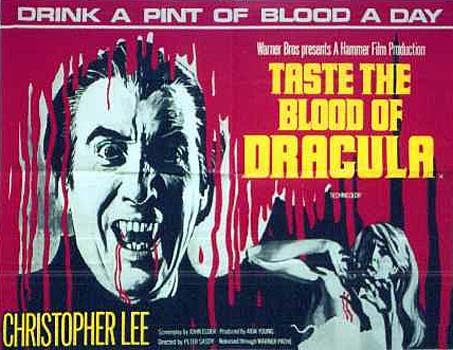
Director: Peter Sasdy
Release Date: 1969*
Contains Spoilers
Taste the Blood of Dracula follows directly on from 1968’s Dracula has Risen from the Grave. The opening is Hammer enough with a coach travelling through the countryside. Inside is Weller (the wonderful Roy Kinnear). He is an English trader who has just bought Transylvanian snowglobes (go figure). He shows them to the other travellers and a very strange man wants one, though not for money, and Weller gets thrown out of the moving coach. He awakens at night and stumbles through the woods, until he hears a scream. Scared, he falls and comes face to face with Dracula impaled on the cross, as in the last film. When he has dissolved to naught, Weller approaches and picks up a clasp that says Dracula. The blood has thickened, to the consistency of strawberry jam, and then turns to very red dust.
Cut to England and families leaving church. There are three main families and it is as well we check out who they are now. There is William Hargood (Geoffrey Keen), his wife Martha (Gwen Watford) and daughter Alice (Linda Hayden). 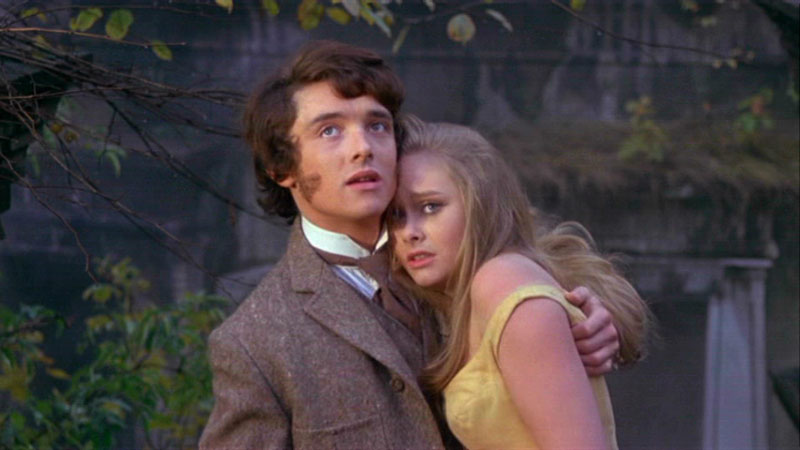 There is Samuel Paxton (Peter Sallis) and his son Paul (Anthony Higgins) and daughter Lucy (Isla Blair). Finally there is Jonathon Secker (John Carson) and his son Jeremy (Martin Jarvis). The children all know each other Lucy and Jeremy are romantically together as are Paul and Alice. The parents, on the surface, do not know each other. One problem with the film, though the fault is mine and not the film or actor, is that it is very difficult to watch with Peter Sallis there; after all he is now the voice of Wallace!
The Hargoods get home and William admonishes his daughter for flirting with Paul (incidentally William Hargood is a thoroughly dislikeable character). It is clear he loathes the lad and calls her actions provocative. She is sent to bed whilst he goes to do his monthly ‘charity work’ in the East End. The charity work consists of the three fathers going to a brothel. They have formed a debauched club, whilst hiding behind respectability, and are desperately seeking new experiences. They are shown to a room by the very camp Felix (Russell Hunter), and the entertainment sees them with a girl each on their lap whilst another woman dances with a serpent. Suddenly a brash young man appears (Ralph Bates) and summons the girl on Hargood’s lap away. It turns out that he is Courtley, son of Lord Courtley, disowned by his family for performing a black mass in the family chapel. Bates is marvellous in the film, if short lived, exuding a fantastic arrogance and over-acting to the perfect point.
The club catch up with him and take him to supper and he hits the nub of their situation straight away. He asks if they would be willing to sell their souls to the devil, and promises experiences they will never forget. All they have to do is buy something for the ritual. That something is the cloak, clasp, signet ring and powdered blood of Dracula, which Weller returned from Transylvania with. The men pay the princely sum of 1000 guineas. Weller’s words, “May the devil take good care of you,” ring in our ears.
They attend a deserted chapel in the woods, where Courtley has set up the tools of his black mass. He pours the powder into three goblets and a chalice and adds a drop of his own blood to each, which causes the powder to re-liquefy (accompanied by thunder and lightening). The three refuse to drink, so Courtley does. He drops to the floor, crying for help and grabs at Hargood, so the three beat him to death and race home. Cue the camera zooming in and out to the sound of a heart beat, dry ice and a lot of sand – Dracula is reborn from the body of Courtley. “They have destroyed my servant. They will be destroyed...” vows Dracula, in one of the few and yet consistently poor lines that poor old Christopher Lee is forced to utter. In fairness he still maintains a great presence, but the dialogue is awful and he is under used.
He starts with the Hargoods. He hypnotizes Alice and has her brain her father with a spade. “The First,” intones the Count, predating Count von Count’s first appearance on Sesame Street by three years. The police, the next day, are useless and refuse to even look for Alice who has vanished.
 After the funeral of her father, Alice calls to Lucy from a hiding spot in the bushes. Her friend’s reaction is astounding given that she has been missing and Paul has been frantic. Lucy agrees to meet her that night. Alice drags her to a carriage, which takes them on a ride to the chapel – Alice laughing maniacally – and straight to Dracula. Lucy is vampirised.
The next day Paxton has gone to Secker to relay his worry that Courtley is not dead and is exacting revenge. They go to the chapel and the body has indeed gone. Secker checks a recently disturbed sarcophagus and finds Lucy, he realises that there is vampirism afoot. He wants to stake her but Paxton shoots him in the arm and tells him to get out (an interesting side note is that Secker says that, should she not be staked, she will spend her nights drinking the blood of animals and humans – this is the first reference in the Dracula cycle to vampires drinking animal blood). Secker stumbles away and collapses outside the chapel. Night falls and Paxton suddenly decides to stake his daughter. He is about to strike when her eyes open. Dracula appears as does Alice and the two girls stake Paxton. “The second,” the Count points out in case we were not paying attention. It’s a pity he didn’t bother looking outside or he could have finished with the business there and then.
The next day Paxton wakes and struggles home. He writes a letter for Paul, explaining what is going on, and then passes out. Jeremy comes in and sees Lucy at the window. He goes to her and she bites him. Jeremy returns into the house as Secker awakens. He realises what has happened as Jeremy stabs him. “The Third,” the Count reminds us, before striding off into the night. Lucy follows after him, whining for approval. Now we know that Dracula hates whiny, clingy women, remember the fate of Zena in the previous film, and so it comes as no surprise when he kills her; what is surprising is that he bites Lucy and, apparently, drains her to death. She was already vamped, so the scene makes little sense – nowhere has it been suggested, so far, that Dracula biting another vampire will kill that vampire. He gets to the chapel and is about to bite Alice when the cock crows.
The next day the police give Secker’s letter to Paul; they have read it and concluded it was the ravings of a madman. But at least they have the perpetrator of the stabbing, Jeremy. Paul tries to convince them that Jeremy would not do such a thing but they won’t listen. He reads the letter and heads to the chapel, with a handy carpet bag of conveniently available items. On the way he fishes Lucy out of a lake, where she has been floating, making me wonder how she didn’t turn to dust in the daylight.
Now, so far the film has been weak, with a lot of style but little else. Now it hurtles into absolute ridiculousness. Paul gets to the chapel and bars the door with a cross. He then dismantles the black altar and creates a white altar, with a couple of candles, a white cloth and a cross. It is clear that this is a sanctifying process of some sort – though Paul is no priest. There is an unexplained sound that causes him to grasp his own ears and Dracula and Alice appear. He holds Dracula off with a cross,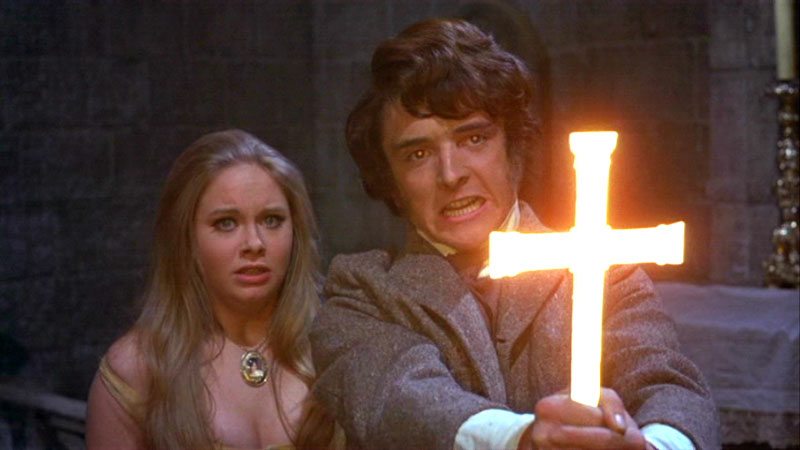 which glows (something that hasn’t happened in the Hammer Dracula films before), and tells Alice she is free to choose good or evil. She pulls the cross from him and he is thrown aside by the Count. Alice follows Dracula, whining to him, and he says he has no further use for her (told you he doesn’t like whiny women). Then he gets to the door and finds it barred. In, what amounts to, a fit of pique Alice throws a cross at him.
Somehow Dracula has ended up on a balcony, Paul tries to get Alice out of the chapel but she won’t leave without him (fickle thing, she chose evil 2 minutes ago). Meanwhile Dracula has started throwing stuff at them from the balcony, in a manner that simply does not become the Prince of Darkness – a candlestick in close quarters fine (and traditional) but lobbing debris just seemed unbecoming. He edges around to a window but the centerpiece is a cross. He smashes it and then hallucinates that the chapel is pristine again and a mass is being said. He falls to the altar and crumbles to dust.
It just doesn’t make any sense; in fact it is just a load of old rubbish really. Anyhoo, Alice and Paul go off into the woods together. Nothing is mentioned about Jeremy, but presumably he’s doomed to hang for murder.
The film really lets its predecessors down and it is a shame because there are some good ideas lurking in there. I loved the idea of someone ingesting the blood and the Count being resurrected through their body. I loved the fact that we were now, finally, in England. The Count was almost an avenger against hypocrisy, which was different, and the use of the children to slay the parents was great. However, we have limited amounts of Dracula and an ending that just kills the movie off, a half decent ending might have made some of the weaker aspects of the movie forgivable.
I can only give this 3.5 out of 10, and it is probably a generous score, one that has been bolstered by Lee’s presence (against the odds unfortunately), plus Ralph Bates performance – and I guess just a tiny bit for Linda Hayden who, I have to admit, I was a little taken with (when she was evil at least). For those who perhaps think the score a little harsh then think on about the ending. In truth two of the most important aspects of a Dracula cycle movie are the resurrection and the death – whilst the resurrection is both interesting and unique, the death is awful, and that has got to lower the score.
For the imbd page go here. *at the time of review imdb lists this film as 1970, but according to the DVD it is 1969.
Wednesday, May 31, 2006
Taste the Blood of Dracula - review

Tuesday, May 30, 2006
Dracula has Risen from the Grave - review
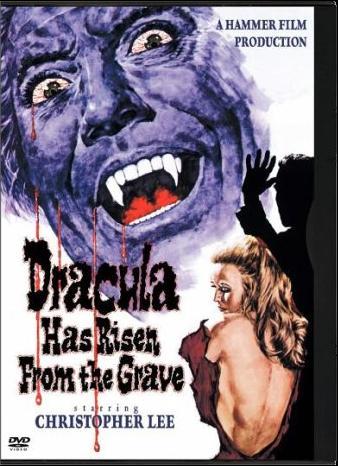
Director: Freddie Francis
Release Date: 1968
Contains Spoilers
Dracula has Risen from the Grave sees Christopher Lee reprising his role as the Count and is a direct sequel to Dracula, Prince of Darkness (1966), and yet something doesn’t quite feel right continuity wise. The film begins with a young boy, Johann (Norman Bacon), cycling to a church. He enters, brushes half-heartedly and then goes to ring the church bell. He touches the rope and gets blood on his hands. He climbs the stair to the bell tower.
The priest (Ewan Hooper, in a major role with no real character name) is then seen going to the church. He hears a scream and runs into the church. Johann flees and he climbs the bell tower himself. 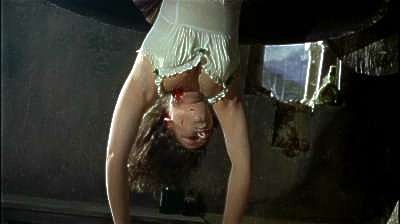 There is a trail of blood and then a blood-stained shoe falls from out of the bell, followed by the upside down torso of a bloodied wench, bite marks in her neck. The scene is a great opening and is pure Hammer Horror but, unfortunately, it is also confusing as we know that Dracula is, for the moment, dead. Who was it that attacked the girl?
This confusion is enhanced when we meet Monsignor Ernst Muller (Rupert Davis) riding his cart. He tells us that it has been a year since Dracula was killed. A throwaway line later gives us a clue to help us sort through this confusion, when Muller says something about knowing that the church had been defiled but it had been over for a year. Thus, our opening scene was a year before!
Ah, but that does not help, for if you remember, a year ago Dracula was busy chasing after Charles and Diana and battling Father Sandor, he had no real time to nip to the village and cause mayhem there. Worse still, we later see a coffin that clearly has the date 1885 to 1905. Now, Horror of Dracula (1958) took place in 1885, there was a ten year gap between that and the events in Dracula, Prince of Darkness (1966) and one year has elapsed in this film. Now I know my math isn’t so good, but to me that should mean that the year should be 1896, not 1905+.
It is also clear that Dracula’s castle has shifted location and design. In the previous film Dracula was drowned and trapped in ice by the castle wall, and not a good distance from the castle as he is in this film – though I guess the current could have taken him lower. Further, the climb to the castle was never so precarious previously; in fact there was a convenient road up to the castle. There is also another change to the killing rules but we’ll look at that later.
Continuity issues aside, the film is still a good outing for Dracula. Muller is informed by the locals that they do not go to church as the shadow of the castle falls across the church and the castle is still evil. Muller and the priest trek to the castle, with church’s cross in tow. The priest cannot make it all the way and so Muller finishes the journey alone. Getting out book, bell and candle he exorcises the castle and seals the door with the cross, assuming it will trap the evil of Dracula within forever (not realising he died outside).  Whilst he does this a tempest raises and the priest falls, cracking his head and conveniently bleeding into the cracked ice and straight into Dracula’s mouth, resurrecting him. Dracula returns to his castle, with the priest in tow, and demands to know who has sealed his castle. The film is now set for his revenge upon the Monsignor. There is a lovely scene of the priest tipping the occupant of a coffin, from a nearby graveyard, out of its resting place so that the box can be used by Dracula.
Muller lives with his sister-in-law, Anna (Marion Mathie), and his niece, Maria (Veronica Carlson). When he returns it is Maria’s birthday and they are to have a dinner with her young suitor, Paul (Barry Andrews). Paul works in a café, as a pastry chef, to pay for his studies. The meal seems to go quite well until Paul reveals that he is an atheist, cue much angst about blasphemy. The film is very much about faith, though it is delivered in a quite heavy handed way. Paul returns to the café and gets blitzed on schnapps. He is helped to bed by busty barmaid Zena (Barbara Ewing) who clearly has a thing for Paul – as well as half the young men of the town it seems - and is jealous of Maria.
As Zena goes home, alone, she is chased down by the priest in the hearse. She is then confronted by Dracula himself. The sequence would have been great except it is meant to be night and was obviously shot in daylight. The next day the priest asks for a room at the café and is helped to gain entry by the now enslaved Zena. The café has a convenient door into the sewers, where Dracula is now hiding. He discovers that Muller has a niece and she becomes the means for his revenge, Zena’s jealousy shines through again as she wants the Count for herself.
Maria is tricked by Zena into wandering down into the kitchens, has a hood thrown over her head and is dragged to Dracula. He uses those hypnotic red eyes and is about to strike when her hypnosis is broken by Paul calling Maria’s name from the café. Maria has to be bundled back into the kitchen area. Dracula vents his frustration on Zena, his anger burning her mind and then the vampire gorging himself on her. The priest has to dispose of her now fanged corpse in the ovens (as an aside, there is no way those ovens would get hot enough to burn an entire body, at any speed at least, so we have to assume that vampiric flesh burns better than plain old human).
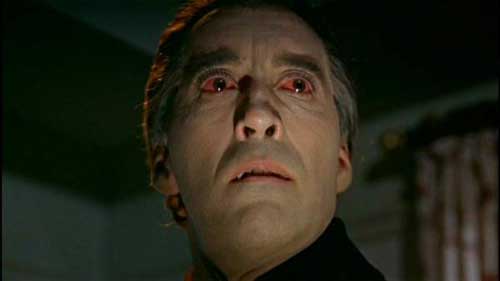 Dracula goes to Maria and, in a fantastic scene, takes her. The scene sees Dracula nuzzling her before the bite and Maria grasping a doll and pushing it from the bed. It is a scene invoking sexuality and the loss of innocence.
Muller realises what has happened and prevents an attack the next night. Unfortunately, in a rooftop chase, he is attacked by the priest and grievously injured. He tells Anna to fetch Paul, the lad may be an atheist, but it is the love between Maria and Paul that will save the day. Unfortunately Paul enlists the help of the priest and Muller dies before he can warn them that he works for the enemy. The priest helps Paul set the traditional protections (note: Sandor’s warnings that garlic is useless once the vampire gains entry, in the previous film, are either not known by the characters or forgotten by the producers) and then brains Paul, when the opportunity arises, with a candlestick, giving him chance to remove the protections again. He has a crisis of conscience and can’t remove the cross, giving Paul chance to wake. Paul forces the priest to take him to Dracula and stakes the Count. Here we have the rule change mentioned earlier. Staking alone doesn’t work, a prayer must be said and neither Paul, an atheist, nor the priest, who has lost his faith, can pray. Dracula pulls the stake out and, despite being showered with hot coals, gets away and kidnaps Maria. There is another marvellous nuzzling scene here, but it is Maria nuzzling the Count’s coffin. The priest, unusually, is not killed for betraying Dracula and has to drive the hearse. There is also a touching scene as Dracula helps Maria down from the hearse.
Paul chases after them and eventually, after an altercation at the village tavern, gets to the castle. Maria has removed the cross and thrown it down the mountainside, where it lands conveniently upright in the road. A bit of a struggle and Dracula is tossed down the Mountain and lands on the cross, screaming and bleeding from the eyes. The priest, who has now rediscovered his path, recites the Lord’s Prayer in Latin, killing the Count. All that is left is blood on the cross and his cape.
This film has problems, and some say it is a little stodgy in places. But despite it all I cannot help loving it. Lee is on fine form, though has little in the way of actual screen time. It is also worth noting that, after the previous film, he is speaking again. The dialogue isn’t the best around, but Lee delivers it with such gusto that it doesn’t matter.
I thought that the clash between faiths was an interesting idea, with Christianity, atheism and the cult of vampirism represented, though the term cult is not actually mentioned directly in this film. The film encompasses loss of faith and redemption, and the idea that love is stronger than belief. Other than the ropey outside shot when Zena is hunted, the film looks great and the music is right on the money.
The barmaid, Zena, is a great character though it would probably have helped to know more about the priest, a name at least would have been good. We can assume that the love he sees Paul display, as the young hero rushes headlong into mortal danger, helps him rediscover his path, but the film doesn’t say that, it merely hints at it a little. Many of the continuity problems I spotted are not as apparent when watching the film for entertainment, but were glaring as I studied it for review especially having just watched the previous movie. The bottom line is that the film is fun, and that is all there is to it. I’m tempted towards 7 out of 10, despite the faults.
The imdb page is here.
Monday, May 29, 2006
Dracula, Prince of Darkness - review

Director: Terence Fisher
Release Date: 1966
Contains Spoilers
If Brides of Dracula (1960) was the Van Helsing character’s sequel to Horror of Dracula (1958), then this most certainly is the Dracula character’s sequel. In fact the film shows the death sequence from the ’58 film at the beginning of this movie. This is followed by a scene in which we see a funeral line going into the woods with the body of a young woman, fully intent on staking her despite her mother’s protests. The desecration is stopped by a grizzly bear of a monk, Father Sandor (Andrew Keir), who travels with a gun and, we discover later, likes to shoot deer and keep his posterior warm.
In an inn are four English tourists, adventurous Charles Kent (Francis Matthews) who is drinking a yard of ale and buying rounds of drinks for the locals, his wife Diana (Suzan Farmer), his brother Alan (Charles Tingwell) and Alan’s shrewish wife Helen (Barbara Shelly). Just before they retire to bed Sandor enters. He admonishes the locals for hanging garlic, saying that 'it' was over 10 years ago – which puts the film in context time wise. On talking to the tourists he tries to get them to go to his monastery for a visit, but warns them about their intended destination, Carlsbad, and more firmly warns them away from the castle. A castle that does not appear on the maps.
The next day the two couples are abandoned 2km from Carlsbad as their coach driver will go no further; he refuses to acknowledge the castle nearby but says he will return 2 hours after dawn the next day. Helen, who so far has done nothing but complain, begins to feel uneasy. They agree to stay in a nearby woodcutter’s hut when a coach appears, with no driver. Charles stops it and suggests they take it to Carlsbad. When they set off, however, the horses have other ideas and head for the castle, not responding to Charles’ commands and stopping right outside the castle door. They alight and the coach charges off. Helen is still predicting doom and gloom but they enter and find the dinner table set for four. Further investigation by the men reveals that their belongings (thought lost on the runaway coach) are in rooms - the investigation ends when Helen screams. They race downstairs but discover she has been frightened by the appearance of Klove (Philip Latham), the butler. He explains that his master, who is dead, instructed that the castle always be ready to accept visitors. Perhaps things would have been different for the travellers if they had taken Helen’s sense of doom seriously, “There’ll be no morning for us.” Or maybe they should have been worried when Charles toasts their dead host Dracula with “May he rest in peace” and all the candles begin to flicker. Of course, if they were that sensible they’d never had ended up at the castle anyway!
Helen awakens in the night believing someone called her name and footsteps, plus dragging, can be heard. Alan goes to investigate and, eventually, is stabbed by Klove for his trouble. In a spectacular resurrection scene, Alan is suspended above Dracula’s coffin, into which Klove pours Dracula’s ashes and then slits Alan’s throat. Helen is lured out to meet her husband and instead sees Alan suspended and meets Dracula. A word here about Lee’s performance. Seemingly he found his scripted dialogue so bad that he arranged for himself to play the role mute. There are gestures and hisses, but no words. That said, the man’s presence fills the screen whenever he is there.
In the morning the castle seems deserted and Alan and Helen have 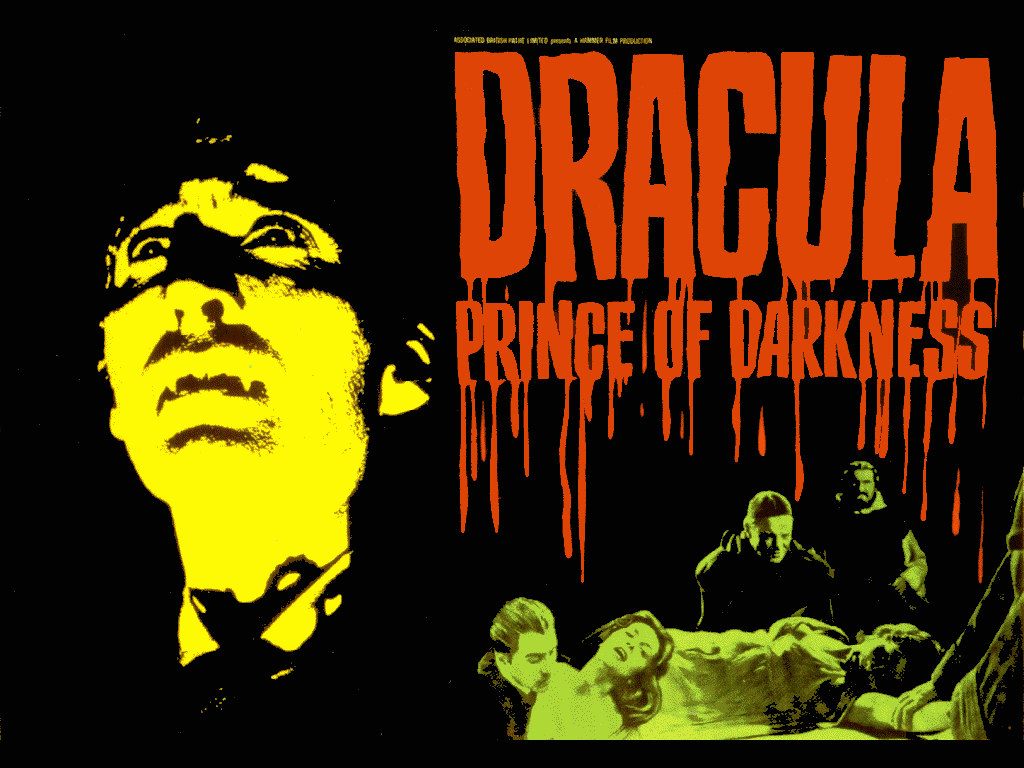 apparently gone. Eventually Charles takes Diana back down to the road and then returns to investigate further. Unfortunately Diana is picked up by Klove and returned to the castle. The previously shrewish Helen has now developed a taste for diaphanous nightgowns plus a voluptuous cleavage and a set of fangs. She tries to bite Diana but is stopped by Dracula who clearly wants her for himself. Charles enters the fray and a fight ensues which is ended when Diana’s crucifix burns Helen. Charles is quick on the uptake and uses the two parts of a broken sword to make a makeshift cross and they manage to escape in Klove’s buggy. Unfortunately it crashes, Charles struggles through the woods with Diana until found by Sandor.
Hammer have again changed the rules, ever so slightly, and it is Sandor who explains this. It is added into the mythology that running water drowns vampires. They also add that they must be invited over a threshold but if they are then such things as garlic have no deterrent effects. Having been cheated of Diana, Sandor believes that Dracula will think she belongs to him and hunt her down. Indeed Dracula has come to the monastery. There are actually a few elements from here that are straight out of Stoker's book. There is a man, Ludwig (Thorley Walters), living in the monastery who was found near castle Dracula 12 years before. He eats bugs and is obviously a Renfield character and facilitates Dracula’s entry into the monastery.
When in there, as the monks and Charles take care of a snarling Helen by means of a stake, Dracula tries to force Diana to drink from his chest, though he is disturbed and it does not happen. Again this is book reminiscent.
The concept of vampires being killed by drowning owes a little to the book (and certainly other vampire myths). In the book Dracula cannot cross running water of his own volition and in books such as Carmilla running water is used to dispose of vampires, or their remains at least. Drowning does seem a stretch as, being dead, they don’t need to breath… but we’ll let that go.
Finally, when Klove races back to Castle Dracula, chased by Sandor and Charles on horseback, I was reminded of the chase through the Carpathians from the book. Klove, incidentally, is shot.
One question raised by their escape was how Dracula got into his coffin. Sandor and Charles had placed crucifixes in his and Helen’s. Obviously Klove removed the offensive items, but this is not actually shown or alluded to.
In a scene reminiscent of the earlier Brides of Dracula (1960) , Sandor shows that the contagion of vampirism can, if treated early enough, be burnt out. When Helen manages to bite Diana’s wrist, Sandor burns the wound with a hot lamp, stating that he did it just in time.
The demise of Dracula is based around the new rule Hammer introduced. Dracula’s coffin is spilled from the wagon onto ice and Charles crosses it to stake him. I have read criticism of the apparent rapid season shift from summer in the woods to winter around the castle, but I didn’t see it as a problem. All through the film it is icy around the castle, though not in the woods, and I assumed, simply, that the castle was at a higher altitude. The sun sets and Dracula bursts from his coffin, attacking Charles. Diana takes Sandor’s gun, shoots and misses, the shot cracking the ice. Sandor, taking his gun back, fires repeatedly causing the ice to break around the Count and then tip, so that Dracula falls into the water and drowns. A small .mov clip of Dracula’s death can be found here.
The film is a great watch and this is, in my opinion, down to three performances. Lee, whose presence, as I mentioned earlier, is all encompassing. That said his on screen time is low, in fact he isn’t even resurrected until the film has gone more than half way through its running time. Keir is fantastic as Sandor; he is kindly, yet gruff and really comes across as the sort of guy you want by your side in a fight.  To me, though, Barbara Shelley’s portrayal of Helen is a key factor in the success of this movie. She is thoroughly detestable at first and yet the palpable tension, which the viewer can feel when the couples spend the night in the castle, is created largely through her acting (even if her screams were dubbed by Susan Farmer). She seems truly terrified and Fisher uses this by cutting to her reactions as Alan searches the castle. Once she is turned she is seductive and when caught and destined for staking her hisses are animalistic and disturbing. This is a great Hammer Dracula and I’ll give it 7 out of 10.
For a further review check Exclamation Mark's Vintage SciFi/Horror Review.
The imdb page is here.
Bonus Mini Review
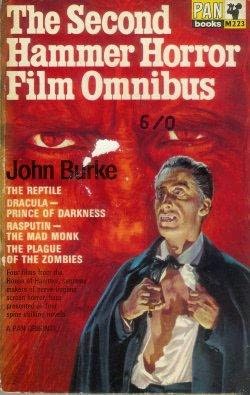 The Second Hammer Film Omnibus
Author: John Burke
This is a book containing four Hammer novelisations, The Reptile, Dracula: Prince of Darkness, Rasputin the Mad Monk and The Plague of Zombies. The Dracula piece is fairly short at some 85 pages long.
In the main it follows the film, though it deviates slightly in the order of events and a couple of the names change. It is clear that the travellers in the film are heading to Carlsbad, we even see a signpost to that effect, in the book it is suddenly Josefsbad. In the credits of the movie Keir’s character is definitely named Sandor but in the book he becomes Shandor. It must be stated that, when reviewing the film, I mentioned that Charles is quick on the uptake when he makes a cross from a broken sword, not so in the written version where Diana has to spell it out for him. ‘“A Cross!” Diana cried. “Charles – Make a cross!”’ In this respect the book probably captures the essence of the character much better than the actual film did, given that Charles did come across as a bit thick!
These are minor differences however; the question is more was the book worthwhile? I’ve owned this for years; in fact until recently I forgot I had it. (As an aside, my edition has Rasputin as the cover rather than Dracula.) As a kid I can remember being thoroughly taken with it. Re-reading it as an adult, with an interest in the vampire genre specifically and Hammer films generally I found it to be an interesting curio. The prose itself is functional and I’ll give the book 5 out of 10.
Sunday, May 28, 2006
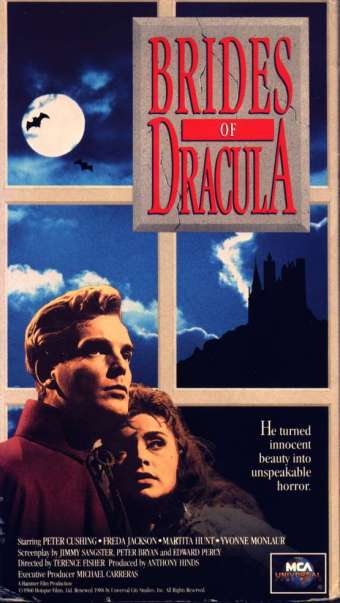
The Brides of Dracula - review
Director: Terence Fisher
Release Date: 1960
Contains spoilers
To some it might seem strange that this movie takes its place in the Dracula cycle of Hammer movies as, despite the title, Dracula is not in the film. This movie, however, is in direct sequel to Horror of Dracula (1958) and follows Van Helsing (Peter Cushing) as he continues his quest against the cult of vampirism. During the film a further titbit is revealed about this so called cult, letting us know that it is the remnants of pagan religion. It’s not a well thought out theory but it helps draw a dark shadowy world of the occult and supernatural around us by throwing common threads between stories that, by tying it into a cult, seem almost conspiratorial.
As I said, however, the obvious common thread – Dracula – is missing from this film, but his presence is certainly there, lurking like a dark heritage. He is mentioned in the opening voice over, “Count Dracula, monarch of all vampires, is dead. But his disciples live on, to spread the cult and corrupt the world...” Later his name is mentioned by Van Helsing in relation to bite marks upon a victim.
The film opens with a girl, Marianne (Yvonne Monlaur), travelling in a coach. The coach is stopped by a log across the road and, as it is moved by the driver, a stranger manages to secretly hitch on the back of the coach. Once the coach arrives at a village the man drops off before the girl alights, as she enters the inn he pays the coach-driver monies. The coach leaves, stranding the girl, and the innkeeper and his wife seem desperate for her to continue her journey, to the point of getting a cart to transport her.
However the Baroness Meinster (Martita Hunt) appears at the inn. It seems that Marianne is due to arrive at a girl’s academy the next day as a student teacher. The Baroness invites her to stay at her castle and promises to help her arrive at her new position, on time, the next day. A word here about the look of the film, it feels typically hammer, with the rich and vivid décor one would expect from the studio. Castle Meinster looks marvellous and is actually, in my opinion, a more fitting setting that the Count’s castle in the previous film.
Marianne spots a strange young man (David Peel) on the balcony of a room below hers. The Baroness tells her it is her son, and intimates that he is insane. In the night Marianne thinks he is going to jump from his balcony and goes to him. He is chained and weaves a tale about usurped inheritance, stating that he is the true Baron Meinster. Marianne helps him escape his bonds. Of course, he is a vampire and, upon escaping, kills his mother and escapes into the night. The maid, Greta (Freda Jackson), seems to have lost her mind completely and Marianne flees from the castle. In the morning she is found collapsed by Van Helsing - who was travelling to the region at invitation of the local priest, Father Stepnik (Fred Johnson). He rescues Marianne and takes her to the school.
It becomes apparent that Hammer decided to completely change their rules on vampirism here. Whilst the previous film stated that they could not transform into animal shape, here they can turn into bats (particularly rubbish looking bats at that). Bizarrely this change of rule is mentioned by Van Helsing, who told us in the previous film that vampires shape shifting was a common misconception, yet does not reference that he once believed it to be a fallacy. In his review, Exclamation Mark raises the more than valid point that, given this shape shifting ability, it seems unclear as to why the Baron did not escape his shackles earlier by turning into a bat. I can only assume that this was due to the fact they were silver, given the often used rule in genre movies that vampires are violently allergic to the metal – though this is just me being overly generous and I suspect it was actually a logical error on the part of the script writers.
The film has other problems. Marianne, later, becomes quickly engaged to Meinster, yet she seems to have forgotten that he ran off into the night, leaving her abandoned in his castle with the corpse of his mother. She also seems to have forgotten that Greta had shown her a coffin in his room with his imprint still in it, and indicated to her that he would return to it.  Okay so Greta was obviously mad, but you’d think Marianne might have had pause to thought. Peel himself is very good as Meinster but unfortunately carries none of the innate presence that Lee injected into the previous movie. Perhaps that is as well to a degree, after all he is a disciple of Dracula not the man himself, but somehow the lack of Lee caused the film to fall a little short. The criticism Peel received because he was a blonde vampire is, however, fairly puerile.
I guess I should also mention the local Doctor, Dr. Tobler (Miles Malleson), whilst I am citing problems. A comic relief character, the comedy falls more than a little flat and his presence is virtually unnecessary.
Yet the film has marvellous moments. The entire sub-story of the Baroness keeping her son hidden and luring young girls to feed his hunger is beautifully macabre and, given her reaction, once turned, is clearly a source of much anguish for the character, which offers a nice depth to the plot. Her actions seemed much underpinned by a combination of maternal instinct and guilt as she allowed him to fall into the crowd through which he became infected. The fact that Meinster turns her, rather than simply killing her, is disturbingly Oedipal in nature.
There is also a scene with Greta, now utterly mad as a hatter, talking a newly turned bride out of the earth. It is an effectively disturbing scene.
The most powerful scene, however, is when Van Helsing has been bitten by Meinster. On discovering the wounds Van Helsing heats a branding iron and brands his own neck, then pours holy water over the burnt flesh, causing both fang marks and brand to heal. We could question why the watching brides did not take advantage of the situation but, in truth, the performance by Cushing is so good through this sequence we can do naught but marvel at it. In fact, it has to be stated, that Cushing owns the movie, all other characters secondary to him.
The defeat of Meinster is fairly unique also. In a scene that outdoes the previous film and its crossed candlesticks, Van Helsing shifts the sails of a mill so that they cast the shadow of a cross across the fleeing vampire, holding and killing him. This was not meant to be the ending originally. In the first draft Dracula was to be summoned to dispatch him – an ending that would have been unsatisfying and illogical. The next re-write saw Meinster set to be destroyed by bats summoned by Van Helsing via an ancient manuscript. This was changed, some say, because it was feared that it would be deemed excessively violent by the censors and it was certainly too expensive to shoot at the time, but the ending was resurrected a couple of years later in Kiss of the Vampire (1962) a ‘miscellaneous vampire’ Hammer movie.
It is here, unfortunately, that we say farewell, for a while, to Cushing as Van Helsing – who will not pit wits against the Count and his undead disciples again until the film Dracula AD 1972 (1972).
Brides of Dracula is a rich, lush film that typifies (in many respects) the glory that is the Hammer studios. It does have flaws, as mentioned, but one wonders how much was due to the copious amount of rewriting the script went through; it ends up with four script writers credited. The place, however, where this losses marks, in my opinion, is in the lack of Lee – given that this was a Dracula series movie his presence is sorely missed and had it featured Lee or an actor who could match his authority, in the role of the villain, this might have been nearly perfect. As it is this is a strong 7.5 out of 10.
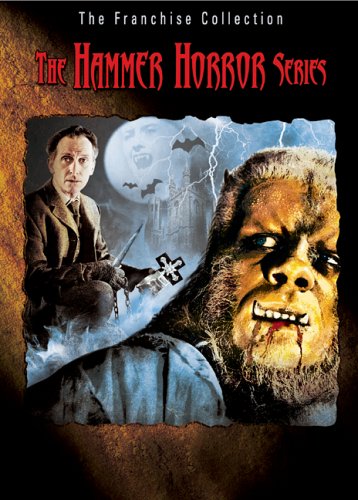 At the time of review the film is unavailable in DVD format, in its own right, and is only part of “the Hammer Horror series” DVD set. This set, however, is a fantastic buy for Hammer fans, containing 8 films, including both this and “Kiss of the Vampire” (1962) plus 6 other none vampire Hammer movies.
The imdb page for Brides of Dracula is here.
Saturday, May 27, 2006
Horror of Dracula - review

Director: Terence Fisher
Release Date: 1958
Contains spoilers
The First Hammer Dracula movie had little in common with Stoker’s book, though this had much to do with the fact that Universal owned the rights to Dracula. Yet, as wildly distant from the source material that this film might have strayed, it is a great film in its own right and introduced us to the actor who is now synonymous with the Count, Christopher Lee. Not only that but it also introduced us to Peter Cushing in the role of Van Helsing. These two actors were great friends off screen and, when one thinks of Dracula, the names of Cushing and Lee go with Dracula as well as ham and pepperoni on a pizza (for those who haven’t tried a topping combination of ham and pepperoni, well suffice it to say that you are, in my opinion, missing out on the greatest topping combination in pizza history).
The two actors give first rate performances. Lee is stately and yet gives the Count a palpable air of menace. Cushing lends Van Helsing a properness and yet an intelegent and determined doggedness.
The film is set in 1885, some 17 years before Stoker’s novel was written, and begins at Castle Dracula, we see Dracula’s coffin and blood drip across the name plaque. We hear an excerpt from Jonathon Harker’s diary. Harker (John Van Eyssen) is going to the castle to take a position. 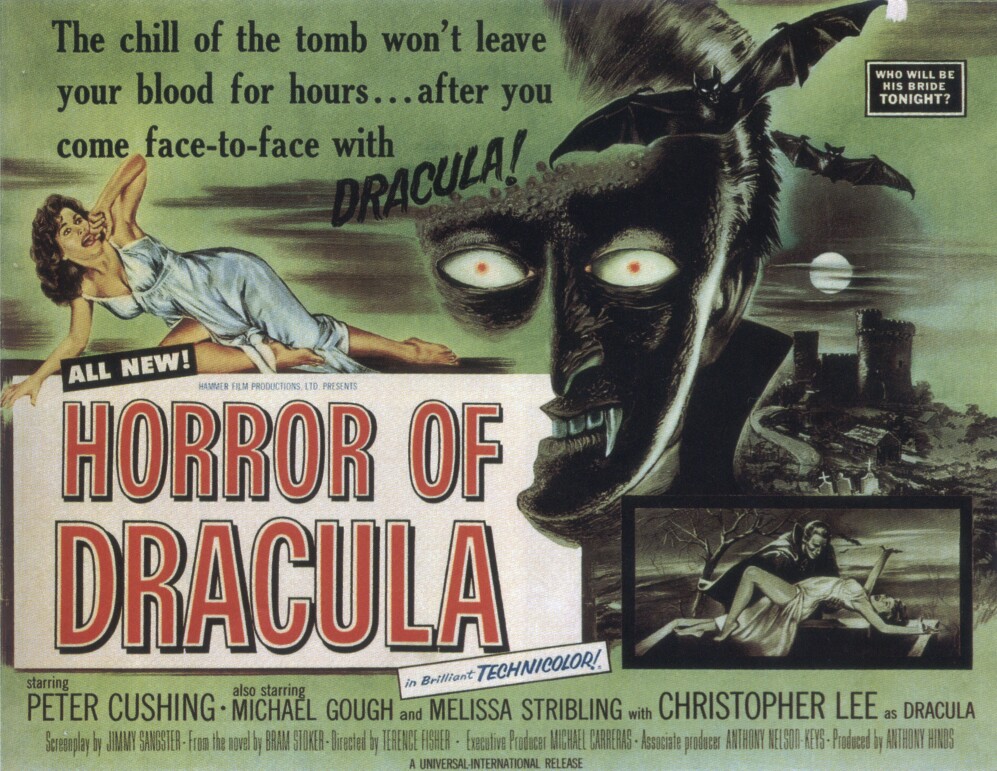 When he arrives there is no one there, but a letter invites him to eat well. He knocks a plate to the floor and a girl (Valerie Gaunt) comes up to him, imploring him for help, saying Dracula keeps her prisoner. She flees as Dracula appears. Harker is shown to his room, by Dracula, who spots his photograph of Lucy (Carol Marsh), Harker’s fiancée.
As Harker’s diary continues we realise that he is not the innocent of the original novel. This Harker may have been invited to work for the Count as a librarian but had gone with the sole intention of destroying Dracula. In the night the sound of his door handle turning wakes him and he explores the castle. The girl approaches him again and he says he will help her. He holds her and she vamps, but is disturbed by Dracula. A fight ensues and Harker fights with Dracula before being knocked out. When he awakens, on his own bed, the daylight hours have almost run out and he has been bitten. He hides his diary outside the castle and then finds Dracula’s crypt. In a moment of madness he stakes the girl before Dracula, she ages rapidly but her cry alerts the Count.
Later, Van Helsing is searching for Harker, they are colleagues. In an inn, where most of the locals deny knowledge of Harker, a friendly serving-girl passes him the diary. He heads for the castle, but a hearse flies from the castle as he arrives. In the crypt he finds Harker, now a vampire, in Dracula’s coffin.
Dracula has headed back to Harker’s home town to exact his revenge by turning Lucy. She lives with her brother, Arthur Holmewood (Michael Gough), and sister-in-law, Mina (Melissa Stribling). Van Helsing fails to protect Lucy and then, after she is despatched, Dracula turns his attention to Mina. The race is on to protect her.
The film is a masterpiece, there is no denying it, despite flaws such as the blood that is all too bright, and massive deviation from the book. We discover that vampires are affected by holy symbols, sunlight and garlic as Van Helsing listens to his own notes in phonograph format, a very effective way of ensuring that we know exactly which rules of vampirism Hammer have chosen to work within. The film states that transformation into a bat or wolf is a commonly held misconception.
In the film Van Helsing mentions the cult of vampirism, a theme that Hammer carries through many of its films. The film also likens vampirism to drug abuse, "The victims constantly desist being dominated by vampirism, but are unable to relinquish the practice similar to addiction to drugs." Van Helsing tells us. This then explains the reaction of the victims, and the fact that they seem to want nothing more than allow the Count to take them. Indeed, once Mina’s seduction has begun, she gives a look which is priceless as though the treatment she has received from the Count is the most marvelous experience she has ever had. The film carries two scenes of vampiric flesh being burnt by holy objects, the scene when Van Helsing burns Lucy’s forehead with the cross being a powerful piece of cinema.
Of course, Dracula is eventually defeated; this should come as no shock. Dracula meets his end in this movie in a fight with Van Helsing in castle Dracula. Van Helsing tears the heavy curtains down, flooding the room with sunlight and then takes up two candlesticks and crosses them, using the makeshift cross to push Dracula into the sunlight where he crumbles to dust.
The film richly deserves 9 out of 10, and is a must for vampire movie fans specifically and horror fans generally.
You can see the film in a short comic format by clicking here.
For another review of the film go to Exclamation Mark's B Movie Review.
The imdb page is here.
Review news
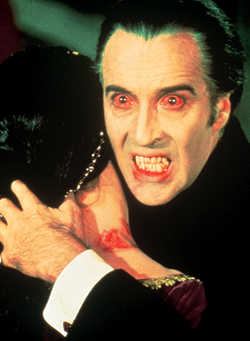
I currently intend to concentrate on reviewing the various Hammer vampire movies, which I have split into three categories of films:
Dracula Movies
Horror of Dracula (1958)
Brides of Dracula (1960)
Dracula, Prince of Darkness (1965)
Dracula has risen from the Grave (1968)
Taste the Blood of Dracula (1969)
Scars of Dracula (1970)
Dracula AD 1972 (1972)
Satanic Rites of Dracula (1974)
Legend of the seven golden vampires (1974)
Carmilla Movies
The Vampire lovers (1970)
Lust for a Vampire (1970)
Twins of Evil (1971)
Miscellaneous Vampires
Kiss of the Vampire (1962)
Countess Dracula (1970)
Vampire Circus (1971)
Captain Kronos Vampire Hunter (1972)
I will go from category to category; starting with the Dracula films and follow each category through in date order. How long this will take very much depends on how much time I get to re-watch each movie and then write the review. Reviews of other movies will continue, interspersed, if I pick up any new movies during the “Hammer Project” or catch anything on TV. The desire to do this has come from two directions, firstly – in the main – the Hammer films are great movies and secondly because within the movies listed above are some of the most important vampire movies produced.
Friday, May 26, 2006
Drakula Istanbul'da
A little known movie, thought lost for many years, Drakula Istanbul'da AKA Drakula in Istanbul is a Turkish movie from 1953.
This film is now available to watch in streaming format from Lost Silver.
Beware, however, the quality is low given the low file size and the language is Turkish, and there are no subtitles. But as a vampire movie, historical curio, it might well be worth your time.
Many thanks to Leila who posted about this long thought lost gem on her forum.
Wednesday, May 24, 2006
Bloodrayne (Unrated Directors Cut) - review
 Director: Uwe Boll
Release Date: 2005
Contains spoilers
In the UK we have not, officially, had a release of Bloodrayne. Being a glutton for vampiric punishment, and a fan of the games, I therefore immediately pre-ordered the region 1 release of the movie. Now let’s begin with myth dispelling, namely around the games. As I said, I am a fan, but that does not mean they are fantastic games – they are functional. I remember PC Zone reviewing the first game and stating it was less a game and more an Italian sexploitation flick; that was enough for me to buy the game and they were right on the money with their analysis. The game storylines are thinner than a bride’s nightdress, in the first instance, so any form of story in the movie is a plus.
It must also be stated that the DVD ships with the full Bloodrayne 2 game. A great marketing ploy, and one that was lost on myself as I bought the game on release and finished it months ago. Thus I bought the DVD despite, rather than because of, the game. Ne’er mind, if this actually opens the gates to full PC games being released with DVDs then that can be no bad thing, just as a nice little bonus.
So, what about the movie? First thing to note is it is an Uwe Boll movie, now I’d not had the dubious pleasure of his first two efforts, but looking on the internet he is generally hated. I went into the movie trying to dispel that from my mind, less I became unwarrantedly prejudiced.
Unlike the games, which are set in the Second World War and modern day, the film is set in the middle ages. As the movie begins we meet Vladimir (Michael Madsen), Sebastian (Mathew Davis) and Katarin (Michelle Rodriguez), agents of the Brimstone Society, a group dedicated to the eradication of vampires. They are in an inn and we see the first staking. The death of the vampire is interesting, a rapid decomposition, kind of like a Buffy dusting, but down to desiccation of the corpse rather than full turning to dust. They are told about a freak in a circus. Cutting to the circus we see Rayne (Kristanna Loken) pulled in front of the crowd. She is forced to dip her arm into water, burning it, and is then cut. She is then forced to drink sheep’s blood in order to heal for the crowds’ amusement. Vladimir believes she is the one prophesised. Unfortunately evil vampire Kagan (Ben Kingsley) is also searching for her.
Rayne escapes the circus,  entering “Blood Rage” (a power up from the game). The escape is pretty darn gory and this sets the scene for the film as there is no shying away from flesh ripping, blood splattering gore.
After decapitating and burning the victims at the circus, and killing the girl who Rayne bit, but did not kill, the Brimstone agents continue their search. In the meantime Viscount Elrich (Billy Zane) sends a message to his daughter, Katarin, suggesting that Brimstone is collapsing and she should send him the talisman. This is a sub-plot that is woefully under used, though it sets up for one of the film’s major movements and it is a shame as Zane is on fine form.
It seems there are three talismans, the heart, eye and rib of an ancient vampire. Each talisman can bestow a power upon a vampire and Kagan wants them. Rayne meanwhile has decided she wants to kill vampires and meets a handy fortune teller. We discover that she is a dhampir, half human half vampire, and daughter of Kagan, who raped and killed her mother. The fortune teller directs her to a monastery where the eye is kept, as she will be able to use possession of a talisman to get to Kagan. Once entry to the monastery is gained there is a pure video game moment with big boss type monster and puzzle trap section. Rayne gets the eye, which bestows immunity to the ill effects of water and then Kagan’s thralls attack.
After a bloody battle scene Rayne is taken prisoner by Domastir (Will Sanderson). He takes her, for the daylight hours to the lair of Leonid (Meatloaf). Now here we see one of those special moments of realism, the vampire whores with Leonid are actually prostitutes – they were cheaper to hire than actresses allegedly. The Brimstone boys go in to rescue her and on the film goes. There is a story here, of power and betrayal, but it isn’t well put together. Part of the problem is in the acting which, in the main, is lack lustre. Many have complained that both Madsen and Kingsley seem to phone their performances in, and that is the impression I got. Loken just didn’t feel right as Rayne. In the game she is ultra sassy, yet here she felt lost.
I mentioned the gore. The high gore is underlined when, at the end of the movie there is a montage of some of the goriest parts of the movie (and some that weren’t actually in the earlier film). The scene, I suppose, shows Rayne remembering the bloody path that led her to where she is but, quite frankly, seemed gratuitous and damaging. I say damaging because some of the scenes were slowed down, rather than the fast cuts Boll used during the movie, and it allowed the viewer to see just how poor some of the effects actually were.
This film has been attacked vehemently, as has Boll. Thus he must be doing something right, just look at the number of pages of comments on imdb, 19 pages – you can’t buy that sort of publicity (and there is no such thing as bad publicity). Boll is also likened to Ed Wood, a little unfair as Wood had an innocence that I really did not see here. However, I think the film has been unfairly slated. Don’t get me wrong, its not a good film by any stretch of the imagination, but I have seen much worse.
I’m giving this 3 out of 10.
There is an Official Site that has both film and DVD pages.
New Film: Lesbian Vampire Killers

Monday, May 22, 2006
(Bram Stoker’s) Dracula {1992} - review

Director: Francis Ford Coppola
Release Date: 1992
Contains spoilers
Coppola’s vision of Dracula is very different to the '31 version, perhaps sharing a little more with the '79 version given that it focuses heavily on a romance. Yet many say that it is the closest to the Stoker story – not true. Whilst Coppola manages to draw a richly gothic romance he veers heavily from the original story.
The film starts in Transylvania, with Vlad Dracula (Gary Oldman) fighting the Turks. His wife Elisabeta (Winona Rider) is left in the castle as he goes to battle and the Turks, once defeated, fire an arrow (with a forged message) through a castle window causing her to commit suicide as she believes him dead. Now this is a mismatch of historical accuracy and inaccuracy, merged with the legends surrounding Vlad Tepes. He was a Walachian Prince, not Transylvanian, though the movement of location is consistent with Stoker. Reputedly Vlad’s first wife died in a way depicted in the film, though it was fear of the encroaching Turkish army that demanded Vlad’s surrender that was the catalyst. In the film, told by the church that she is damned as a suicide, Dracula curses himself; in life he married again. However, none of this is in the book, Dracula’s descent into undeath is hinted to be through the devil via his attendance at the Scholomance – the Devil’s academy.
All this sets the film up for the reason why this film is not an accurate remake of the book. Despite the fact that it has all the main characters from the book (unusually), the actual roles of the characters are changed. Mina (again, Winona Ryder) is the reincarnation of Elisabeta and the film tracks their love through time and darkness. She goes to Dracula willingly, betrays Harker (Keanu Reeves) and turns on Van Helsing (Anthony Hopkins) , calling him a murderer for killing Lucy, whereas she is grateful to Van Helsing - in the novel - for saving her friend's soul. She even helps the Count at the climax of the film, summoning storms to confound his pursuers. This is not Stoker’s Mina, who was a brave and intelligent woman who was picked by Dracula as an object of revenge against the mortals arrayed against him. The devolving of the story reaches a peak when it is Mina who kills the Count, not Harker, and it is her love setting them all free from darkness.
Coppola’s treatment of Lucy (Sadie Frost) fairs little better. She is depicted as a wanton hussy, not the sweet girl corrupted by the Count’s evil and demonstrates displays that would be simply unseemly within Victorian high society. Indeed Van Helsing actually states that she is a willing recruit to Dracula’s army of the undead, and their attempt to save her soul is despite her not for her. 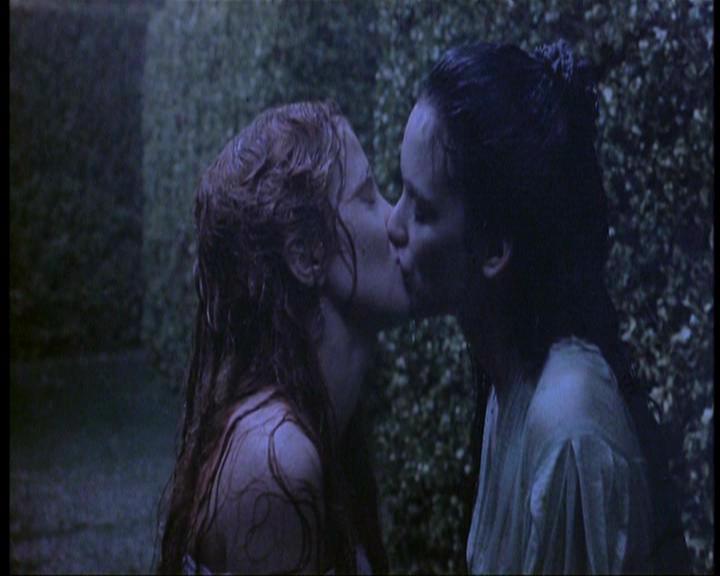
There is even a hint, not from the book, that there might be a more intimate relationship between Mina and Lucy beyond being best friends, going so far as to having the character’s kiss, though it is intimated that Dracula perhaps pushed this urge.
It must also be pointed out that Whitby is utterly lost from the film. Elements from the book are added and yet changed. Renfield (Tom Waits) is there, but he is a solicitor who lost his mind when attending Dracula before Harker – in the book he is a madman whose madness allows him to tune to Dracula’s wavelength and becomes almost a barometer of the vampire's comings and goings. It is one of the few films that shows the escape of the wolf from London Zoo, though in the book the wolf is used to attack Lucy and her mother whereas in this film it is used as a seduction technique as Dracula woos Mina. That said, Lucy attacked by a wolf is revisited as this is the form that Dracula takes when he makes his final attack upon her.
So does the film succeed anywhere? Frankly, yes. As I said at the head it is a richly photographed gothic romance and in this it works very well. Hopkins’ performance as Van Helsing is masterful, painting a much more manic Professor than in previous versions and yet obviously thoroughly enjoying himself. Oldman, as ever, throws himself into his character with consummate professionalism. 
Whilst the scene with the brides and their interaction with Harker strays from the book it is, perhaps, one of the most effective visions of the brides. Though the fact that Monica Bellucci is involved may have swung my opinion on that one.
The scene with Lucy in her crypt is far from accurate to the book.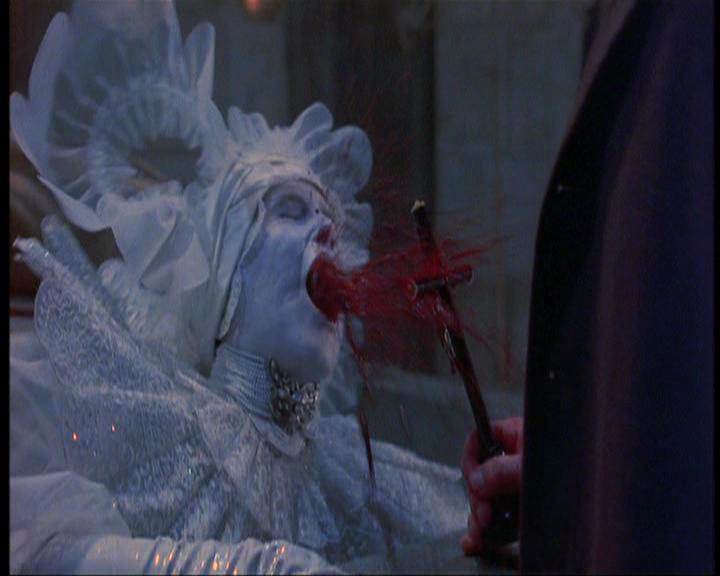 The heroes attendance is so easily gained that the hows and wherefores are missed totally and the blooferlady section is missed altogether. That said it is a gory and successful reworking, with Lucy going Linda Blair on Van Helsing, spewing blood at Van Helsing as he forces her into her coffin.
Special mention has to go to the fact that Coppola allowed Dracula access to the daylight hours. A part of the story too often missed in Dracula retellings.
One of my favourite parts of the film, however, was the way in which Coppola used Dracula’s shadow. 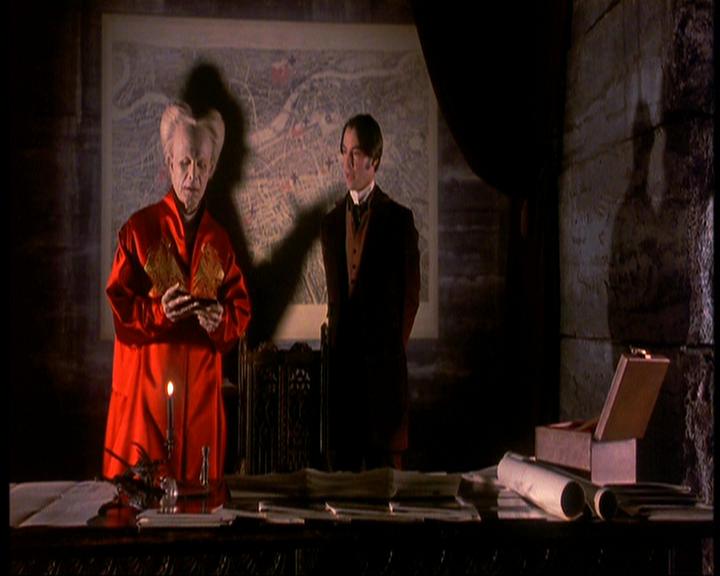 This was, in my opinion, a homage to Nosferatu. Coppola has the shadow moving independently of the Count which gives a kind of surrealistic feel to Harker’s imprisonment within the castle and allowed the director to show the direction of the Count’s true thoughts whilst he hid them behind his false civility. This device was so successful that it was wildly lampooned in Dracula - Dead and Loving it (1995).
If I dwelled, at the head of the reviews, on the films inaccuracies it was because of the insistence by many that this was a faithful version of the book. It has many elements of the book that are too often missing, but misses swathes itself and rewrites the substance by making the Count a tragic romantic figure and introducing a passionate love between Mina and the Count. This, however, does not make it a bad film and it still deserves 8 out of 10.
The imdb page is here.
Bonus Mini Review
 Dracula (novelisation)
Author: James V. Hart & Fred Saberhagen
The 1992 movie was, as we know, based on the Bram Stoker novel. Indeed it actually added Stoker’s name to the title. Why then, oh why, was the need found to novelise the movie? Yes, you heard right, there is a novel of the film of the novel.
I found this book in a charity shop and whilst it is a functional read it is entirely a pointless addition to the annals of vampire fiction. There is not a lot to be said in reviewing this, the book follows the film precisely – inaccuracies from the movie to the original masterpiece captured forever in words. It is only really worthwhile if you are a completist collector, 2 out of 10.
Sunday, May 21, 2006
Supernatural goes vampiric
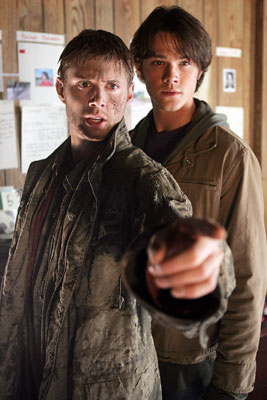
I've been watching this on ITV 2 (one of the UK channels) and tonight's episode was about a Shtriga, an Albanian witch that drains the spirtus vitaé from victims, in the show children. Though in the show it was energy, the shtriga was certainly vampiric - virtually indestructable and immortal and is related to the romanian strigoi vi.
For a little on the folklore of the Shtriga check the Wikipedia entry.
I checked an episode guide for the show to find the correct spelling of shtriga and discovered that the episode of the show that airs in two weeks in the UK will be a full vampire episode. Unfortunately I'm going to be away then (I'll be posting to let folks know when the blog will be hitting a one week hiatus closer to the time) and so I am now frantically ensuring that plenty of people tape the episode so I make sure I see it! Of course, one tape will have to work (if not then the fates hate me!) and once I get to see the actual vampire episode I will be reviewing it for the blog.
Saturday, May 20, 2006
Alien Blood - review

Director: Jon Sorenson
Release Date: 1999
Contains Spoilers
When I sit down to write these reviews I have a fairly shrewd idea of what I want to say. This time I must admit that I am somewhat stumped, this film is one of the most bizarre, psychedelic efforts I’ve ever seen and I really cannot work out whether that is a good or bad thing. As you will be able to tell by the DVD cover and the title, this film is not your normal run of the mill vampire movie.
Normally now I’d do a run through of the plot, but I’m a little stuck here. The first twenty or so minutes of the movie has virtually no dialogue. Essentially it appears that it is new years eve, 1999. Two women (both aliens), each with a child (again aliens) are wandering through the English countryside. They actually meet up at one point but then split again. We also see masked men. One of the alien mother and child groups are attacked, and after putting up a fight, are killed by the masked men who seem to be soldiers hunting them.
The other pair are Helene (Francesca Manning), who is pregnant, and the strange child Monique (Rebecca Stirling). Eventually they reach a house but it is clear that the hunters, led by Jouvet (Glyn Whiteside), are not going to give up.
The house is populated by vampires. Now I was tempted to write a Vamp or Not? rather than a review. 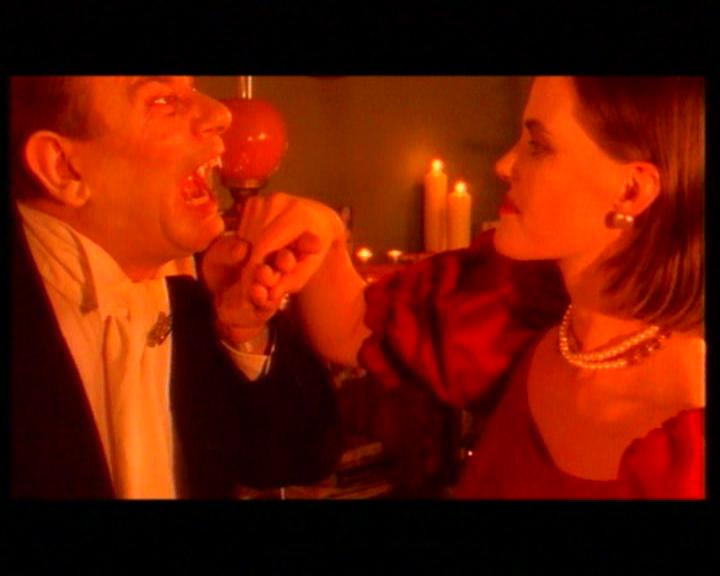 The vampires do not seem to be particularly vampire like, bar the fact that they have fangs. Indeed, although their leader is Dracula (Tony Hunt), he is also known as James and is, well in a vampire sense, pretty pathetic. There has been a suggestion that they were meant to be debutantes having a fancy dress party. The party bit is correct, that was mentioned, but I think that, despite the fact that bullets can kill them, they were meant to be vampires.
There is a scene later when one of the vampires is shooting a hunter, as well as shooting him she bears fangs and hisses. Now, to be honest, I don’t think that is the action of a debutante. No these were vampires, though weak and feeble, and thus this is the first movie that I am aware of in which a vampire, threatened with a gun, wets himself.
Anyway, Helene breaks into the house, kills James. Then the hunters come and the vampires team up with the alien to defend the house and little girl, who is the object of their search, against the soldiers. All that is, except Tom (Glyn Whiteside) – the vampire who wets himself - who escapes the house to be killed by Jouvet. Bizarrely Jouvet (obviously played by the same actor) says something along the lines of “Goodbye little brother.” Why? Is it just a reference to the same actor doubling up, is it artistic prentention or does it mean something plot-wise? Well we just don’t know.
That is one of the biggest problems with the film, we just don’t know. Okay it is low to no budget, the acting is never top rate, but it is passable, and the soundtrack can be down right haunting at times, but we never really know what is going on. The director creates an artistic landscape, oft-times pretentious – and yet doesn’t offer anything close to exposition.
The action sequences are a let down, and the special effects, especially the giant UFO that rides to the rescue at the end, are perhaps a little too ambitious for the budget. Yet, having said that, you have to respect Sorenson for creating something very unique. Unique, unfortunately, is not necessarily good cinema, nor does it make a good vampire genre film and I’m only giving this 1.5 out of 10.
The imdb page is here.
Dark Desire - review
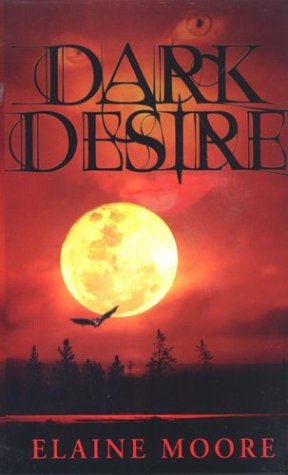
Written by: Elaine Moore
Contains spoilers
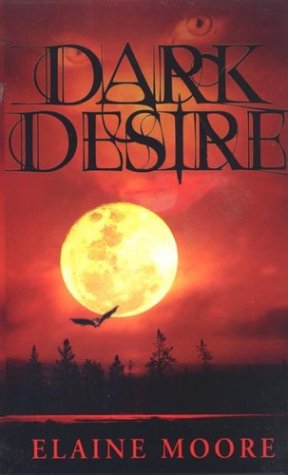
Dark Desires is the first book in Moore’s “Dark Madonna” trilogy. Victoria McKay is a girl of Celtic bloodline in Scotland, some – never fully revealed – centuries ago. She has the power to read the future and that is what draws vampire Johann Nikolai Valfrey to her. He desires to make her his bride, and through his blood his slave, so that he might harness that power.
He does, indeed, seduce her and, just before her marriage to him, she dies – as far as her family are concerned. Of course her death is by his hand, or more accurately his fang and three nights later she rises as a vampire and Valfrey spirits the new risen vampire away. At first their life together seems idyllic, he ensures that she is educated in languages and writing, but eventually the cracks show and her innate goodness, fighting the beast within her, and his inherent evil become apparent.
She eventually escapes him, her inner-strength proving stronger than the pull of his blood, heading to the new world of the Americas, but his shadow is always haunting her - a dark menace in the depths of her consciousness.
The book sees them in France, Spain at the time of the inquisition, Africa and of course Victoria’s time in a young America. The vampires are fairly much the normal mythological fare; they have telepathic/hypnotic powers, they are confined to the night, they can shapeshift, they have superhuman strength, silver burns their flesh etc. There seemed to be no effect upon them from holy objects. I did like the concept that simply loving, physically, a human would slowly kill that human, their desires burning so bright that it would age the frail human flesh.
The book has a romance edge to it, but I never really found myself getting into the story, nor the characters. There is nothing inherently wrong with the novel, the writing seemed competent enough and yet the characters never engaged me. Whether this was the fault of the book or myself I couldn’t really say. However, I will say that often I will devour books, I will sit up into the small hours of the morning unable to put a book, that has captured me, down. In this case the book, which is a slim volume, took several weeks to read and it was because I kept putting it down and not returning to it.
I am sure that there is plenty in this book to a reader who wants a more romantic view of the vampire and certainly would probably get much out of it if they could connect with the characters in a way I did not.
However, for myself I’m afraid I can only score this at 5 out of 10, stating that I found it an average, but ultimately forgettable, read.
Thursday, May 18, 2006
New film - Blood the last vampire
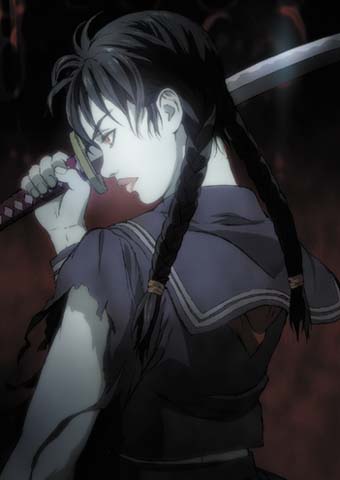
I remember watching Blood: the last vampire - a Japanesse anime and being torn. The animation was beautiful but the film itself is woefully short and, as it ended, I felt that I was only half way through.
Now, according to Variety, Bill Kong (producer of Crouching Tiger, Hidden Dragon) is to team with Ronny Yu to make a live action version. All I can say is yay! Original story found on Bloody Disgusting.com.
Fangs of the Living Dead - review

Director: Amando De Ossorio
Release Date: 1968
Contains spoilers
Fangs of the Living Dead is an exploitation flick from the late 1960s, hailing from Italy and Spain. As such it is dubbed (or at least I hope it is or the voice looping is atrocious!) and thus one of the problems with the film, its overly melodramatic acting, might actually be a problem with respect the voice actors rather than the original cast.
It begins in a Doctors office in Rome when Dr. Pietro Lufuani (Gianni Medici) is summoned to a nearby bar by his fiancée Sylvia (Anita Ekberg). When he gets there, along with their friend Max (Cesar Benet), Sylvia reveals she has a letter from her uncle (Julian Ugarte), the Count Walbrooke. Sylvia was taken by her father from her mother when she was new born. It appears, however, that her mother was a Countess and she has just died, leaving her castle and title to Sylvia. Sylvia states her intention to travel to the castle but she will be back in two weeks for their wedding.
Arriving at the village below the castle she enters a bar where she is served by Bertha (Diana Lorys) who works at the bar with her sister, Freia (Rosanna Yanni). When she announces that she is the new Countess all the locals go silent. Their fear is interrupted by Vladis (Fernando Bilbao), her uncle’s coachman, who hurries her to the castle. At this point I couldn’t help but think bad things regarding the aristocracy, given that she never paid for her beer!
Arriving at the castle she is informed that her uncle would not be available until 10 that night. When he finally appears (see the screen capture) he is the very picture of a 50s/60s Satanist from a bad B movie – wait it is a bad B movie, though he isn't a satanist! He kisses his niece and she notices how cold his skin is. He shows her a picture of her great grandmother, Malenka (also played by Ekberg in flashback scenes), he then tells her that her mother died of melancholy and is in the castle crypt – off then to the crypt.
Now, as they wandered into the crypt I, thought to myself, 'who on earth keeps all those torches and braziers lit?' This is actually a film which answers such questions; it is the Count who keeps the fires alight, in reverence to the dead.
That night Sylvia is awakened as the door to her room opens. In slinks the rather busty brunette Blinka (Adriana Ambesi).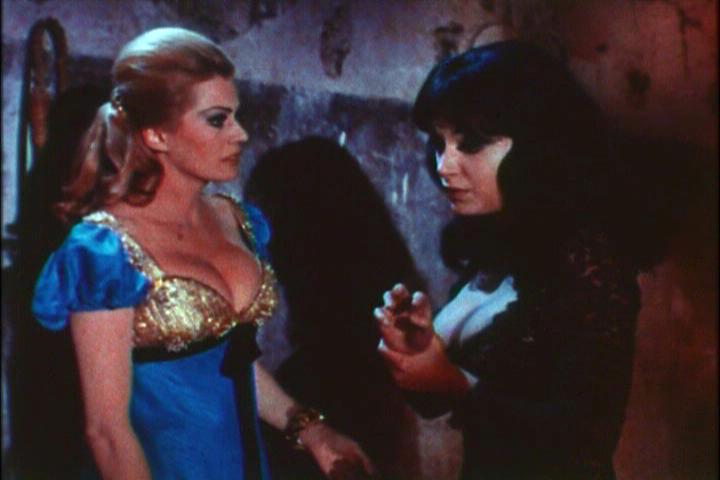 She informs Sylvia that her uncle is not what he seems, that he isn’t really her uncle, being over 100 years old, and that he kept her mother a virtual prisoner. She then tries to lull Sylvia to sleep before kissing her neck. Just then the Count bursts in and drags Blinka off. Sylvia searches, hearing screams and finds Blinka chained and being whipped by the count. He turns the woman’s head to Sylvia and shows she has fangs.
Sylvia, of course runs off and she is caught by her uncle who tells her to break her engagement and then reveals the history of Malenka – a brilliant bio-chemist who dabbled in the black arts and perfected necrobiology (hey, I didn't make that up!). For her troubles she was burnt as a witch but not before she had made her second husband a nosferatu – the 'none dead'. The Count is, of course, that second husband.
Pietro receives a letter breaking the engagement and, not being a man to take no as an answer, goes to find Sylvia with Max, a comic relief character, in tow. Turned away from the castle he goes to the inn. He is asked to examine Bertha and says she is anemic. The Count visits her and she dies. When we see her in the coffin her hand twitches and fangs appear. The next day she is buried.
Sylvia escapes the castle, with Blinka’s help, when the Count is distracted from trying to feed Sylvia his blood by Bertha, back from the grave. Sylvia gets to the inn and is reunited with her love, but has been accosted by Bertha as she made her way through the cemetery. 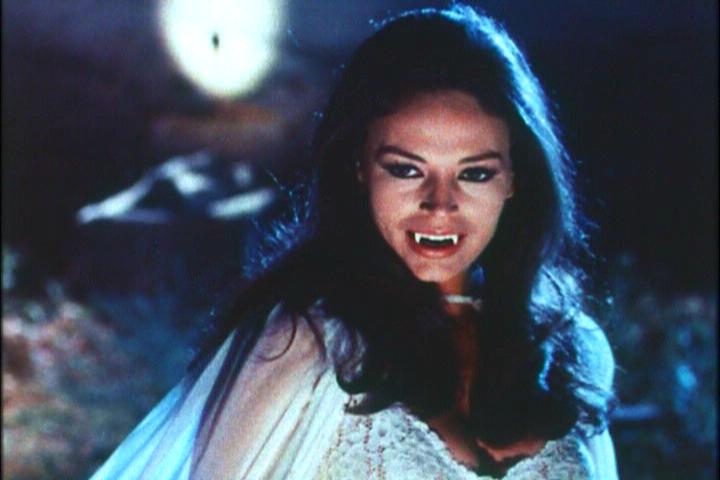 Because of this apparent vampiric ressurection Pietro, Max and the local drunken Doctor, Dr. Horbringer (Carlos Casaravilla), stake out the cemetery and see Bertha rise from the grave. During this time Sylvia has been captured.
They head for the castle and Pietro ends up chained in the dungeon whilst Max tries his luck with Blinka. Cue the following exchange, “I am a vampire.” Drawls Blinka “I love exotic women.” Replies Max.
Here everything goes wrong with the movie. So far it has been a low grade, melodramatic piece of euro-horror pantomime about vampires. Okay the reactions of the characters are often unbelievable, their own perceptions turning from belief to disbelief and back again as quick as the eye can blink, but the film has a direction. Suddenly the Count reveals that it is all a scam to have Sylvia locked away as mad, presumably so he will get the estate, having killed her love because she is a "vampire" from a family of "vampires". Bertha’s death was faked and they knew that the drunken Dr. Horbringer would sign the death certificate – the scriptwriters forgetting that it was Pietro who announced her dead.
The Count's exposition over, Sylvia appears and is told to kill and drink from Pietro. Blinka interupts proceedings just as Sylvia is, apparently, going to kill Pietro and a rather long cat fight begins between Blinka and Bertha. The Count is totally distracted by the enthralling sight of these busty maidens fighting and fails to notice as Sylvia frees Pietro and the direction of the film turns around again.
Pietro punches the Count who falls back into a chair; Pietro has a torch, though it is not clear if he actually stakes the Count or if the Count falls onto something. However, the Count dies and crumbles to dust as the painting of Malenka burns.
In a coda to the film, which forgets to mention the fates of Bertha and Blinka, we see Sylvia and Pietro leave the castle, followed by Max. Freia approaches Max and asks him to take her to Rome and he vamps out in broad daylight chasing her, Benny Hill style, out of the castle.
The film could have been an average euro-horror and it is a shame. I previously posted it was truly awful, and was mildly shocked, whilst I re-watched it, that I was quite enjoying it in a B movie kind of way. It is the inability to decide if the film is or isn’t about vampires that spoils the film, the huge swings in direction at the end just kill the film off. Seemingly this was because the producers decided that enough had been filmed three weeks before the seven week filming schedule had ended, still it doesn't make for a good film. For a score I’ll have to give 2.5 out of 10.
The imdb page is here.
Wednesday, May 17, 2006
New Film: High Stakes
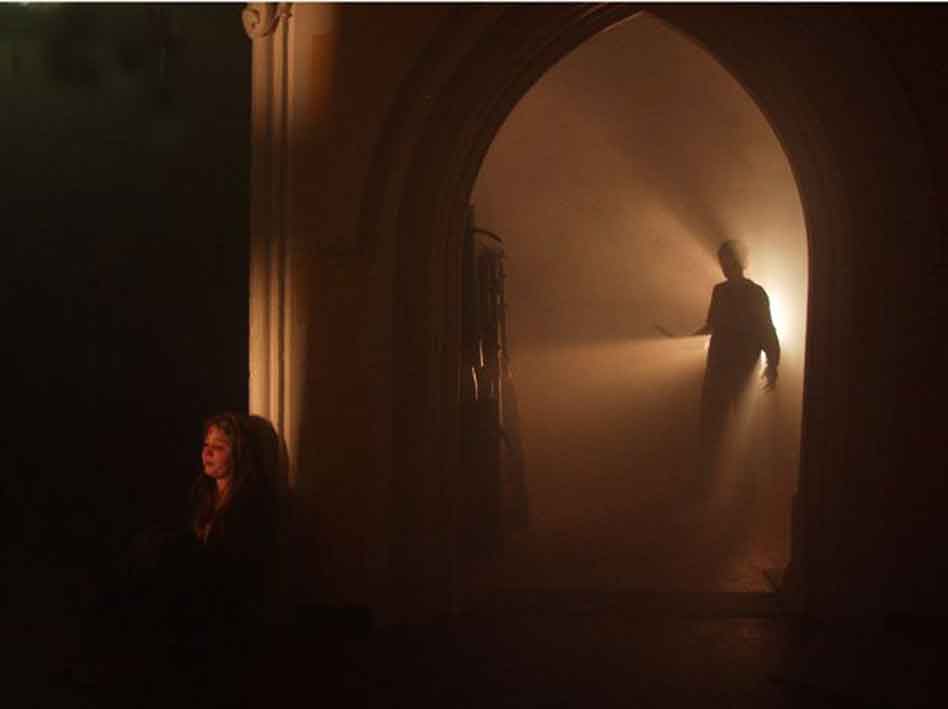
High Stakes is a new film due straight to DVD at the end of 2006 in the UK, and being taken over to Cannes at the moment to try and sell internationally.
Described as Blair Witch meets From Dusk 'til Dawn, there is info, a flash presentation and a synopsis here.
The synopsis runs as follows:
Guy, a small time gambler gets to play the biggest game of his life.
Unfortunately, the player he beats is an ancient vampire. Enraged, the vampire and his motley crew give chase, but Guy manages to escape to the refuge of a local Church.
Safely inside Guy meets the Reverend and his young congregation. But after the Reverend is bitten and becomes crazed with “The Blood Lust,” he soon discovers that the congregation hides a sinister secret.
The Siege begins
The Gambler has no where to run.
What happens if everywhere you thought was safe……Wasn’t?
What happens if everyone you thought you knew….You didn’t?
What happens if every time you thought you’d got away….You hadn’t.
Sanctuary
As Guy discovers……is the biggest gamble of his life..
Tuesday, May 16, 2006
The Next Frightmare
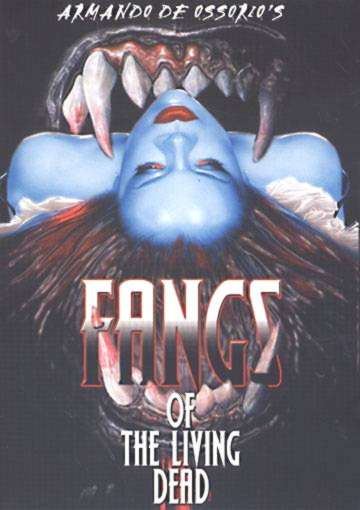
The next episode of frightmares the series airs Friday the 19th May and will be the trully awful Fangs of the Living Dead. Be it awful or not, many thanks to the brave (if foul mouthed) puppets at Frightmares for bringing this film into a viewable arena.
Now, it might not be a good film, but if opportunity presents itself I might just have to dig the old DVD of it out (yes I am that sad!) and do a review of it concurrently! No promises mind you.
Blade the Series
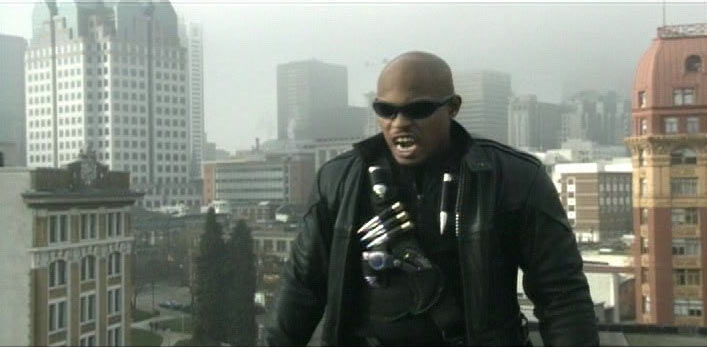
Nip over to ign for some exlusive Blade the series stuff. They currently have the trailer and 5 behind the scene featurettes available for streaming and downloading in either .wmv or .mov formats. Obviously this is going to be out in the States long before the UK, so can anyone who catches it, once it starts, leave a comment to let me know what it is like?
Sunday, May 14, 2006
Dracula {1979}- review
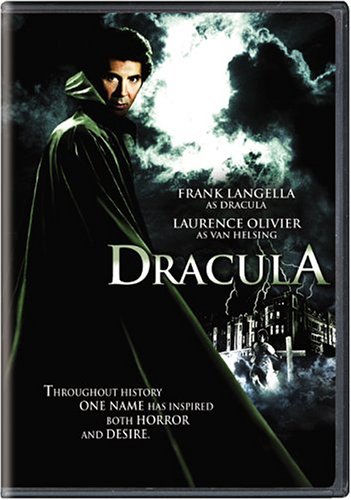
Director: John Badham
Release Date: 1979
Contains spoilers
Back in the halcyon days of video, when I was of a tender age, my Granddad (bless his soul) would happily rent any video I wanted to watch – age restrictions be damned. One video he rented for me, a video that was watched and watched until it had to be taken back to the store, was this version of Dracula. Now I most certainly had seen vampire movies before then, but this film sticks in my mind as the film through which I fell in love with the genre.
The film itself was based, like the 1931 Dracula, on the play by Hamilton Deane, yet this film not only skewed the book but also is very different to the ’31 film. Thus I can guarantee that, as this is a movie that has a very special place in my heart and as it is very different to its predecessor this is likely to be a long review that looks at the film blow by blow, so you will have to indulge me.
We begin aboard a ship tossed about in a violent storm. We see a sailor, his throat torn out, a gruesome beginning that, of course, bodes well. The remaining crew have gone to the hold and are trying to haul a crate out. They get it to the deck, as the captain ties himself to the wheel. They try to push the crate overboard, but a hand smashes through it, clawing out the throat of one sailor whilst his mate gets pushed overboard by a wave. The captain is alone as a wolf growls.
It is a dramatic opening and cuts out, completely, any Transylvania scene. This film is set in Whitby for the main, though actually the location shots where in Cornwall.
Next we see the lunatic asylum; it is the very essence of Bedlam. The inmates scream and it almost looks like a riot might occur. Seward (Donald Pleasence) tries to gain some order, wondering where his daughter Lucy (Kate Nelligan) is.
Lucy is in the house with her friend Mina (Jan Francis).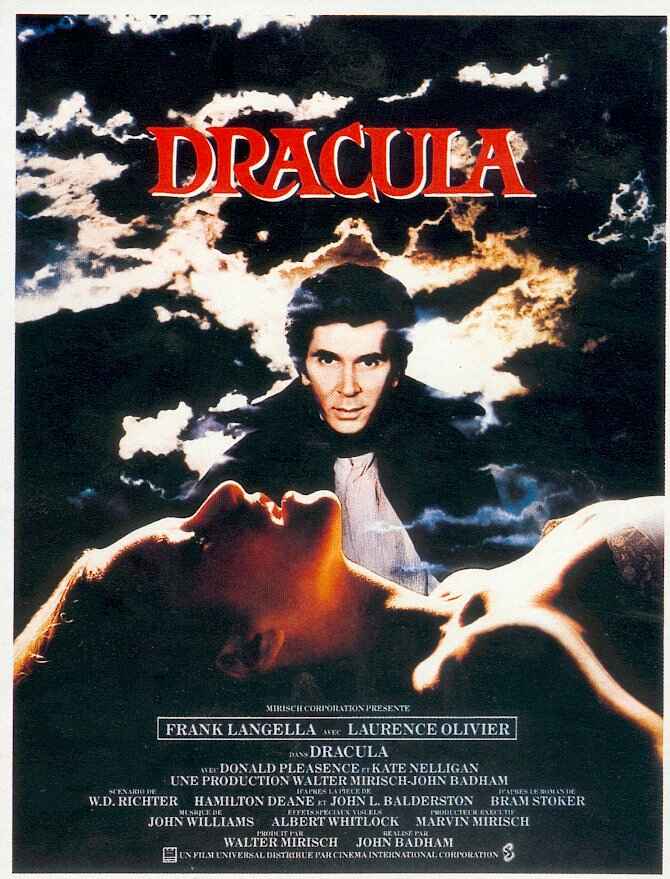 Now let us be clear, the roles of Mina and Lucy are reversed here from the normal roles. Mina is the sickly friend who will, very soon, be Dracula’s first core character victim. In a neat bit of plot twisting she is no longer Mina Murray, but Mina Van Helsing. It is Lucy who is engaged to Jonathon Harker (Trevor Eve). Lucy is portrayed as a very strong, intelligent woman, when we meet her she is reading a letter indicating that she has been offered a job with a solicitor’s firm.
She is called to help her father and is in the asylum when a bell is heard and Mr Swales (Teddy Turner), the warden, says that it is ‘sunken bells’. In the book, of course, Swales was the old man befriended by Mina in the graveyard at Whitby. Mina also hears the bell and is drawn out of bed; she sees the ship in trouble. Despite her poor health, she runs out into the storm as the ship runs into rocks. She enters a cave and finds a survivor, though at this point we only see a hand emerging from a coat trimmed with wolf fur, it is Dracula (Frank Langella).
The next day the ship is being salvaged. Harker drives up the beach in his car, to an off screen comment about contraptions, he is a solicitor representing the Count. There is talk that the rights of the ship’s owner are sacrificed as the tiller is in the hands of a dead man, this is lifted from the book and not often quoted. It is revealed that the Count was taken to Carfax the previous night and his possessions are being taken from the ship to his residence by Milo Renfield (Tony Haygarth). This is a very different Renfield to the one we see in the ’31 film. He is gruff and has a grudge against Harker as he sold his house from under him. Seward, who is inspecting the body of the captain, asks Renfield to tell the Count that he is invited to dinner that evening.
Later we see Renfield pulling the final crate up the long stairs inside Carfax when Dracula awakens. He stands at the head of the stairs and transforms into a bat, swooping down towards Renfield and feeding on him. Carfax himself is a gothic vision of outlandish architecture, dust and cobwebs, owing much – I felt – to the interior of Castle Dracula in the ’31 film.
Lucy, Mina, Seward and Harker are discussing the shipwreck when Dracula arrives. It is mentioned that the ships log contains the word Nosferatu, which Mina believes means undead. The Count contradicts this and says it means ‘not dead’. This is an interesting piece of dialogue, perhaps indicating that Dracula is not overtly enamoured with his state. In a nod to the famous Harker/Renfield cutting their finger scene, during this scene Swales cuts his finger as he is carving and the camera lingers on him sucking the blood. There is also the famous “I do not drink… wine” line, but Langella delivers it in a much less obvious way than perhaps Lugosi did.
After dinner the Count is ‘attempting’ to read the log, but says that it is written in a dialect that he cannot understand. Mina falls into a faint, though it is clear to the viewer that it is Dracula’s doing through Langella’s subtle gestures. Seward calls for Laudanum but Dracula opposes the suggestion, saying that they should not pollute her blood and offers to hypnotise Mina to take away the pain she now feels. The hypnosis is successful, though Lucy makes it clear, during the process, that she dislikes the concept as Mina has no will of her own. Later Lucy, obviously interested in the Count just as Mina is, dances with Dracula – much to Harker’s chagrin.
That night Lucy sneaks from her and Mina’s shared bed to be with Jonathon. There is just the smallest amount of angst to underline that Harker has noticed the attraction between Lucy and Dracula, but then they kiss. The camera pulls up to the roof and we see Dracula crawl down the wall towards Mina’s room. Mist appears before the balcony door and a hand starts to claw at the lead around a pane of glass. Mina awakens, terrified as she sees Dracula’s face upside down, the pane falls and he opens the door – however that fallen pane is not mentioned again. Mina’s expression changes from terror to expectation and she opens her nightdress to reveal her throat.
Back at Carfax Renfield awakens. He tries to find water unsuccessfully and then eats a bug. Dracula appears and Renfield panics, trying to run, but there is no escape. Dracula tells him that he expects loyalty.
In the morning Lucy is woken by Mina trying to catch her breath. She calls her father, who, in a fantastic display of modern medicine, resorts to slapping Mina’s face but it is to no avail and Mina dies. They notice the punctures in her neck. Seward telegrams Van Helsing (Laurence Olivier).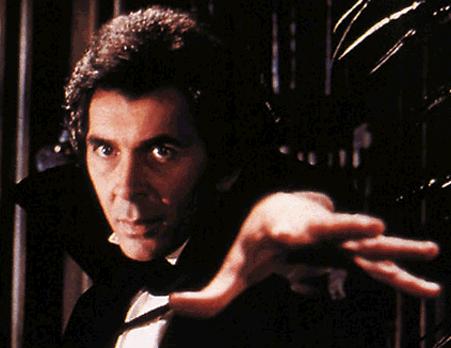 It must be said that making Mina his daughter causes the calling of Van Helsing to make much more sense than it did in the ‘31 film. That night Harker takes the deeds to Carfax for the Count to sign. Dracula asks him to take them to London immediately but Harker refuses saying he must attend the funeral. Dracula then pens a letter inviting Seward and Lucy to dinner, after the funeral, telling Harker that he would be invited also but obviously he would be on route to London.
Driving back from Carfax, Renfield lunges at Harker from the back seat of the car. It seems like an attack but Renfield does cry out for Harker to save him. Renfield is institutionalised for his trouble.
The next day sees the funeral of Mina. Afterwards Harker tries to get Lucy to go to London with him, but she refuses. Seward mentions that Van Helsing is arriving that night and so they would not be able to dine with the Count. He’s forgotten to mention the invitation to Lucy before then but she quickly insists that she will dine with the Count. We see Lucy arrive at Carfax as Seward meets Van Helsing at the station. Carfax is aglow with candles.
During dinner we see Dracula begin to flirt and then seduce Lucy. During these scenes we hear the famous ‘children of the night’ line, but slightly changed. Now Dracula says “Listen to them - children of the night. What sad music they make.” The line was changed deliberately as part of the attempt to make Dracula seem to dislike his lot in life, envy the sunlight walking mortals and make him a tragic figure.
Interspersed between these scenes we see a figure in white smash through a window and hear cries from Annie (Janine Duvitski), one of the inmates I assume, about her baby. Seward and Van Helsing find the baby, punctured and drained of blood. Annie is hysterical, talking of red eyes and fangs, but manages to say it was Mina.
The next day we see Van Helsing reading a book on vampire bats, he then visits Mina’s grave and places garlic across it. Lucy approaches him and he gives her a crucifix to wear. As they are leaving Dracula arrives, on horseback, to ‘pay his respects’ to Mina. From the house Van Helsing sees the horse rearing at the grave and that gives him an idea. He takes a white horse to the graveyard, along with an incredulous Seward. The horse goes to Mina’s grave and begins to stomp at the soil and then dig at it with its hooves. This is a marvellous moment, to my knowledge not done in other Dracula movies. This is based around folklore, and if we look at Everything You Need to Know About Vampires we see the following ways of finding a vampire’s grave:
· Have a virgin boy ride naked and bareback on a virgin stallion through the graveyard until the horse steps on a grave and goes no further. That marks a vampire’s grave. Or...
· Lead a white stallion through a graveyard and the grave he will not step on is the grave of a vampire.
The film seems to have merged the two concepts, but it is marvellous that such folklore has been added into the movie.
Meanwhile Lucy has removed the cross. Dracula enters the room, he bites her and there is a stylised love scene complete with silhouettes and red glowing graphics, finally he has her feed from him.
Seward and Van Helsing have dug up Mina’s grave and it is empty. Van Helsing sees that the side of the coffin is broken and Seward realises it goes into the mines that run under the town. Van Helsing leaves Seward by the grave as he descends into the mines. A bat flies at him and he drops his crucifix into a puddle of water. As he gropes for it we see, reflected in the water, a grim vision. Many have complained about this scene as vampires cast no reflection (a device used twice later in the film) but it does look good. According to the ‘making of’ featurette, Badham liked the scene and invented the rule that vampires do cast reflections in holy water and, as the cross had fallen into it, the pool had become holy water. A little flimsy perhaps!
It is, of course, Mina. 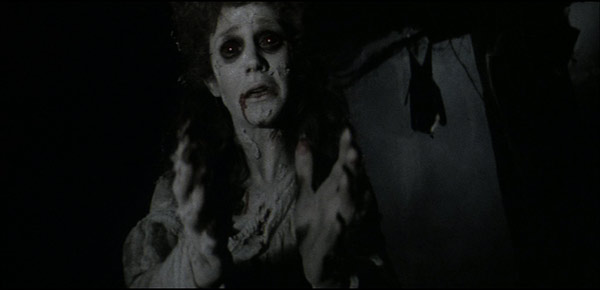 She looks like something from Hell, her face greyed and covered in mud, her mouth stained with blood and her eyes red surrounded by deep black shadows. She stumbles forward repeating the word Papa. Suddenly she is on Van Helsing but is pulled away by Seward who threatens her with a cross. The cross burns her flesh and she turns away, onto Van Helsing’s stake; the distraught father wails.
Harker has returned from London and finds Lucy collapsed on the floor, wounds in her neck. Van Helsing orders garlic rubbed into the windows and doorjambs and then goes downstairs. He is confronted by Dracula, who casts no reflection and so smashes the wall mirror. Van Helsing presents him with garlic, causing him to rear away. Dracula tries to dominate his will but Van Helsing is too strong. Eventually Dracula escapes the room as a wolf.
Next day Mina’s body is in the graveyard. She now looks fresh and beautiful again. Van Helsing shows the incredulous Harker that she has no reflection in the mirror. He then cuts out his daughter’s heart. They return to the house but Lucy has gone.
They chase down her horse and trap in Harker’s car and she is incensed at their interference. Seward takes her home whilst Harker and Van Helsing go to Carfax. They open Dracula’s coffin, but it is empty. Although this film insists on maintaining the inaccuracy that Dracula cannot walk around in daylight, he is not restricted to his coffin - as the mobile Dracula delights in telling his hunters. Harker threatens him with a cross that Dracula grabs causing it to burst into flames. He then turns into a bat and attacks Harker, retreating only when Van Helsing breaks a support to allow sunlight into the crypt.
After placing hosts in the crate they return to the house to discover that Seward has put his daughter into a room of the asylum. Harker goes in to see her alone. She is conniving at first and then seductive. As she holds Harker she vamps out and tries to bite him.
That night Dracula returns, he scales the wall to Renfield’s cell and breaks his neck, then, whilst in the form of mist, he enters Lucy’s cell. There is a crash and, by the time the door is opened, they are gone, a hole smashed into the solid wall. They try to give chase and we have a chase scene car against horse drawn wagon. Eventually they crash, but they have discovered that the wagon was going to Scarborough. They reach there too late, a ship has already set sail with the crate aboard, but Harker and Van Helsing commandeer a boat and give chase. They board the fleeing ship and go to the hold, finding the crate with Lucy and Dracula inside. Van Helsing is about to stake the Count when Lucy awakens and her cry warns Dracula. In quite a turn around Dracula pins Van Helsing (or a body double at least as Olivier was very frail when the film was made) to the hull of the ship with his own stake. Harker tries to shoot Dracula, to no avail. With his dying breath Van Helsing swings a hook on a rope into Dracula’s back and Harker pulls the winch that drags Dracula into sunlight. His death is graphic, filled with screams, his flesh peeling away in the sun.
At the end we see his cape flutter away, or do we? It seems to glide rather than flutter and the camera cuts to Lucy, a smile curling over her lips. Is it because she is free from the Count or, as she went willingly to him, is it because he has escaped?
This film is a visual treat, with a stellar cast who give it their all. The soundtrack is marvellously stirring. Badham strayed from both the source and the ‘31 film/play but what he did really works. He really did try to give this a very romantic edge and I believe that it worked better than Coppola’s version with the clichéd reincarnation of the true love plotline. This, as you probably can tell, is one of my favourite versions of Dracula and so, of course, I will score it highly. When I re-watched it for the review I tried, though I do not know if I succeeded, to be objective about it and settled on 9 out of 10.
The imdb page is here.