Showing posts with label strigoï. Show all posts

Tuesday, April 29, 2025

Short Film: Strigoi


This was a 2021 short film, directed by Florin Anghel and coming in at just under 14 minutes.

It starts with the sound of laboured breathing, and we see that a poorly man struggles for breath. His wife brings him food, but he knocks the plate out of her hand and threatens her. Telling her she won’t get away from him so easily and he will return as a strigoï and haunt her.

A young woman is at work, a bouquet of flowers is brought in for her. Her phone rings and it is her mother – her father has died from cirrhosis. They are the couple from the opening. Her mother asks her to come and says she is afraid at night. The daughter exits onto a balcony (for a cigarette) when she returns to her office the flowers are withered.

the daughter

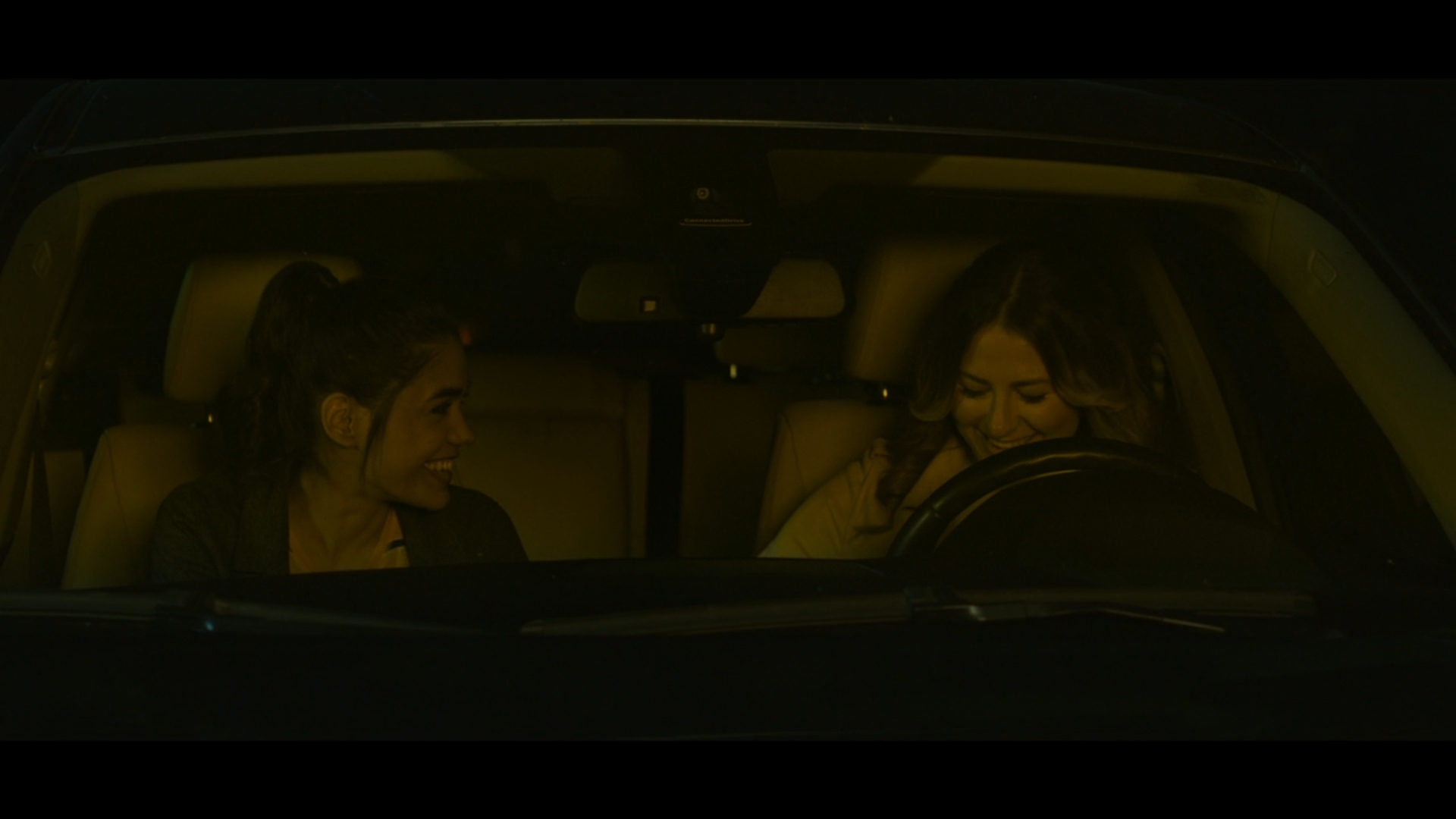
Not a lot more is said about this – the sender of the flowers drives her to her old village, and she suggests they arrived withered, we saw them fine and then withered. Could it indicate her father’s influence. Maybe she is (unknowingly, perhaps) a strigoï vii? Also on the drive her companion questions her atheism (though she does wear a cross) and asks what happens to evil doers after death if there is nothing else.

equine vampire detection

The funeral arrangements were interesting, he lay open casket but with his hands bound and holding a candle and the open casket continued at graveside. A man with a horse comes by but the horse is skittish by the grave (this is a stripped-down version of the traditional vampire detection method, as the horse carries no naked virgin, boy or girl). He is returning to mother and daughter (we see a shadowy figure as he visits the daughter) and so the grave is opened. The corpse has talonlike fingernails, his heart is cut out as a ritual (which names him both strigoï and moroi) is spoken. It is suggested that the heart be cut into 9 pieces and scattered to be fed on by nine dogs.

strigoï's nails

What is interesting about this is that the filmmakers based it on the real case of Toma Petre – a Romanian vampire killing that happened in the 2000s, the film suggests between 2005-2007. As well as outlining the event, the film contains a snippet of an an interview with Mircea Mitrica who was one of those involved in the real life exhumation – I assume it is the actual gentleman and not a reconstruction, the credits do not say.

The imdb page is here.

Tuesday, April 15, 2025

Domnisoara Christina (2013) – review


Director: Alexandru Maftei

Release date: 2013

Contains spoilers

I recently discovered the existence of Mircea Eliade’s novella ‘Miss Christina’ (1936) and my post on the previous film version of it contains details of how I discovered this story of strigoï in Romania. Like the previous film, this is apparently fairly novella accurate and there is a version (at time of writing) on YouTube with hardcoded English subtitles – noting that the subtitles translate strigoï as “zombie” for some reason.

Like the 1992 release, the filmmakers have aimed for an uncanny feel rather than full on horror. However, there are some distinct differences between the versions. The character Simina (Ioana Sandu) reverts back to being a child rather than a teen. The sexualised scene (involving a kiss and some dominance language) involving her, from the novella, is done in such a way that it feels sinister but not exploitative. There is also a much wider view of the impact of the strigoï on the locality, rather than just the family.


The film starts at the Moscu manor in winter, and as the camera enters the house we see it is wrecked by the fire that will rage through it at the climax of the film. In the broken house is a man, with a small campfire from which he retrieves charcoal and looks to continue the drawing on the wall of the portrait he is trying to render. There are cracks in the wall and an empty frame propped against it and we can assume this is Egor Paschievici (Tudor Istodor) trying to redraw, from memory, the portrait of Miss Christina (Dumitrescu Anastasia), he destroyed.

on the train

The film jumps back to the main timeline of the narrative and Egor is on a train travelling with Sanda (Ioana Anastasia Anton). They are going to her family estate for a visit. Once there they meet another guest, Professor Nazarie (Ovidiu Ghinita), and Sanda’s mother Mrs Moscu (Maia Morgenstern). Before they sit for dinner, we see that Mrs Moscu feels weak, staggering a little at one point, and Sanda’s young sister Simina, demands the seat next to her mother that Nazarie was going to take, and he allows it. During the meal we witness Mrs Moscu’s obsessional eating habits.

Ioana Sandu as Simina

Nazarie visits Egor in his room before retiring and mentions a drought in the village (despite a proximity to the Danube). The next day, a romantic moment between Sanda and Egor is broken when she sees Simina walking near by and it starts an underlying theme of the younger sister somehow being a danger to the older. At a meal thereafter, Simina says she dreamed of Aunt Christina and this introduces the strigoï to the story – who was Mrs Moscu’s murdered older sister. As she describes the dream she suggests Christina has lamented the fact that Sanda has begun to forgot her. I won’t particularly go blow by blow through the plot as it is pretty darn close to the previous film but there are some motifs to draw out.

the portrait

When they are taken to see Christina’s portrait it is mentioned as a Mairea (I assume referencing George Demetrescu Mirea) and Egor is dismissive of his work until he sees it. However, having complemented it – due to the subject – we see a mist swirl within a perfume bottle. I took this as indicative of the presence of the strigoï in an immaterial form. He is then told about her history, through the Professor, but as well as her cruelty and murder at the hand of her lover, jealous after she consented to be raped (as much of an oxymoron as that sounds) by peasants during the 1907 peasant uprising, he also mentions that her body was never found and the villagers believe her to be strigoï and responsible for the death of animals and sickness in local children.

the bullet hole

This is followed by his first dream of her – after a warning within the dream – it is interesting that she tells him not to believe the terrible things Nazarie has told him (though much later he manages to run his finger over the still bleeding bullet hole in her back). It is also telling that she removes a glove and when he awakens it is there (although that is shown as waking from a dream into another dream) and then when he actually awakens, Nazarie enters the room and he asks about the smell – there is the scent of violets, her signature scent (and we can assume the perfume bottle earlier was violets), proving she had been there.

the three ladies

In the previous review I mentioned that, in a non-fiction volume, Mircea Eliade had split strigoï into living and dead categories (commonly referred to as strigoï vii and strigoï mort). There is indication that, as well as the three female characters being connected to the strigoï mort (Miss Christina), they may also be strigoï vii. This seems true of Mrs Moscu, who obsessively eats, is unnecessarily cruel (we see her casually snap the neck of a bird) and has a psychic connection to her sister (which I’ll come back to) and Simina who can be read as being connected to her aunt and strigoï herself, and/or possessed by her aunt at times. Fairly early into the narrative, as Sanda becomes ill, Egor calls Simina a witch and warns her from hurting her sister. He grabs her arm and she pulls herself away, at which point Egor collapses in considerable pain (presumably magically inflicted). Also, when Simina seems to dominate and kiss Egor later, the kiss is clearly a bite drawing blood.

Egor's stake

This version of the story shows a greater connection between Sanda and her aunt, though her age, as mentioned by Simina, and perhaps her time in Bucharest has weakened the connection. She seems to be feeding her aunt (and is diagnosed as anaemic) but we see her stood awaiting Christina until her mother (connected to the strigoï mort) tells her Christina will not visit that night. One thing that felt a little more apparent in this was that when Egor returns to the house, having been bitten by Simina, he has lost time and the doctor (Ioan Ionescu) attending Sanda says he saw him taking a moonlit walk with a woman (which he can’t recall and was likely Christina). Interestingly the film draws a direct line between the fate of the strigoï mort (who must be killed by metal stake through the heart – though Egor does assault the portrait also) and the two living sisters.

Dumitrescu Anastasia as Miss Christina

It is hard to judge the two films against each other. Both aim for the unheimlich and both have a languid pace. I thought this showed more of the supernatural and I liked the way it reached further, into the impact on the village, at least in reportage. One telling difference was in the performance of Egor, Tudor Istodor played him as a rather detached character (be that through his arrogance at times or through supernatural influence at others) and that worked but not as well as the smouldering and intense performance by Adrian Pintea in the previous version. The wider communication of the supernatural gives this the edge for me. 6.5 out of 10.

The imdb page is here.

Friday, April 11, 2025

Domnisoara Christina – review


Director: Viorel Sergovici

Release date: 1992

Contains spoilers

A little background, if I may, of how I came to know this film existed. On occasion I am known to attend the excellent online lectures arranged by Romancing the Gothic - favouring, of course, the vampire related. I spotted one by Maria Cohut entitled Revenants as Abject Feminine in Romanian Gothic Horror: Mircea Eliade’s ‘Miss Christina’ (1936). The word revenant got me… then as I looked into the book I noted it used the term strigoï. More excited now I looked to track the book and discovered that there were two Romanian films based on it. This being the first and so I managed to track it down and watch this the day before the lecture. Note this is not easily come by, it is a VHS quality rip from Romanian TV and, I suspect, fan-subbed. There was also a 2013 version that I will also look at.

Christina murdered

So Eliade’s story surrounded strigoï and, from within the lecture I ascertained that in his non-fiction work he recognised both the strigoï vii as living witch-like persons and strigoï mort as more vampiric and fluctuating from spectral to corporeal. This film, I understand, follows the book pretty darn closely. It starts with Miss Christina (which is the English title) the sound of a crack of gunfire and she falls dead. This places the event in the historical peasant’s revolt of 1907. Later, however, we get to hear that Christina was deemed as wicked anyway (beyond being a landowner). The film shows us a portrait of her.

Adrian Pintea as Egor

Moving to the 1930s and the painter Egor Paschievici (Adrian Pintea) has visited Sanda (Raluca Penu), with whom he has a romantic entanglement. As they walk through the hall of her family house he tries to pull her to him but she pulls away and says they have a new guest. They enter the dinning room and her mother, Mrs Moscu (Irina Petrescu), introduces Professor Nazarie (Dragos Pîslaru). They sit to eat but Sanda’s younger sister, Simina (Medeea Marinescu), insists she have the chair near her mother to which the Professor acquiesces. A note about Simina, the dialogue referring to her describes her as young – indeed in the novel she is nine – but Medeea Marinescu was eighteen and the character looks teen. I suspect this is because of sexual connotations later.

the portrait

One thing of note is Mrs Moscu eating obsessively, shovelling fork after fork of food into her mouth. Egor has also noted that she seems to lose strength as the sun sets, sometimes falling into lethargy. The next day Simina reports having dreamt about Aunt Christina – Mrs Moscu’s older sister – and the men are taken to a locked room that contains the portrait of Christina. Egor suggests he would like to paint it in his own style and Sanda tells him that it is rare that her mother lets anyone in the room. The Professor has heard stories about Christina being the bailiff’s mistress and forcing him to thrash peasants for her pleasure. During the uprising, it is said that she invited peasant men two at a time into her room and allowed them to rape her (a note from Maria Cohut’s lecture is that this paints her as the abject feminine, that rape and consent are mutually exclusive, and that the tale is told from a male perspective) and the bailiff shot her out of jealousy. Children in the village, he suggests, still fear her.

Simina and Nazarie

As the story progresses Egor, having had warning dreams at first, starts seeing Miss Christina in his dreams as she attempts to seduce him. Sanda becomes deathly ill – and is said to have anaemia by the doctor (George Constantin) who is called for. Though we don’t see it, Sanda seems to be being fed upon by Christina, whose powers grow and who seems to become more corporeal. Equally Simina starts acting in a way inappropriate for a child (notwithstanding the age she presents in the film), knowing things about Christina, cleaning her Aunt’s prized carriage, acting sexually dominant to Egor at a point and a cut on his lip may have occurred when she kisses him. This can be read two ways, that she is being possessed at times by her aunt or, as posited by Maria Cohut, that she is actually strigoï vii. The mother seems to have a sympathetic connection to Christina, with her prized portrait and obsessive eating habits and perhaps lending her strength to the strigoï mort at night. It is interesting that in the climax, when villagers reach the house, her first reaction is to say, “You’ve come for land” referencing the 1907 revolt again.

Sanda weakens

The way to deal with a strigoï in this is to push a rod of iron through the heart (in the grave) but the film also connects the portrait in to the ending – with portraits being a firm favourite within the Gothic. I enjoyed this but it is rather languid in its pace, the slow march rather than a rush of thrills and it also aims more for the uncanny than it does horror. The world feels off kilter. It is an interesting take on the feminine; it is a household of females, the negative stories about Christina are delivered by men and the three women of the household could be fit into the maiden (Simina), mother (Sanda – though she is not a mother she is the object of Egor’s sexual desire) and crone (Mrs Moscu), with Miss Christina a unifying force. One thing that did strike me was a feel of la Morte Amoureuse - though Clarimonde only demanded a drop of blood from her lover, and Christina seemed to be sucking the life out of Sanda as she pursued Egor. 6 out of 10.

The imdb page is here.

Sunday, March 09, 2025

The Route of Ice and Salt – review


Author: José Luis Zárate

Translation: David Bowles

First published: 1998 (2021, English translation)

Contains spoilers

The Blurb: A reimagining of Dracula's voyage to England, filled with Gothic imagery and queer desire.

It's an ordinary assignment, nothing more. The cargo? Fifty boxes filled with Transylvanian soil. The route? From Varna to Whitby. The Demeter has made many trips like this. The captain has handled dozens of crews.

He dreams familiar dreams: to taste the salt on the skin of his men, to run his hands across their chests. He longs for the warmth of a lover he cannot have, fantasizes about flesh and frenzied embraces. All this he's done before, it's routine, a constant, like the tides.

Yet there's something different, something wrong. There are odd nightmares, unsettling omens and fear. For there is something in the air, something in the night, someone stalking the ship.

The review: We have looked at vehicles focused entirely on the doomed voyage of the Demeter before. There has been the novel Dracula’s Demeter by Doug Lamoreux and, in graphic form, Bram Stoker’s Death Ship. On the small screen the second (feature length) episode of Dracula (2020) was entirely about the voyage and, of course, the voyage finally got feature film treatment with the Last Voyage of the Demeter. This is another recounting of the fateful voyage, but one that actually pre-dates all the above (in the original Spanish), and can I just say wow.

The book is in three parts. Firstly, and noted immediately in the blurb, this is a retelling through a queer lens, entitled Before the Storm and the largest section of the novel. The Captain is gay, closeted from his crew (and haunted by the death of a lover). This section explores this and the view of the voyage as things begin to go wrong, with beautifully composed, evocative prose. It is a queer fever dream, both a distraction from and communication of the evil taking the ship. The book then moves into the Log of the Demeter, taking Stoker and expanding upon the original logs in the novel, and, finally, the catastrophic denouement.

There are several vampire descriptions used, names from around the globe as befits a ship where crews come and go from an international pool. Mention is made of the vrykolakas from Thera, delicately hanging above their victim, causing a deep sleep as they steal their breath. His Romanian mate has told the Captain of strigoi, described as demonic birds in the night – which brought the idea of the deathbird from Nosferatu to mind. The wieszcy are mentioned, dead devouring themselves in Wallachia (Bane associates them with Poland and auto-vampirism is not mentioned in her description). The book also mentions the Indian rakshasa, Ghanian monsters and Bulgarian obours. It is a cornucopia of references that works well.

One scene I particularly liked described the dead sailors clinging to the hull of the ship – unable to let go and look for other ships as the water hurts – for a sailor it is a consecrated thing – and yet the pull of blood might be more than the pain of the water. I also liked, in a vampire sense, the way the rats of the Demeter hid, starved and tried to flee the Demeter, replaced by the Count’s familiar rats.

This was a marvellous book, lyrical and haunting. The queer aspect added a layer that was welcomed and added depth to the primary story. 9 out of 10. My thanks to Sarah, who bought me this for Christmas.

In Paperback @ Amazon US

In Paperback @ Amazon UK

Sunday, September 17, 2023

El Conde – review


Director: Pablo Larraín

Release date: 2023

Contains spoilers

Augusto Pinochet was, of course, a right wing dictator who seized and violently maintained control of Chile and who is associated with fascism (though academically it is argued that, whilst ultra-nationalistic and popularist, his ideology skirted close to, rather than was, fascism). His human rights abuses are well documented; Thor Halvorssen, president of the Human Rights Foundation said:

He shut down parliament, suffocated political life, banned trade unions, and made Chile his sultanate. His government disappeared 3,000 opponents, arrested 30,000 (torturing thousands of them) ... Pinochet's name will forever be linked to the Desaparecidos, the Caravan of Death, and the institutionalized torture that took place in the Villa Grimaldi complex.

Jaime Vadell as the Count

All of which is background useful for a film that is a sociopolitical satire and centres on Pinochet (Jaime Vadell), or the Count as this version of him insisted on being called in private, as a vampire. Set in the here and now, the Count is aged and dying. Clinging to his martial past (the diegetic opening music is the March of Radetzky and his book Memoirs of a Military Man is on display), he lies in bed and it looks like he is about to salute but rather he puts his hand to his weary brow.

old fangs

The film is accompanied by a narration, the identity of the narrator (Stella Gonet) is not revealed until quite a way into the film (when she becomes physically involved) but was blatantly obvious within the first lines of her voiceover – though I won’t spoil as it is a reveal. The narration reveals that he has taken blood from all over the world but his favourite is English (no doubt tied to empire) and suggests that South American blood is insipid and the blood of workers – a dismissive view of the relevance of the working class.

about to be staked

In an alternate biography, we discover that Pinochet was born Claude Pinoche (played age 28 by Daniel Contesse) an orphan who became a soldier in France (the real Pinochet’s ancestry was French), under Louis XVI, and discovered his vampirism when he (drunk) bit a prostitute. He awakens, not remembering and a group of prostitutes tell him what he had done, call him vampire and look to stake him, in consort with a mallet wielding priest. He turns the stake on the priest and kills the prostitutes, smashing one of their heads to a pulp with repeated mallet blows.

at the guillotine

Of course, the revolution occurs and Pinoche betrays his king by deserting and passing himself off as a revolutionary. His taste for blood has solidified and we see him licking blood from Marie Antionette’s guillotine. He eventually robs her grave and steals her head (replacing it with that of another corpse he desecrated) – the executed Queen’s head becoming a prized keepsake – and fakes his own death. He reappears as a soldier in Haiti, Russia and Algeria fighting against revolutions – indeed his loyal manservant (and vampire) Fyodor (Alfredo Castro) was a White Russian. Eventually he appears in Chile, in 1935, rises up the ranks and in 1973 deposes the left-wing Government in a coup.

lying in state

After Chile became democratic and he found himself under investigation, he once more faked his own death, in 2010 (the year the real Pinochet died). He does this by not drinking blood for several months and seeming to have a heart attack. There is a scene of him lying in state, in a glass fitted coffin, and him sneaking a peek at the mourners. The imagery of him in the coffin brought Dreyer’s Vampyr to mind. 

hunting

In the here and now, he resolves not to drink blood as he wants to die and yet seems to be hunting – taking hearts and liquidising them to drink. His (human) children are due to visit – they want his monies – and the church send an exorcist nun, Carmencita (Paula Luchsinger), to dispose of him and the film does, as well as playing with the evil of fascism/pseudo-fascism, have a thing or two to say about the church and its financial obsession (she acts as an accountant and the church specifically wants his money as much as the children do) and how easy it is for the church to be politically turned.

Carmencita and the Count

So there is plenty, in a satirical sense, going on but not so much as far as in-depth narrative. The story is fairly simply laid out, with the Count exiled to a remote complex, miles from the thriving, pulsing modern city but close enough to fly to. We do get an understanding of how he was born a vampire, which is relayed later in the film, though for the most part a vampire has to bite to turn someone. Because of this the main method of feeding is to cut the throat, open the chest and then, as mentioned, take the heart and blend it into a drink - thus avoiding a plague of vampires. The only other notable lore is that the heart of a vampire is the most potent thing another vampire can consume and will make that vampire younger. It is worth noting that Fyodor has front fangs and all the other fangs we see are side placed (though we see the Count's as broken and aged).

Fyodor's front fangs

The film looks brilliant, the black and white photography superb, with a real Gothic edge, and the acting is top notch. The story, as mentioned, is on the surface really simple but the political discourse is interesting and has not only much to say about Pinochet and the enduring impact of his legacy, as well as wider nationalism, popularism and neo-liberalism/capitalism conversations, but also plenty to say about the church as well. This is not a film to go into expecting anything different to what it is, this is not a grand story or a standard horror. It sits neatly against such films as Back to the USSR - though this is, by script, satirical edge and cinematography, far superior to that film. 7 out of 10.

The imdb page is here.

Tuesday, June 20, 2023

Captive – review


Director: Gregg Simon

Release date: 2023

Contains spoilers


Captive appeared on Tubi and is a fairly competent but simple film, which perhaps could have done with some character expansion and certainly could have done with less cgi blood splatter (given some practical blood effects, the obviously cgi blood is annoying to say the least). It did have a nice distinction towards the end between vampires and strigoï – the latter explained as superior vampires.

massacre on the news

It starts with news reports of a mansion massacre but then jumps back to 3-days earlier. A jogger (Kevin Chambers) pauses on his night time run. He sees a sinister looking hooded character, who then vanishes. Then he’s got by someone/thing fast moving. The opening credits then have a view of figures dripping with blood.

Crystal and Ashley

So the film proper starts with Crystal (Tasie Lawrence) and Ashley (Scout Taylor-Compton, Pearblossom). They are going to meet their friends, though Ashley seems unimpressed with her relationship with boyfriend Luke (Michael Lovato). For her part Crystal has a soft spot for Teddy (Timothy Chivalette). Also there is Ed (Ryan Stajmiger). When they discuss what they are going to do for the weekend, Luke has a plan.

Timothy Chivalette as Teddy

He is aware of a mansion where the owners go away for the weekend for the same three days every year (how he knows this is never explored). His idea, break in and party there for the weekend – though Ashley is forbidden from inviting her sister Mallory (Christina Robinson). Why this seems like a good idea is also not really explored but Luke and Teddy watch the owners leave and the gang break in. Its not long before they hear a noise in the house.

Cody Frank as Drake

Heading down into the basement they find a man chained up (behind a circle of, what looks like, salt). He begs to be released but the gang mostly are not so sure. It is Ashley who comes to his rescue. They discover that he is called Drake (Cody Frank) and he gives his story as being a drifter/hitchhiker who was picked up by a couple who turned out to be religious fanatics who chained him up (to convert him, though later when the paraphernalia in the room is seen there is a thought that they may have been vampire hunters). Luke wants him gone but again Ashley intervenes and says he should at least stay until the morning.

turning

A public domain quick look at Night of the Living Dead, which Luke and Ashley watch, and then we get Luke being an ass, Ashley getting prissy and them sleeping separately. She can’t rest and, wandering around, finds Drake and they go for a walk. Kissing ensues followed by biting and he turns her. She then kills Teddy. The following day she is struggling with the sun and wears dark glasses (everyone assumes hangover), she has a reflection (but Drake says it will fade) and she is bitchy to Crystal until she leaves (to try and get her friend out of harms way). This leaves two victims… so she texts their location to Mallory who pitches up with a full party in tow – chaos ensues.

fangs

As I mentioned, this is very simple in format and the characters are pretty 2-dimensional. Probably the best drawn is Ashley but even she is flimsy. As for the new party goers, well they are just fodder. However, it does have a charm and Scout Taylor-Compton does her best with very little. There is a minor twist at the end but it is far from earth-shattering. Nevertheless, I was entertained enough and there were some great soundtrack choices. 5.5 out of 10 shows that it is competent enough but not so much that it’ll change the world or even the genre.

The imdb page is here.

Sunday, November 20, 2022

The Invitation – review


Director: Jessica M. Thompson

Release date: 2022

Contains spoilers

The Invitation was a film that was spoilt by “the twist” in the trailer, or so people have complained, but the primary twist – that this a vampire tale – was no twist at all to those of us versed in Dracula and its lore. From the moment the protagonist Evie (Nathalie Emmanuel) arrives in England the mentions make it clear that this is, in fact, a Dracula movie. Now Dracula, the name, is not uttered once (though it is implied in suspended dialogue) but this is not just a film that uses an odd name to situate the film’s place in the vampire megatext, as we’ll see.

Nathalie Emmanuel as Evie

The film also has two versions with the US home release having an R rated version next to the tamer theatrical release. Having watched this in the theatre I have waited to review until getting the Blu-Ray to compare and, to be honest, the unrated version really doesn’t add much to the mix – but the wait and re-watch did consolidate my feelings on the score and initial reaction.

suicide

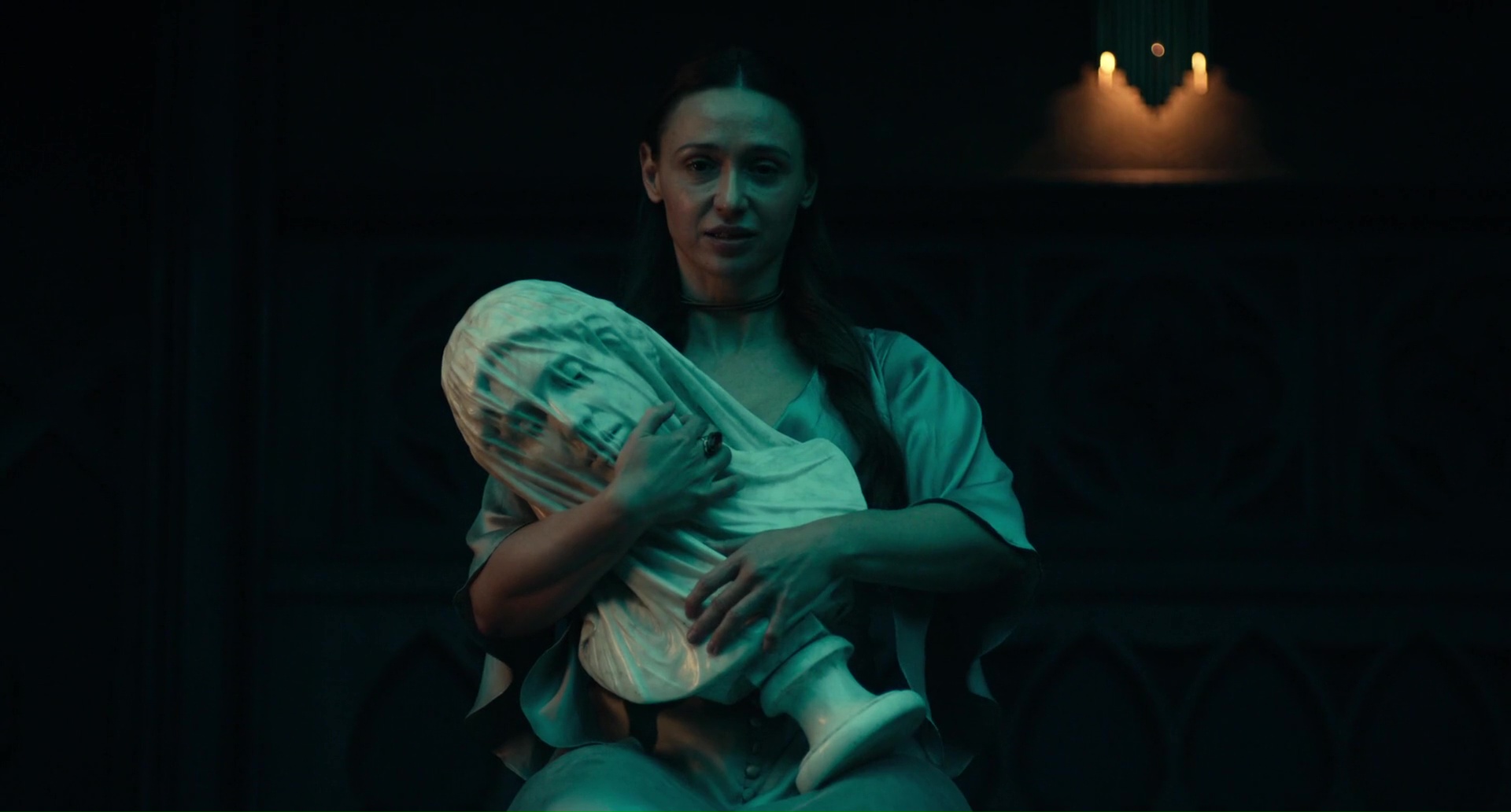
We start in a Gothic mansion, the set looking magnificent and the building establishing itself both as glorious eye-candy and also a contested space through the run of the film. We follow a POV camera and then a pair of legs – later revealed to belong to head butler Fields (Sean Pertwee). He unlocks a door after knocking saying to the inhabitant, Emmaline (Virág Bárány, Dracula (2013)), that they are worried, she must eat and she must be weak as she has not fed. She manages to push past him and, after getting a piano string from a music room, holds a bust as she leaps from the landing, decapitating herself.

DNA results

Over in New York Evie is working as a server for a caterer at a corporate event for DNA ancestry company “Unlock Your Past”. In the kitchen she and her friend Grace (Courtney Taylor) discuss the inappropriate behaviours they have had to put up with at the event and Grace has got them swag bags – these ones containing a free DNA test. We discover that Evie is broke (her rent is past due), she is an artist working in ceramics and her mother has passed (we discover later just a few months before, of cancer). She takes the test.

Hugh Skinner as Oliver

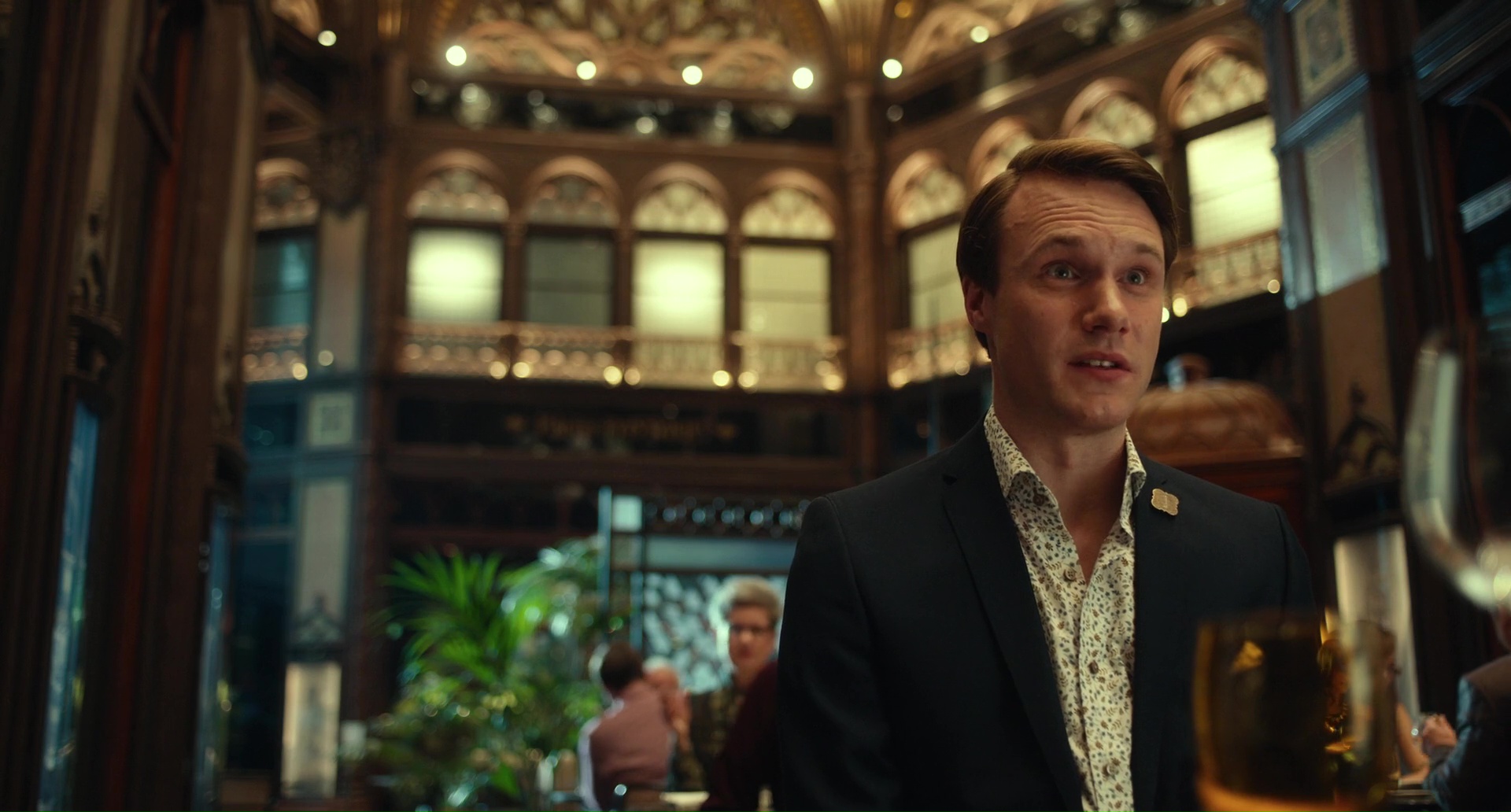
Grace is at Evie's apartment when the DNA test comes back. Now IMDb suggests a DNA test offering you names and addresses of cousins is not possible and therefore a goof. I beg to differ, such DNA companies will highlight cousins (and quite distant ones at that) who have also used the services and will allow messages to be sent between (if consent for such reveal has been given). Evie is contacted by British cousin Oliver (Hugh Skinner) who happens to be in New York for work the next week and wants to meet up – Grace is cynical but Evie is looking for connection and so meets him. Just to note that I have seen complaints about Grace stating that Oliver is the whitest guy she’s ever seen, suggesting the film is being “woke”. Firstly, there is nothing wrong with woke. More importantly two African American ladies seeing a clearly Anglo-Saxon relative may well say that.

New Carfax

Oliver proves to be bumbling, enthusiastic and charming. He informs Evie that the whole family in England is very excited at having found her and relays her family history in which she is the product of a scandal when her great-grandmother, Emmaline Alexander, had an affair with a footman and a child ensued. The footman took and cared for the child. There is to be a wedding in the family, to the de Villes, and she should attend. She can’t afford that but Oliver offers her his air miles to get her over to Whitby.

Thomas Doherty as Walt

So let us take stock. We are near Whitby (actually not at all, by location, the film being shot in Hungary and those who know Whitby and the surrounding countryside can see that immediately) and the family involved is the De Ville’s – indeed the estate belongs to Walt de Ville (Thomas Doherty, also Dracula (2013)). So, for the viewer who knows Dracula, we know the connection with Whitby and de Ville was a pseudonym the Count used in England for business purposes. When they get to New Carfax Abbey – the name of the estate – the connection is obvious.

Walt and Evie

So, to cut the plot down to essential elements, Evie is a fish out of water and I have read some people comparing this to Get Out and that is an obvious correlation. However, I think the the trope is more to do with her being a free-spirited American facing a very privileged level of British/European society. Yes, race is touched on but it is more a class issue. Walt, however, is charming and Evie is drawn to him and when she meets bridesmaids Lucy (Alana Boden) and Viktoria (Stephanie Corneliussen), she gets on with the former but dislikes the latter (who is bitchy). There is to be a wedding, of course, but it is Evie who will becoming Walt’s third bride (with Lucy and Viktoria being the other two), replacing her great-grandmother following her suicide.

Viktoria and Evie

And this I really liked – it was a neat thing to do with the three brides trope. Walt, has a pact with three families. The Alexanders – who deal with his real estate and who had not produced a female family member for some time, so finding Evie was a relief. Viktoria is a Klopstock, who are bankers mentioned within the Dracula text, and Lucy is a Billington, one of the solicitor firms Dracula uses in the novel. There is some underlying lore around their eternal lives relying on there being three – that wasn’t explained in detail unfortunately but the idea that Dracula drew the three from specific bloodlines was brilliant. It should be noted that the Alexanders are not from the novel. As for Walt he states that he has been called strigoï and nosferatu and then mentions being the Son of the Dragon, which is where Evie nearly says the D word.

turning to dust on staking

Killing vampires in this is strictly stake, fire and decapitation. There are some minor issues and one comes out in staking where we see a double impalement but the staking is clearly through the stomach for both vampires – indeed, it is one of the worst examples of clearly missing the heart I’ve seen – a shame given the fact that otherwise it was quite a cool staking. Likewise, there is some in-film logical use of names from the novel (the family names, New Carfax etc) then naming a pair of characters Jonathan (Jeremy Wheeler, the Munsters) and Mina Harker (Elizabeth Counsell) was an unfortunate grab at novel connection which was unnecessary and seemed to be for a ham-fisted broadcast of a plot development only.

the monster revealed

The film looks great and there is some nice ‘haunting’ moments put in. Evie works as the protagonist with vulnerabilities but an underlying strength she has to tap into and Nathalie Emmanuel is very natural in the role. There does seem to be a chemistry with Thomas Doherty’s very charming Walt – though he perhaps was less sinister than he should be when the mask was removed. Sean Pertwee was wonderfully surly as the butler. I think what I liked most about this was the neat way of dealing with the brides, however. 7.5 out of 10.

The imdb page is here.

On Demand @ Amazon US

On Demand @ Amazon UK

Thursday, March 24, 2022

Origin Unknown – review


Director: Rigoberto Castañeda

Release date: 2020

Contains spoilers

Hitting the 2020 festivals – notably Frightfest in the UK – this is a Mexican vampire movie that ties secretive vampire hunters and the cartel into the action. They come together in a well shot piece that perhaps flinches when it comes to the dénouement.

It starts, however, with a head rolling across the screen after we hear a particularly visceral slashing sound. We are straight into action as a group of vampire hunters and vampires battle it out. Stood in the chaos is a little girl, Lina (Paulina Gil). One of the vampires indicates that she should run as he is stabbed through the heart.

ouija

A cavalcade of black cars run through the countryside. It returns Pedro (Daniel Martínez) and his bodyguards home. In the car he hesitates on a money transfer for $20m US and eventually cancels it. As he gets home, a compound that is a veritable fortress, we discover that he lives with his children the teenage María (Ana Paola Marín) and the younger, and disabled, Beto (Matías del Castillo). Their mother is dead and he is now in a relationship with their Aunty Francis (Lisette Morelos) a fact accepted by Beto, not so much by María. There is a hint of the supernatural from the get-go with Beto using a Ouija that Francis gave him and the planchette moving whilst untouched – it says “She is coming”.

Lisette Morelos as Francis

Arriving at the house are brothers Alan (Horacio Garcia Rojas) and the mute Eric (Ramón Medína). They are part of a cartel and their presence at the house wasn’t that clear to me. Pedro is trying to get out (later Alan confirms the only way out is a high payment or dead) and the $20M he hasn’t yet paid is the severance payment. It seems they brokered the deal for him and he is worried about cartel assassins – so I guess they were there as insurance for him. Later, however, Alan indicates that he was meant to receive the $20m – it’s a tad confused but not that important.

flash of fang

What is important is that the house is surrounded by armed guards and has a state-of-the-art security system. We see Lina in a field, lights behind her, and then there is an alarm that goes off in the house. A guard finds the rear gate has been ripped at and then finds Lina. However the lights draw closer, they are drones, and the guards are attacked with crossbow bolts – one going through the back of Eric’s skull and out of his mouth.

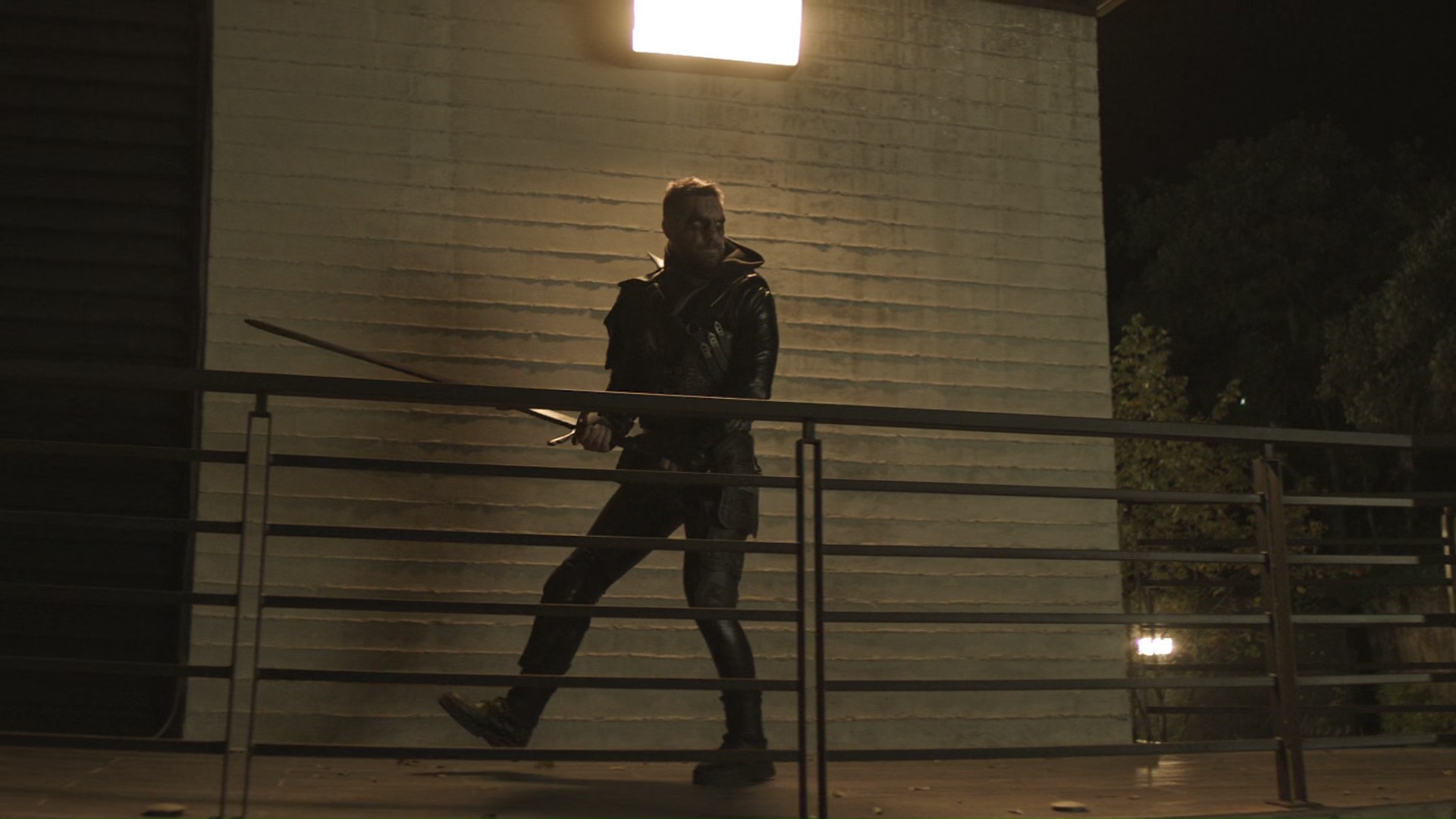
big sword

They lock down the house (though a roof skylight shutter doesn’t shut due to a tree branch – and somehow the system doesn’t detect that). This is where the film needed to tighten up for me, for instance they are now surrounded by tattooed warriors using melee weapons and they have killed all the guards outside – yet they fail to spot María who went for a sneaky smoke just before the attack. The warriors are after Lina, obviously, but she is not yet fully a vampire as she hasn’t drunk live blood.

Lina goes full vamp

So that is the turning aspect. The backstory we get is that she was an orphan, the vampires took her from the orphanage (with a view to turning, it appears) and she had leukaemia. They have drunk from her, given her vampire blood but her body is in turmoil, becoming ill again pending drinking live blood (whether live means not from a vampire or absolutely fresh isn’t elaborated on). When she does feed, she goes full on vampire and takes the fight to the warriors… her speed, her wall and ceiling crawling and her (almost) flight (it might be flight, it might be giant leaps) makes you wonder how the hunters faired so well against adult-sized vampires.

an Arcane

The hunters are called Arcanes and they have been trained from birth to hunt the soulless vampires, which they refer to as strigoï. They have no apparent regard for human life or collateral damage their activity leaves behind, making one question who the bad guys really are. Ok, Lina is warded off by a cross but she at no point threatens to hurt the family (indeed Beto’s mother, on her deathbed, told him that a girl would come who would cure him). The adult vampires (from Lina’s viewpoint) saved her, tried to cure her and did not a lot else except dance. It is an interesting viewpoint – other than Lina being overpowered without reason.

adult vampire

The film is well shot and mostly well-acted. I was less sure of Lina as a vampire then as Paulina Gil’s performance of a hunted and scared girl. The latter worked well but the decision to give her a strange ‘goblin’ voice when vamping out didn’t help and she didn’t carry sinister off when in vampire mode, at least for me. However the action was generally well done and there was some nice gore. The very end of the film contained an aspect that I thought was a tad weak, unfortunately, but I won’t spoil that here. The storyline is fairly simple – vampire hunter home invasion meets members of the cartel – and this works overall. 6.5 out of 10.

The imdb page is here.