Showing posts with label plague. Show all posts

Saturday, January 08, 2022

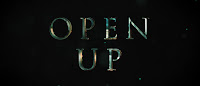
Short Film: Open Up


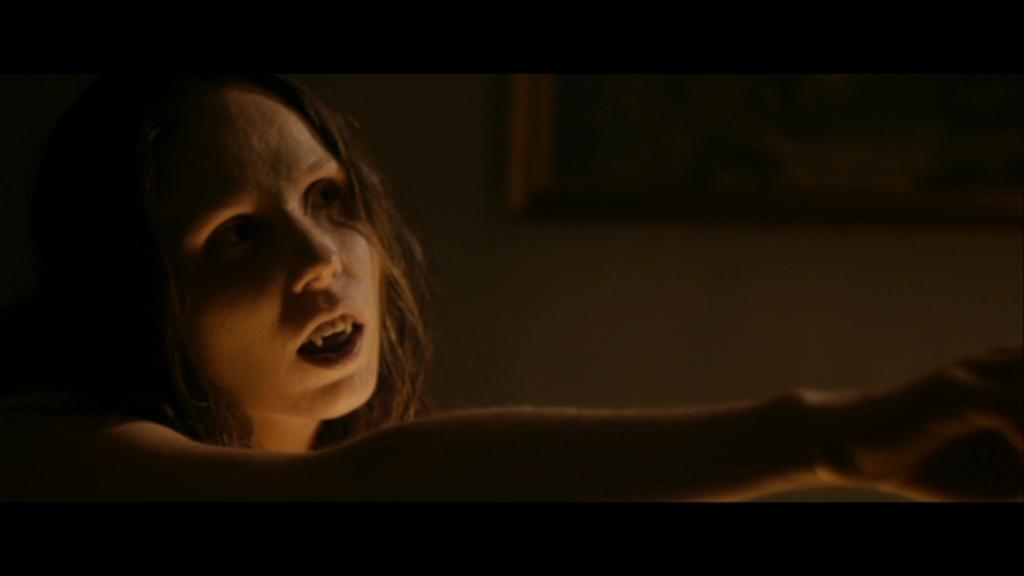
This was a 5-minute short film directed by Rob Gurney and centred on a vampire (lady-Viper) – ancient, by her own account – during the current pandemic and the UK lockdown. She asks what does lockdown mean to a vampire?

preparing to go out

For the main part it is her voice-over telling the story – she remembers plagues past, perhaps more demonstrative in symptom than Covid-19 but also remembers her kind being scapegoated by the clergy and sees parallels between the political leadership reactions then and now.

attack

There is some nicely done fake blood on display, and whilst more a musing on the situation than a story in and of itself, there is a nice twist at the end.

At the point of writing, I couldn’t find an IMDb page.

Monday, January 28, 2013

Troublesome Corpses: Vampires & Revenants from Antiquity to the Present – review

Author: David Keyworth

First Published: 2007

The Blurb: Since earliest times man has feared troublesome corpses – the bodies of the dead which do not lie still and decompose, but rise again to revisit the living. European folklore is particularly rich in tales of vampires and reanimated cadavers. The Undead take many forms, as do precautions to avert an attack and methods of destruction should precautions fail.

What distinguishes vampires from other revenants? What metaphysical agencies empower the Undead and how do theological contortions help explain them? And why did popular belief in the existence of the undead wane during the eighteenth Century? These and other vampiric questions are addressed in David Keyworth’s encyclopaedic survey of troublesome corpses.

The Review: It is difficult to review this book without using words such as seminal, wonderful and necessary: so there you go, I got them out of the way.

Heyworth’s book explores the concept of corpses who just won’t stay still and the main question within the book is, “what is the difference between a vampire and the other types of undead?” This is not an etymological question and the simple answer seems to be blood. The vampire panics of the eighteenth century had revenants that were not only called ‘vampire’ for the first time (in print at least) but drank the blood of victims. Blood did come into earlier folklore but it was not as central as it was in the eighteenth century vampire reports/folklore.

To take us on this journey Keyworth takes us from Antiquity, through Medieval writing all the way to the Eighteenth century and beyond that, touching onto the twenty-first century. However, keep in mind that this is an exploration of the vampire of folklore, media vampires need not apply except in passing. I found the discussions around the revenants of medieval England and the Scandinavian draugrs particularly fascinating.

It has to be said, however, that the book is so much more than the above. It looks deeply into all aspects of the vampire reports and folklore with impressive referencing and useful indexing.This book has been either the source of, or has informed, several threads on the Facebook Vampire Lore and Legend page and is, in itself, invaluable to all students of the vampire. 10 out of 10.

Saturday, January 26, 2013

The Caretaker – review

Director: Tom Conyers

Release date: 2012

Contains spoilers

Its always good to see vampire films emerging from Australia. This is one that seems to stretch over a few genre areas and, perhaps it stumbles just a little in doing so, but makes a brave stab at doing something unusual even though, at its heart, it uses the house under-siege in an outbreak trope beloved of both the zombie genre especially but also appearing in several vampire films.

What I love about many Australian films is the tendency to put in off-beat characters and this is no exception. Did they work? We’ll get to that later, but first the premise…

shielded from the sun
As the film starts we meet several of our main players though their stories will emerge slowly through the film. We have Ron (Lee Mason), an activist for men’s rights who believes that the divorce system is stacked against the male gender. There is Guy (Clint Dowdell) and Annie (Anna Burgess) a couple camping to try and rekindle something – it eventually emerges that the acidly tongued Annie had decided she couldn’t say “I do”, whilst stood at the altar. Most of our attention, however, is on Dr Ford Grainger (Mark White). As he drives along we hear snippets of a remembered conversation, talk of an epidemic that seems like the flu, the fact that he is infected and his arguments that he should still help people.

reflection fades
He is headed to a wine merchant’s home. The merchant, Lester (Colin MacPherson), has been phoning the hospital to say that his mother (Abbe Holmes) is ill – but with debts staking up and therefore no electricity he has not heard that there is an epidemic. As Ford drives he shields himself from the sun and when he gets to the house he runs into shelter. We see a wisp of smoke as sunlight grazes his fingers. He knows the symptoms displayed by Lester's mother well; she has covered the mirrors as she claims that the reflection is wrong and sleeps during the day (we later discover he has taken amphetamines so that he can get up and out of his hospital bed). When he sees her she seems to recognise him as infected as she states it is her nest – we discover vampires are territorial. His reflection does move differently and have fangs and when someone fully turns their reflection vanishes.

young vampire
Lester makes a steak for Ford, who has said that he must monitor the mother overnight, but he can't keep the food down, even though it is cooked rare. That night is the third since the flu-epidemic started and it takes three nights to turn. Ron’s motivational session in the pub is rudely interrupted as vampires descend on the men in there. In the hospital all the patients awaken and attack the staff and Ford beheads his rival vampire. In the morning Annie and Guy (none the wiser with regards the vampires) end up at Lester’s having run short on gas, Ron has survived the night and gets there too. When they look in on the doctor (who has eaten bits of Lester’s mum) he gives them an offer. Protect him through the day from their kind and he’ll protect them at night from his.

Lester and Annie
The film is really character driven and all the characters are quiet oddball. Lester, for instance, is a middle-aged lecherous pervert who likes young women, has a mannequin in his room and an imaginary twenty year old girlfriend. This works in the films favour but there was something just off. I can’t put my finger on it, perhaps it was the dialogue, the delivery or the substance could have been tweaked that little bit and propelled this into a classic. As it is, it is good but you feel that a chunk of something is missing. Frustratingly Ford, who seems a good character, becomes little more than a blood soaked cypher after he turns.

vampire doctor
The vampirism is interesting. It is a global pandemic and has been spread by mosquito bite (which was an unusual idea). Thus we later get hunters wearing mosquito netting. Other than that they are standard; night living, sun burning, fanged blood drinkers. A stake in the heart, apparently, will kill (as will beheading or neck breaking) but they shrug off gunshot wounds. The territorial aspect, of course, would come into play if one of the primary human characters were to be bitten by a mosquito…

Ron and Guy
The cinematography is brilliant for a budget film and really captures the glory of the countryside. The soundtrack is beautiful, haunting in places but can overwhelm the dialogue and perhaps needed a lighter aspect to capture the quirkiness of the characters a little more. Ultimately this is a film about redemption and beneath the sporadic moments of gore, beneath the odd-ball characters and the vampires, there is the heartbeat of a drama. It is interesting stuff, it might have been a classic but, as is, is a solid 6 out of 10.

The imdb page is here.

Friday, March 09, 2012

The Last Man on Earth – Colour re-master – review

Directed by: Ubaldo Ragona

Release Date: 1964

Contains spoilers

The Last Man on Earth is, in my humble opinion, the best cinematic version of Matheson’s classic vampire novel I am Legend. I have reviewed the film itself here and gave it 7 out of 10. The film is flawed, with day for night scenes jarring and action sequences that don't quite work but it is carried by Vincent Price and his wonderful voice/presence.

killed by extortionate pricing
The reason for looking at the film again is because there is a re-mastered version that has been coloured through. It is also an excuse to have a moan about DVD retailers – and specifically HMV (I am sure the phenomena I am about to explore has precedents in other countries as well). HMV is struggling as a business and I think, personally, their outrageous pricing policy has much to do with this. I saw a box set of 4 films – this, the Devil Bat, House on Haunted Hill and Bride of the Monster. They are public domain films but, despite all these being re-mastered in colour, I didn’t feel the £18 price tag was warranted, and so I checked Amazon through a handy smartphone app. The same set was under £5. More than £13 different. I know a store has more overheads than an online company but, seriously, nothing warrants such a price differential. HMV, the reason your stores are failing is because you hideously inflate product prices. I ordered the set from Amazon, whilst stood in HMV!

Franca Bettoia as Virginia
So, what about the film. Well I was rather impressed with the colouring. The film looked like it was meant to be in colour and I can only imagine the effort that went in to creating this effect. Everything looked natural and the process cleaned up the visuals compared to the other version I have on DVD. If you compare the screenshot of the newly risen Virginia (Franca Bettoia) that I have placed with this paragraph with the same screenshot on the original review you can really see the difference. Negatively it does mean that the day for night shots jar that little bit more than before.

Vincent Price as Morgan
The actual film still deserves 7 out of 10 – I am still unconvinced by Vincent Price during the more action orientated sequences, and still equally moved in the pathos filled scenes. If you haven’t seen this film of the novel then you owe it to yourself to see it and I would recommend the colour version – some films may not suit the conversion to colour but it worked well in this case and you know you’ll get a nice print.

The imdb page is here.

Monday, November 28, 2011

The Night Eternal – review

Authors: Guillermo del Toro & Chuck Hogan

Release date: 2011

Contains spoilers

The blurb: The nail-biting vampire thriller from the world-famous director of Pan’s Labyrinth and Hellboy.

The night belongs to them, and it will be a night eternal…

After the blasts, it was all over. Nuclear Winter has settled upon the earth. Except for one hour of sunlight a day, the whole world is plunged into darkness. It is a near-perfect environment for vampires. They have won. It is their time.

Almost every single man, woman and child has been enslaved in vast camps across the globe. Like animals, they are farmed, harvested for the sick pleasure of the Master Race.

Almost, but not all. Somewhere out there, hiding for their lives, is a desperate network of free humans, continuing the seemingly hopeless resistance. Everyday people, with no other options – among them Dr Ephraim Goodweather, his son Zack, the veteran exterminator Vasily, and former gangbanger Gus.

To be free, they need a miracle, they need divine intervention. But Salvation can be a twisted game – one in which they may be played like pawns in a battle of Good and Evil. And at what cost…?

The review: So, first there was The Strain, which I rather enjoyed. Cinematic in its construction, hardly surprising with the great director del Toro involved, with a CSI-vampire vibe. Then came The Fall. Running perhaps that tad better than the first book it was an excellent read.

Now we have had The Night Eternal, the wrap up of the series and… well… this is going to spoil the first two books so look away if you haven’t read them yet…

…At the end of book two the Master, the über-vampire controlling the apocalyptic outbreak, detonated nuclear power stations that had been built over the birth places of the other ancient vampires, consigning them to dust, and all their broods too as they are all symbiotically reliant on the first from their line.

It is two-years on and the world is enslaved, bar Britain (which was a cool if odd throw-away), the nuclear winter has caused sunlight to be limited to just two hours per day and the only thorn in the Master’s plan is the resistance (made up of the rather flawed characters from the first two books) who happen to have a sacred text that might be able to reveal the masters birth place, something he himself does not know, and thus allow them to do unto him, what he did to his brothers.

There was, of course, an underlying mythology to the first two books that strayed from the scientific. If it strayed then this has diverted. We discover that an angel went rogue at Sodom and Gomorrah, drank the blood of humans and then another angel. God had the angels chop him up and bury his body parts – and it is from these that the blood worms emerged and birthed the ancients and it is those parts being destroyed at the birthing sites. We shifted from a supernatural element to a full on theology and I have heard a lot of folks complain about this.

I suppose it does take some getting used to. Especially when, the once very scientific and now strung out junkie, Eph starts having divine inspired visions. However I could live with it. But…

There is no other way to describe it, the book was a slog. Perhaps I was in the wrong mood? It’s possible, but it was an effort to make myself persevere and I can’t really tell you why, just that it was. It wasn’t as though I didn’t actually enjoy the book when I was reading it, but put it down and I was reluctant to pick it up again.

This has left me feeling disappointed with the book, but I don’t know exactly why. However it is a book you’ll want to read if you have read book 1 and 2.

5 out of 10.

Saturday, November 26, 2011

Damn Nation – review

Story: Andrew Cosby

Art: J Alexander

Release date: 2005

Contains spoilers

The Blurb: The United States is locked down against a terrible threat. However, the barbed wire and border patrols aren’t there to keep an enemy out, but to protect the rest of the world from a devastating plague that’s transformed the nation’s populace into bloodthirsty nocturnal predators.

This land is their land… …from sea to shining sea.

Now, a team of scientists trapped somewhere outside of Buffalo claims to have found a cure, and it’s up to a Special Ops unit sent from the President’s current headquarters in London to retrieve it. Little do they know, not everyone wants to see America back on its feet.

From writer Andrew Crosby, creator of UPN’s Haunted and the Sci-fi network original series Eureka, and Eisner-award nominated artist J. Alexander comes a vampire thriller with surprises under every manhole cover, and the dark truth that not all monsters fear sunlight.

The review: Some blurbs are rubbish but this one actually takes the entire need to describe any of the story found within this graphic novel. A recommendation from Halek, this is another post-apocalyptic vampire story. However this is unusual in that the outbreak has been contained in the US and so the other Nations are still up and running.

After a brief prologue, sourcing the outbreaks origins, we follow the Black Ops run into the country, to rescue scientists who claim they have the cure. The blurb actually spoils the twist, I think, but it wasn’t one that you’d not see coming anyway.

We actually see little in depth with regards the vampires. Sporadic, violent attacks occur from twilight. UV rays attack the virus and so they emerge not when it is dark but when the sun is down. They are violent, driven, feral creatures.

The artwork is superb throughout with J Alexander really capturing a mood. However, my main gripe is the story, not in what is there but in what is missing. The book is thin; it felt we had just moved into a vast arena when it was all over. Clearly it was aiming for a sequel (the virus is mutating) but it could also have put some extra padding through the story we got as well. The brevity of the book keeps the score down but it was still worth a read. 5.5 out of 10.

Monday, November 07, 2011

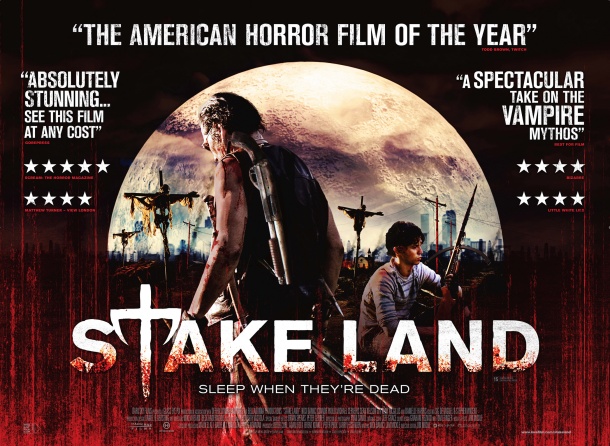
Stake Land – review

Director: Jim Mickle

Release date: 2010

Contains spoilers

I looked at Stake Land here after watching it on the big screen. Now, when I offer a first impression I have often found myself torn about composing a full review, often I re-read the first impression and decide I have said all I want to about the film, tag a score on the end and list the film in the review menus.

In the case of Stake Land I felt it would be doing this marvellous film a disservice. It is a movie I particularly enjoyed, have watched a few times since getting the DVD, and wished to run over it once more. I doubt everyone will feel the same way about the film – the joy, of course, of movies generally.

Mister and Martin
The film begins with Martin (Connor Paolo) and Mister (Nick Damici) in a car. Martin’s voiceovers lead us through the film. There is something in the boot of the car. Cutting to the time when they met, Martin is in the family garage as his dad (Gregory Jones) works on the car and his mother (Traci Hovel) holds his baby brother. Public service announcements sound through the radio. The dog runs into the night and Martin chases after it. He is out of the garage when the vampire attacks.

uncompromising opening
He runs back but is intercepted by Mister. Mister hands him a gun and they go into the barn together. By flashlight they see that his father is wounded and dying and his mother is dead. The vampire is up the barn wall feeding on the baby, which it drops. The film is uncompromising here, the scene with the baby showing us the aggressive, feral hunger of the vampires. The vampire attacks and Mister manages, eventually, to pin him but Martin has to swing the hammer to bury the stake in it's chest – it is the start of an apprenticeship in vampire hunting.

Michael Cerveris as Jebediah
Where did the vampires come from? The film doesn’t say, we are simply in the midst of a vampire apocalypse. However some short prequels, which were made available, indicate that contaminated meat may have been the source of the virus. Martin tells us that many survivors turned to God, waiting for a Messiah who never came. However crackpot religions did develop and rather than the vampires, the main enemy in the film is the Christian Army of Aryans, known as the Brotherhood and personified in the form of Jebediah Loven (Michael Cerveris, Cirque du Freak: the Vampire’s Assistant). The first time we meet the brotherhood is when two of them are trying to rape a nun, credited as Sister (Kelly McGillis), and Mister kills them – finding rapists morally reprehensible.

dumped with vampires
The Brotherhood see the vampires as instruments of God and use them to attack Lockdowns – small towns surviving through their own militia. We hear of them crashing through roadblocks, we see them dropping vampires from helicopters into a town and hear tales of them crashing planes with vampires on board into cities – that is how Washington DC is alleged to have fallen. The hypocrisy of the group and their twisted biblical message is a central theme of the film.

Kelly McGillis as the Sister
The actual core of the film is a buddy, road movie focusing on Martin’s coming of age. The film can be purposefully languid at times, with soundtrack to match, exploding into violence and, more importantly, forcing the characters, and thus us, to deal with the aftermath of the violence. Along the way they meet other survivors in the form of Belle (Danielle Harris) and Willie (Sean Nelson). The goal of the group is to head North, vampires are inactive/less active in cold climates and New Eden (Canada) is alleged to be safe.

Eilis Cahill as the scamp
We meet various vampire mutations. Berserkers have developed a bony breastplate protecting the heart and so they have to be killed by severing the spinal cord – vampires utilise the reptile brain – and we also meet a scamp (Eilis Cahill, Thicker than Water: the Vampire Diaries Part 1), a child turned into a vampire. Mister mentions that he has seen other mutations. Sunlight will kill them, causing them to burn and Mister coats his stakes with garlic essence – saying it can’t hurt. The virus manifests as black markings radiating from a bite.

vampire Santa
I really enjoy Stake Land, it was a fantastic vampiric take on the apocalyptic movie – taking back from zombies what they originally borrowed from the genre. It works as a buddy movie, as a coming of age movie and as a horror. There are moments that seem derivative – the vampire Santa reminded me of the zombie clown in Zombieland for some reason, though this film is played completely seriously as opposed to the comedic zombie movie – but this was not necessarily a bad thing. The film eschews sentimentality, the brotherhood attacks destroy hope in the form of community and Martin’s companions can be taken from him without any character sympathy and yet, in the end, an open finale offers a glimmer of hope for the character.

Definitely a film I will return to again and again. 8 out of 10.

The imdb page is here.


Sunday, June 19, 2011

First Impression: Stake Land


Last night I took an impromptu trip to the cinema to see Stake Land as I noticed it showing locally… impromptu as I have been looking out for the film but it didn’t seem to be appearing in my local region and then suddenly the local Odeon had it on.

This is not going to be a film that wows those looking for action films or pretty boy vampires. That has to be said at the beginning and, in a moment of public complaint, perhaps if that had been explained to the four ‘selfless’ individuals, who clearly were not impressed with the film, before they entered the cinema then they might not have proceeded to talk through the film until I shushed at them and they left the cinema.

Now, winding back from that and focusing on the film, it is worth reminding ourselves that the post-apocalyptic vampire story is, in the form of I am Legend, the spiritual progenitor of the zombie genre, inspiring as it did Night of the Living Dead. Thus this is a vampire film that goes back to those post-apocalyptic roots and creates a vampire that is a snarling, blood lusting killer running on instinct and spreading its plague across the planet. As per more modern infected/zombie conventions it is a creature that can run, however it is not just a vampire that is kind of like a zombie. Vampire lore holds and it is killable by stake through the heart, sunlight and severing the spinal column – Mister (Nick Danici), the vampire hunter of the piece, suggests that the vampires use the reptilian part of the brain and cutting it off is like throwing a kill switch.

Connor Paolo as Martin
The film begins with the aforementioned Mister and Martin (Connor Paolo) traveling together and the film is about Martin. Indeed, if it is anything, at its heart it is a coming of age story concentrating on the young man and it is Martin who narrates the story for us. We cut back and get Martin’s history. A moment with his parents as they get ready to try and escape the horror of the viral (we assume) outbreak building around them, preparing their truck so that they can run. The dog runs off and Martin chases after it and this moment saves his life. A vampire is in the garage and Martin sees it grab his mother, he runs back and is intercepted by Mister. As they enter the garage his mother is dead, his father dying and the vampire is up near the rafters draining Martin's baby sibling, which it casually tosses to one side after devouring. In this moment, with the baby, director Jim Mickle tells us that he is not prepared to soften the blows in the film; life in Stake Land is depressingly cheap. After a brief but violent tussle, Mister has the vampire held down and a stake held over the heart. It is Martin who has to strike the killing blow. Thus begins his apprenticeship.

are vampires the real monsters?
Mister teaches him about vampires as they travel, zigzagging East and West but always heading North to New Eden, a supposed human colony in Canada. Mister tells Martin that the vampires are cold blooded and thus cannot function in the cold but early on we hear a rumour that New Eden has no food and the colonists have become cannibals. The truth of New Eden is something we never actually discover, it is very much a representation of hope, a goal to attain and perhaps an outward representation of Martin’s own inward journey. As they travel, avoiding cities which are deemed death traps we discover towns in lockdown – the residents barricaded in the night, bartering for survival. We also discover that an apocalyptic Christian cult has appeared called the Brotherhood. This cult believes that the vampires are sent by God and that killing them is a sin. It is also an excuse for their own brand of survivalist fascism. When we first meet them, two of the Brotherhood are trying to rape a nun, known only as Sister (Kelly McGillis), and Mister kills them – slitting one’s throat and leaving one to die with a stake in his back. It turns out that the one he left to die was the son of local Brotherhood leader Jebediah Loven (Michael Cerveris, Cirque du Freak: The Vampire’s Assistant) thus the hunt for Mister is more personal on his part. The Brotherhood are the focal point for the negativity in the film, which suggests that, despite the creatures in the night being real, the actual monsters are still human – with all their bigotry, hatred and fundamentalist zeal.

Counterbalanced against that is the hope that exists, be it in the thought of New Eden, the pockets of community still managing to exist and in some cases flourish, and in the camaraderie that builds between Martin, Mister and the various rag-tag travellers that travel with them. However the film isn’t content for us to have hope. The Brotherhood will, by breaking through barriers or using choppers to drop them, destroy these pockets of hope using vampires and the film itself will take these fellow travellers away from Martin with little or no sympathy.

a berserker
Vampire-wise the majority of the lore has been given – however there are different types of vampires beyond those simply infected. Two other types we meet are berserkers, which are the older vampires who have developed bony armour over their heart, rendering stakes useless and thus they must be killed by severing the spinal column, and child vampires that Mister calls Scamps. The scamp we meet was played by Elis Cahill, whom we previously met in Thicker than Water: The Vampire Diaries part 1. Mister alludes to having seen other vampire mutations.

The acting and casting was bob on, especially in respect of Nick Damici who, despite his character’s background remaining mysterious (though more is offered in an official, online, character portrait), manages to draw a hard, world weary but caring character. We do get a cameo from Larry Fessenden who was also a producer of the film and was himself behind the genre films Habit and I Sell the Dead. The soundtrack was an interesting part of the film, mournful would be the best description and it really set an atmosphere that suggested that the film wasn’t meant to be the action or horror picture that some might have expected.

I thoroughly enjoyed Stake Land (ill-mannered cinema patrons not withstanding), though I could understand why it might fail to hit the buttons for other viewers. The IMDb page is here. (Article images sourced from Google images)

Thursday, May 05, 2011

Vampire Holocaust – review

Directed by: Shane Hatfield

Release date: 1997

Contains spoilers

Oh dear me…

Ok the VHS print was washed out so this was difficult to view in places but none the less…

Oh dear me…

This was a low end, no budget affair that was more than a little fragmented at its beginning. Essentially there were two groups of people.

in the bookstore
First off there was Tommy (Rico Love) and his crew. A gang, fighting with another gang, one of his crew is killed. He goes to an occult bookstore and asks about revenge. Whilst being shown the books, one about resurrection of the dead is mentioned. He takes that one, determined to bring all his fallen crew members back. There is a bizarre breakfast stop-off simply to introduce a character that will appear towards the end of the film and a plot about an in-gang take-over that was less a narrative and more a damp squib.

Dave's friends in school
Then there is Dave (Nick Stodden). He hasn’t been turning up in school because he has been working at his uncle’s bar. His friends are all more or less non-entities, film wise, bar his girlfriend Sherry (Coelle Peck). She’s been having nightmares about a murderous mime – now this is important, sort of. Anyway he works that evening in his uncle’s bar and then goes to pick some friends up before calling her, when he doesn’t she goes looking for him.

Rico Love as Tommy
So, Tommy does his ritual, which seems to fail and then they are attacked by vampires (well sort of vampire zombie type things, as there seemed to be as much a desire to go for a zombie movie as a vampire one – indeed only on a key few vampires, in specific shots, do we seem to see fangs). In the meantime Dave has broken down with his buddies and ended up fighting off attacking hobos (possibly vampire hobos). Dave and his pals end up in a junkyard, as do Tommy and what remain of his crew.

we just watched the Crow
They eventually decide to make crosses and bolt for the bar. However the bar has had a vampire infiltration, of one, whom Uncle Tony (Pat Stodden) has killed. He, Sherry and her friend Tracy (Brandy Gordon) are under siege. Intercut with all this is a killer with a painted face killing prostitutes. Sherry’s mime? We don’t know and no connection is made between her dreams and the man. Indeed it is likely that the makers had seen the Crow and thought, that’s cool, as it looks like Crow makeup that he's wearing.

the bar vampire
Be that as it may, when the survivors get to the bar (Tommy and 1 crew member plus Dave and 1 friend) and a stranger appears, wearing a long black coat, it does not take a genius to work out that he is the killer (with makeup off). When he reveals himself as the leader of the vampires it is even less surprising. He is Caleb (Joseph Rubenstein) and he is a direct descendant of Dracula. He was killing the prostitutes to get their blood for a ritual to raise his undead army, Tommy’s ritual did fail.

shotgun stake
What was more surprising was… when uncle Tony took shotgun pellets, emptied the buckshot and put little mini-stakes in each cartridge and much worse, in the end, he drops a stake into the barrel of the shotgun and fires it out, he somehow failed to blow his hand or maybe even his face off as the shotgun backfired, the shotgun failed to jam and the little stunt worked.

fangs on display
There is little lore. Crosses may or may not work – it isn’t clear. The vampires crowd doors and windows like a horde of zombies – completely failing to turn to mist and enter until Caleb tells them to (although, to be fair, I think Caleb was playing with the survivors). Kill the head vampire and all the other vampires die, unless you happen to be the girlfriend of one of the main characters and then – despite suggesting that sex would be necrophilia earlier in the film and thus indicating she did in fact die – she becomes mortal again with no recollection of the night’s events!

A failure to act, rubbish dialogue and failure to offer proper exposition. This was a chore to watch. 1 out of 10 for the scene where someone was folded to death!

The imdb page is here.


Tuesday, February 01, 2011

Honourable Mention: The First Vampire: Don't Fall for the Devil's Illusions

This was a 2004 short, directed by Jason Todd Ipson and available to watch at Sloan Science and Film. The setting is fantastic, the film is set in Sweden in 1349 and the film itself looks (as far as I could tell given the streaming video) rather luscious.

I did have a wee problem with one of the premises behind the film and that was a shame as the core premise was a nice area to move into, though even with that there are reservations.

It starts at a lodge and a hooded figure (Clayton Barney) pulls a child (Stefania Barr) from her bed. Meanwhile Erik (Dan Merket) has been to see the priest, Father Anderson (Derrick O’Connor) for (what sounds like) confession. He then goes to the tavern before leaving town. His horse nearly runs down the figure, who drops the child and runs. At the church, with the sickly child, he claims to have seen a devil with fangs, pale skin and evil in his eyes.

erecting a cross
Sister Ingrid (Susan Duerden) arrives at a house to fetch Dr Jurgen (Ben Livingston, Dracula: Dead and Loving It) to the town. Four are ill after being attacked. They arrive, as a cross is being erected in the town entrance, and he examines a victim. She has a mark on her neck that looks like a bite but has not broken the skin.

The film then follows the hunt for the creature – found in a barn at one point and screaming in pain as he runs out in daylight – and Jurgen’s search for the medical truth behind the illnesses. Things are confused further as Ingrid becomes ill in her lungs – but has no marks.

Now comes where I thought both the strength and weakness of this lies. This is spoiler heavy so you might want to look away.

a victim
They do catch the vampire, and despatch him by stake and immolation, but the deaths – as an intertitle tells us – continue as the suffering is from bubonic plague. I liked the plague idea, but bubonic seems unlikely a candidate as the buboes would be in the armpits and groin as well as the neck, those ill would not lie so peacefully and the explosive diarrhoea would be telling. Also Ingrid seems to have pneumonic plague but she would likely have been dead in 24 hours. A better plague to have used would have been septicemic plague, as was used in the classic Isle of the Dead. However, I could live with the idea that plague was mistaken for the work of the devil in the form of a vampire.

Ben Livingston as Dr Jurgen
I had a bigger problem when the intertitle suggested that the scapegoat suffered from Gunther’s Disease (spelt incorrectly) and then named it vampire’s disease. Gunther’s disease is congenital erythropoietic porphyria and the idea that it is “vampire’s disease” is a modern conceit based on bad science. The intertitle claims that sufferers can display the following symptoms: extreme photosensitivity, which is true but was not a part of vampire mythology until Nosferatu. It suggests they can have growth of fangs – some porphyria sufferers can suffer from necrosis of the gums or browning of the teeth due to deposits. Finally it suggests that they have “an insatiable thirst for iron found in blood” – which is absolutely untrue. Firstly some sufferers lack haem, which does consist of (amongst other chemicals) an iron atom but… a sufferer could not absorb haem by drinking blood nor would they crave blood. The association of porphyria with vampirism was, as I say, bad science with a lack of knowledge in respect of folkloric vampires and only served to cause actual sufferers harm with the association. I could have lived with this if he were a porphyria sufferer who was used as a scapegoat for being different (Scandinavia has a larger than average incidence of porphyria) if it hadn’t been for the bad science mentioned at the end.

That moan aside, this seemed worthwhile and a feature length film lurks at the heart – with some scientifically accurate changes going hand in hand with an expansion.

The imdb page is here.

Wednesday, November 17, 2010

Dying Light – review

Author: D. Scott Meek

First Published: 2010

Contains spoilers

The Blurb: In the near future, a new world order society mercilessly eradicates the last victims of the “blood virus”, “Vampyres”, constantly in fear of discovery and persecution, live and walk among humans as ordinary people with an extraordinary reality and a haunting past; a deal to save the last vampyres is struck, but intrigue, deception and betrayal ensure that while the sun will rise tomorrow, no one knows who will live to see it.

The review: Blurbs… sometimes I hate them. The blurb for this book is a stream of words that isn’t very will written (candidly) and incorrect. This is not a book set in the near future – more like 400 years hence. The comment about the sun rising is almost a misnomer as it is a world of almost constant rain. The media pack actually tells us more. It talks about the death of the global jihad (in 2036) and the last ditch attack of the fundamentalists – the Tears of Allah, a bio-attack known in the west as the Blood Virus. I felt this was a bit stark – a bit in your face. The building of the story's history, within the actual book, is done with much more subtlety and craft.

So what do we actually have? We have a world drawn around us that is a dystopian view of tomorrow. Early into the book I had a distinct feel of Bladerunner, with a brooding sky, constant rain that explodes into devastating and deadly storms (as though the earth was trying to rid itself of humanity once and for all), neon holograms advertising products to an exotic throng, hovercars flying to higher city levels, whilst the lower levels seemed dangerous, brutal. All this. it seems. was deliberate as Meek builds in a location called the Tannhauser Gate and later mentions a Tyrol Corporation (not a million miles from Tyrell). Is this a problem? No, the city is skilfully painted in words, the resemblance is noted and even celebrated and there are distinct differences too.

In this world Meek explores the attempt by the Vampyre Lord (who was the last US President in office as the world fell apart) to draw a treaty with the Premier – actually his many times Grand Daughter (although she seems unaware of that) – to allow the few remaining vampyres to live in peace with humanity. In the meantime praetorian squads hunt vampyres and Charlotte, a vampyre, is tasked by her own people to hunt down rogues also.

The world becomes much more complex than that, Charlotte is sent after Michael – her lover and husband – who has betrayed the vampyres. Soon we discover that it is not the case, but, and here is the aspect that was slightly frustrating, we never have explained to us why it was necessary to have her hunt him. There are machinations, plots and counter plots occurring that Meek keeps deliberately obscured. Purposefully, it would seem, threads are left dangling before us, at once enticing and frustrating. We meet one character, Jeremiah, only very briefly and yet the climax of the book is his countermove for his own motivations. As the novel ends we are no wiser as to what has occurred with most of the main characters. Is it to be revealed in a sequel? The book is the first in a series and so one hopes so. I do know that I was left with more questions than answers, I know that this led to a frustration at the end of the novel and yet the frustration was balanced against the skilful writing and clever characterisation.

Onto the lore, and there isn’t too much to tell. The vampyres are faster and stronger. They have extendable fangs and claws, changes wrought to the physiology by the virus. They are immortal (it would seem) and the correlation is made to cancer – though their condition is like cancer in reverse. They drink blood to survive. There is never sunlight but they do say that sunlight is not an issue and, when mentioned, Dracula is brought up – hinting that Stoker’s vampires were destroyed by the sun, which is blatantly not the case. I re-read the passage and still drew the same impression so chose to believe it is an error on the part of the characters and not the author. Religion is a theme within the book, an undercurrent bubbling away, but not necessarily for the vampyres – they are the product of attempted genocide and not through a deal with the devil, to paraphrase the Lord Vampyre.

This is cyberpunk with a deliberate Bladerunner chic and a history drawn in such a way that we feel we know much of what occurred through glimpses and reflections. Extremely well written but frustratingly opaque by the end – you are left screaming for more clarity and clamouring for the sequel so that you can continue your dive into Meek’s dark world. 7.5 out of 10.


Friday, September 17, 2010

The Fall – review

Authors: Guillermo del Toro & Chuck Hogan

Release date: 2010

Contains spoilers

I am a member of the Amazon Vine programme and, essentially, that means that I get a couple of emails a month with products that I might want to review and they’ll send me gratis. When a book that I have had pre-ordered for months comes up, well it’s a bit like Christmas. Pre-order is cancelled, free copy cometh here… Rather than repeat my review here I am simply going to direct you to Amazon. You can find my review for the Fall here.

As Amazon score out of 5, note that the TMtV score is 7.5 out of 10.


Sunday, July 25, 2010

The Passage – Review

Author: Justin Cronin

First Published: 2010

Contains spoilers

The Blurb: What strange places our lives can carry us to. What dark passages…

Deep in the jungles of eastern Colombia, Professor Jonas Lear has finally found what he’s been searching for – and wishes to God he hadn’t.

In Memphis, Tennessee, a six year old girl called Amy is left at the convent of the Sisters of Mercy and wonders why her mother has abandoned her.

In a maximum security jail in Nevada, a convicted murderer called Giles Babcock has the same nightmare, over and over again, while he waits for a lethal injection.

In a remote community in the California mountains, a young man called Peter waits for his beloved brother to return home – so he can kill him.

Bound together in ways they cannot comprehend, for each of them a door is about to open into a future they could not have imagined. And a journey is about to begin. An epic journey that will take them through a world transformed by man’s darkest dreams, to the very heart of what it means to be human.

And beyond.

The Review: You know I should be jealous. This book – 766 pages and the first of a trilogy – sparked a multi-million bidding war with the publishing houses, has allegedly had the movie rights sold pre-completion (to Fox 2000) and Ridley Scott has been strongly suggested as the director. Then again, having read the damn thing, it deserves it.

Comparisons have been given to Stephen King’s The Stand – and such are understandable. This is a post-apocalyptic story, where a virus rips through the continental United States and said virus has been released due to the black ops military experiments with an old, old virus.

The comparison is also fair as Cronin’s writing reminds me of King, a wonderful eye for minutia combined with a detailed character building. How detailed? The first couple of hundred pages show us how the outbreak occurred and introduce us to characters most of whom cannot survive and yet we know them, feel them as Cronin weaves them around us.

Of course there is another predecessor book this owes a debt to, I Am Legend, the granddaddy of apocalyptic novels. This is, however, a unique take on the concept, with more of a philosophical/mystical heart than Matheson.

The year is round the 2018 region and the military are experimenting with a virus to make a super-soldier that will self heal on the battlefield. They are using it on death row “volunteers”. Eventually Fanning – infected during the original expedition to Colombia to find a legendary virus and known as zero – plus 12 “volunteers” are infected. They have become known as sticks – due to the way their new bioluminescence makes them glow like glowsticks – and they are no longer anything that resembles human. They are fed rabbits and it has been noted that they will eat 9 and leave the tenth, ripping the 9 apart. With each test subject the virus has been weakened but the results have been the same... a new type of subject is needed.

That is Amy, a six year old abandoned by her mother. Younger than the other ‘volunteers’ and with the weakest dose yet, the viral effects are somewhat different. However the army are unable to capitalise on that as the sticks have been influencing the dreams of those around them and an outbreak occurs. As the book suggests it only took “thirty-two minutes for one world to die, another to be born.” Suddenly the meaning of the tenth rabbit is clear, they feed on 9 and infect the 10th human victim.

Wolgast, the FBI agent who had been working with the military to bring in the ‘volunteers’, helps Amy to escape and it is through his eyes we see the death of the world but it is done at a distance, third hand as he hides in the mountains with her. A very clever way of making a chilling finale to the world without getting crushed in detail. It is also the way our vampires – known as virals, smokes or dracs at different stages – are drawn.

Cronin goes back to a world of horror where you rarely see the enemy, as a reader, a horror that is truly terrible and, for the characters, when these monsters fall from above (they hunt from height) you are likely dead. The book itself has been accused of becoming slow after a while. Not really so, but it is a victim of its own style. When we have reached the end of the Amy/Wolgast story we flip to a diary describing the creation of First Colony – a place of alleged safety in the Californian Mountains. We then jump forward 92 years, the colony intact, under bright lights that shine through the night and the survivors who (other than walkers, who come in from the desert – something that hasn’t happened for years) try and keep themselves (and humanity) alive in the midst of a post-apocalyptic world. We then go through a new round of character building, which is where I think folks believe the book has slowed – it hasn’t but Cronin’s style demands he builds rounded characters again. Perhaps the tone becomes a tad action adventure towards the end.

Amy, of course, is still out there – perhaps aged to around 14 in appearance she is sensitive to sunlight and apparently immortal, she heals rather quickly but that is the only physical thing she has in common with her viral cousins. The virals, our vampires, are insanely strong, a mass of tooth and claw and must be killed by hitting the sweetspot – in the breastbone (the equivalent of staking). There are other aspects that relate to standard vampire lore. Sunlight burns them, killing them eventually, and they avoid bright lights. It is noted that those infected always return home and this is akin to needing “native soil” and also the more traditional idea of preying on one’s family. Garlic is mentioned, but it is a very brief mention and it appears they like it rather than not.

They attack at the neck and spread the virus that way and one is distracted, at one point, when shown a mirrored surface – reminding her of individuality or her humanity? There is an interconnectedness between the virals, on a telepathic level, and the original virals can influence weaker willed minds. This interconnectedness also ties in with a commonly used piece of lore and... it is a spoiler too far and I have said too much already.

I found this an astonishing read, a wonderful take on vampirism, a fantastic look at a post-apocalyptic landscape with a ribbon of hope thread through it that sees fate plays a hand in this world as much as anything else. Highly recommended for those who like their post apocalypse with a seasoning of King-like detail, their vampire lore unusual and their vista epic. 9 out of 10.


In Paperback @ Amazon US

In Paperback @ Amazon UK

Monday, June 14, 2010

Planet Blood – review

dvd set
Director: Scott Patrick

Release date: 2001

Contains spoilers

Having watched, and reviewed, the poor effort that was Blood Red Moon I decided that we should visit Scott Patrick’s earlier effort – Planet Blood.

It is a mercifully short film, available on the Mortuary of Madness set, and is, generically, an I Am Legend derivative.

Brett Kelly as Justin
Meet Justin (Brett Kelly, who was in Blood Red Moon and was in/directed the remake of Kingdom of the Vampire). He is our survivor in the vampire apocalypse and we have to ask questions here. The first to spring to mind, for instance, is... how is it that the power and water are still on? This is the immediate logical question that springs to mind. Justin speaks to a mannequin head, however, long before Will Smith became obsessed with mannequins in I am Legend .

vampire attack
We also notice that he hasn’t actually boarded the place up either and, guys, I know you were on a budget but Justin would have been vampire chow. He does make a tin can alarm system and then wanders out into the snow when it rattles. This leads him to being face to face with a vampire (Jody Haucke, also Kingdom of the Vampire) and whilst we don’t see fangs we do later with other vampires and rubbish fangs they are too.

vampire 'horde'
He gets a radio signal from a survivor in the warehouse district and after some umm’ing and arr’ing goes to find them. En route he is attacked by vampires and, once in the warehouse, he asks the two women, Jody and Daisy (Anne-Marie Frigon), and one man, Lane (Ray Besharah), how come the vampires are attacking in the day? They don’t really know, but we do… low budget filmmaking is the answer, my friends.

another one bites the dust
Lane goes and has a cigarette, opening a door to have his smoke and then leaving it ajar! Seriously, if the Darwin Awards are still being given in this alternate reality he is up for one and, of course, the vampires get in… But they aren’t exactly a horde. There’s two groups of three and, when we cut to the ones outside, it’s the same set of actors! We also notice that head shots are awarded with a crap CGI overlay of a little blood and the death of a human necessitates throwing fake blood over glass.

meteor of doom
However, before they are attacked we discover that the reason the apocalypse happened was due to a meteor… Again rubbishy CGI, honestly having the actor tell the story would have been better. Not that there is much acting, though Brett Kelly is ok, given what he had to work with.

The shame of this is that it should never have been tackled with so little budget, beyond anything else. I actually appreciated what Scott Patrick tried to do more than Blood Red Moon but it is still pants. 1.5 out of 10. The imdb page is here.