Showing posts with label vampiric building. Show all posts

Sunday, August 30, 2026

The House That Drinks – review


Author: Alex Alicea

Release date: 2026

Contains spoilers

The blurb: Marrow’s Point has a house everyone avoids and one ambitious investor is determined to monetize it anyway. When restoration consultant Evelyn Hart steps onto the fog-choked property, the mansion seems to notice her. Doors lock themselves. Sound dies in the halls. Blood does not spill, it sinks into marble and wood like the building is thirsty.

This is Gothic Horror with teeth: a living Victorian mansion that behaves like an organism, studying people, learning what they fear, and deciding what they’re worth. Locals warn that even if you leave, “part of you becomes a room,” and the house is patient enough to make that prophecy feel inevitable.

Evelyn is hired by Lila Voss, a desperate dealmaker who refuses to slow down even as the house’s “charm” turns predatory. When Evelyn pushes back on hosting guests, Lila’s answer is blunt: “Whatever it takes.” The house seems to like that.

Then Detective Mark Calder gets pulled into the nightmare as the mansion’s history snaps into focus and the town’s “luck” starts looking like a bargain paid in blood. The house whispers offers of protection in exchange for feeding, and Mark realizes the missing-persons story may include his own family.

As the mansion tightens control, Lila accelerates a preview event, funneling dozens of guests into a structure that herds them like prey. To survive, Evelyn and Mark are forced into an uneasy alliance with Silas Crowe, a contractor who knows too much about what’s under the house, and Rowan, an unnervingly calm figure who feels far older than he should.

If you want a Vampire Horror Mystery where the monster is the building, the secrets are structural, and every locked door is a decision the house is making, step inside The House That Drinks… and try not to give it anything it can keep.

The review: Some people are very traditionalist when it comes to vampire stories, they are looking for a member of the undead, they expect certain tropes. Others like a wider view of what constitutes a vampire and I am of the second camp, as regular readers will likely attest. I particularly like the idea of a vampiric building and indeed wrote a chapter on just that subject for the Palgrave Handbook of the Vampire. I was therefore really excited when I spotted this book and there are conceptual aspects that I really enjoyed but other facets that are worryingly poor.

The book follows Evelyn Hart, a house restorer employed to assess the Varrick House (a building that had many names and uses over the years, but was built by immortality obsessed Elias Varrick in the nineteenth century). The house, however, is a living being and, as the book goes on, we find out about the predatory creature sealed in a foundation stone that acts almost as heart and brain, are told of the living wood used in construction and are introduced to a design that was meant to allow immortality and does, kind of. The house not only drinks blood but drinks in the person, taking the memories and personality, trapping the essence within its walls as it slowly grows and changes. This then feels like a culmination of certain vampiric house traits, whilst the stealing of memory and personality makes the house a repository of undead memory. In that sense it was a conceptually exciting read.

What went wrong was in the writing. There is inconsistency throughout the book and, as I read it, I gave that the benefit of the doubt as some of the inconsistencies, certainly around the passage of time, may have been deliberate to give the whole thing an Unheimlich essence. That might be true in places but, for instance, the time setting jumps between January in one place and October in another, which seems it might be a change in concept by the author and the editing of a redraft was poor…

However the errors in names were pretty bad, Evelyn Hart becomes Evelyn Thorne at one point. At the same time in the book Detective Mark Calder temporarily becomes Mark Chen. Chen, incidentally, is a name used for several background characters in the narrative. At the end of chapter 17 they are held in the house, with it locking them in place, at the start of chapter 18 Evelyn is outside in the nearby town – charitably, this could be nonlinear, though there is no indication of this, or deliberate but the author neglected to put anything in that would indicate that to the reader, likely it was just sloppy. On a positive note, it does jar the reader, and so inadvertently it does add to the uncanny.

Characters repeat plot points they have already established as though new – though perhaps this was meant to be the impact of memory being drunk and the characters losing their minds (literally) but if so the author never let the reader know this was what they were doing. Attitudes regress with characters resigning to the truth of the house and then deciding that can’t be the case despite seeing absolute proof. The house’s custodian, Rowan Hale, is met for the first time in the nearby town but later we are told his binding to the house is so strong he cannot cross beyond the house’s property line. He tells how his family were bound to the house, suggesting the responsibilities were inherited, and he has seen its actions by observing past family members but also that he is the one that made the original deal, was bound and has aged extremely slowly since. This might be an untrustworthy narrator, an error in drafting or an inability to keep motivations and backstories straight.

Another thing I noticed was the house using Evelyn to draft blueprints to allow it to reproduce, there are seventeen of them. However, at the end suddenly the house itself is blueprint 11 and it is strongly suggested that there were ten house before and likely out there (an idea that didn’t fit with the backstory and a single captured predator at the heart of the house) and seemed a fudge to open the pathway for a sequel.

I think all this could be one of three things: 

One, that the author deliberately made unreliable narrators and had things change or aspects repeat to build in that Unheimlich element and make the narration itself a liminal space between facts and falsehoods. If this is true, then the failing is on the author for not making this clear to the reader. I managed to convince myself this was true so as to stay with the narrative and finish the volume, and this was because I loved the central idea of the vampiric house, but I don’t truly think that was the case.

Secondly it might conceivably be errors created because the author used AI, to a greater or lesser extent, in the writing process. The inconsistencies and errors would then likely be AI hallucinations. I sincerely hope that isn’t the case, though I also note the, apparently, AI illustrations on the Amazon product page. A worse scenario is that the author is a pseudonym/invention that entirely AI generated books are being attached to – there is very little about the author online and he seems to have published a large number of books in an incredibly narrow space of time.

Lastly it is simply sloppy writing and redrafting, with ideas shifting, rushed changes, and very poor subsequent editing (or none at all).

As stands, if you like the idea of vampiric buildings and can overlook the issues with the narrative it may be worth a go, and that bolsters the score to 3 out of 10, which is generous given the issues but a tragedy given the concept.

On Kindle @ Amazon US

In Paperback @ Amazon UK

Friday, July 03, 2026

Vamp or Not? Monster House


For those who are unaware, I have a keen interest in the idea of the vampiric building and wrote a chapter, Vampiric Buildings: Life Soaked into Mortar and Blood into Earth for Palgrave’s Handbook of the Vampire. I was aware of the 2006, Gil Kenan directed, Monster House and think I did see it back in the day. However, I decided to take a look with pretty fresh eyes (I remembered next to nothing about the content) and a view to see whether we could call the house of the title a vampiric building.

The film starts the day before Halloween in US suburbia, within a nostalgia dictated timeframe. It starts with a very young girl riding her trike and greeting inanimate objects. Suddenly the speeding trike stops, the animation follows a leaf but the inference is that she has flown off the bike. She hasn’t, but she is stuck on the verge of a lawn, for some reason unable to move (I’ll return to why later). Suddenly the door flies open and house owner Mr Nebbercracker (Steve Buscemi, Paris Je T’aime, Hotel Transylvania 1, 2 & 3) comes screeching out of the house, yelling at the girl and in the tirade asks if she wants to be eaten alive – she runs off crying and he breaks and takes the trike.

Steve Buscemi voices Nebbercracker

This is watched from over the road by DJ (Mitchel Musso), a young boy who has been observing the antics of Nebbercracker and logging them. His parents are going away for the weekend and have arranged for Zee (Maggie Gyllenhaal) to babysit. Meanwhile, his friend Chowder (Sam Lerner) arrives but his ball ends up on Nebbercracker’s lawn. DJ notices that he hasn’t reacted and goes to retrieve it but the old man emerges and, in the tussle, collapses – DJ thinks dead. Paramedics come and pick him up – the viewer notices that grass seems to grow and grasp one of the gurney wheels, which breaks off and is then consumed by the earth. That night DJ receives phone calls from the house – making him believe that the ghost of Nebbercracker is haunting him.

the house awake

Now, we have heard local rumour from Bones (Jason Lee), Zee’s boyfriend, who lost his kite, as a kid, to Nebbercracker, who suggests the old man had been married, fattened her up and ate her (bringing in a cannibal theme – though the story is gossip and not truth). Kicked out by Zee he taunts the absent old man (and by default the house) only for the front door to open and his kite be there. With a similar lure used later with Chowder’s ball it indicates an intelligence (and memory) at play. The house consumes Bones. The next day DJ and Chowder save a prep school student selling candy, Jenny (Spencer Locke, the Vampire Diaries), and the three realise they have to neutralise the house before trick or treaters arrive.

the gang

Getting some half-baked advice (that is accurate) they are told they have to “strike at the source of life – the heart”. This is, of course, a vampire trope. They decide that the heart must be the furnace and they have to douse it (the house chimney has been active despite being empty). We have also seen that the house can morph its physical self and the front door becomes a mouth, with teeth (and the veranda can widen the maw), it opens a gullet within the hallway and the hall carpet becomes a tongue. 

Constance's grave

When Nebbercracker is released from hospital (and the kids have just escaped from inside the house) DJ realises that the house is Nebbercracker’s wife Constance (Kathleen Turner). We get the story that she was an unwilling circus freak – the Giantess – and war veteran Nebbercracker helped her escape. He was building the house when trick or treaters caused her to fly into a rage, fall into the foundations and be buried in concrete – that has become a shrine/grave for her. He soon realised that her spirit had possessed the house, that she would attack those who approached and hated Halloween. Nebbercracker was actually protected the neighbourhood and had been essentially a prisoner of his own making for forty five years.

with legs

So – is the house a vampire. Well, possessed by Constance’s spirit it is certainly a monster and arguably (through Constance) undead. It is sentient, intelligent, remembers both what happened to Constance and those who have been near. It is polymorphic, able to change from a creepy house into an animated creature – at the end of the film it takes two trees as legs and becomes mobile. The idea of striking the heart was correct. The question is, does it feed on the victims? That isn’t clear. We do know that those it consumes in the course of the movie all survive but that does not mean to say that normally it would not digest them or drain their energy – the film is silent and probably deliberately so as it is a PG movie. Assuming it does, I think we can call this a vampiric building and one whose source (ie the possession) is communicated to the viewer – in other vehicles these things can be simply alive and bad.

The imdb page is here.

On Blu-Ray @ Amazon US

On Blu-Ray @ Amazon UK

Friday, June 05, 2026

Honourable Mention: A Haunting on the Hill


This 2023 sequel to The Haunting of Hill House by Elizabeth Hand was authorised by Shirley Jackson’s estate as an official sequel to the seminal novel. The book obviously features Hill House, and the ‘haunting’ therein but also touches into witchcraft and, with the recurring appearance of a supernatural Fetch of a hare (or multiple thereof) has a touch of folk horror to it. There are some interesting (literal) echoes from the original story.

I put haunting in parenthesis because it is mentioned through the book that it is not a haunted house, rather that the house is aware, an entity of its own. The phenomena in the house stems from that. It is further suggested that the house both hates and needs the occupants and it is this need that leads us to an Honourable Mention again as the reason for the need is perhaps hinted but not explicit. The house is owned by Ainsley, who is part of a coven of three, the others unhappy that she occasionally rents it out as to do so is dangerous – the three watch over it and Evadne, one of three, asks of one of the group in the house, “Hill House—how do you think it survives?” adding “Ainsley’s done virtually nothing to maintain it. No one has. Hill House looks almost the same today as when it was built a hundred and forty years ago. Why do you think that is?” The implication being that it takes something from residents within and maintaining itself through that. This is almost, but not quite, spoken again later (or that was my reading, at least). It becomes clear that those it manages to “take” remain in spirit, perhaps as puppets for the house, which sits against the idea of the house not being haunted.

The only other vampire adjacent comments is character Nisa suggesting that they may need garlic. We get the tale, within the dialogue, of one of the characters meeting a woman who suggests she met a haint (a restless ghost or spirit) who impregnated her. Mentioned as haints do occasionally get mentioned in vampire texts.

In Paperback @ Amazon US

In Paperback @ Amazon UK

Monday, April 20, 2026

Honourable Mention: The Haunting of Hill House


I had never read Shirley Jackson’s 1959 novel, which is shameful given one of my favourite films, The Haunting (1963), was based on it. I recently rectified the situation and read the novel, though I didn’t expect to give an honourable mention here.

I knew that the 1963 adaptation was pretty faithful to the book but there is nothing within the film that could have it (and the house at the centre) labelled as a vampiric building text. This is not true of the later (and also excellent) Mike Flanagan adaptation, The Haunting of Hill House, which made the house vampiric (and the least said about the 1999 film the better).

The house in the novel, however, is immediately coded as living and sentient (if mad):

“No live organism can continue for long to exist sanely under conditions of absolute reality; even larks and katydids are supposed, by some, to dream. Hill House, not sane, stood by itself against its hills, holding darkness within; it had stood so for eighty years and might stand for eighty more. Within, walls continued upright, bricks met neatly, floors were firm, and doors were sensibly shut; silence lay steadily against the wood and stone of Hill House, and whatever walked there, walked alone.”

There is a suggestion that it sought to feed from inhabitants when we are told, “The sense was that it wanted to consume us, take us into itself, make us a part of the house, maybe—”. Had the theme been expanded on then I would have been suggesting that the house was, indeed, vampiric but, as a throwaway, I will say it certainly flirts with the trope and this could lead to a vampiric reading.

The mention is offered as Jackson certainly draws the reader to the vampiric on a couple of occasions by associating the house with an imagined vampire inhabitant. In one exchange about housekeeper Mrs Dudley we get:

“‘She probably watches every move we make, anyway; it’s probably part of what she agreed to.’
“‘Agreed to with whom, I wonder? Count Dracula?’
“‘You think he lives in Hill House?’
“‘I think he spends all his week-ends here; I swear I saw bats in the woodwork downstairs.’”

Later we get another mention, whilst discussing Mrs Dudley leaving the house in a car with two others (one of whom was her husband, who the characters had met at the gate of Hill House, but who the second person might have been is never discussed further):

“‘First Murderer must be Dudley-at-the-gate; I suppose the other was Count Dracula. A wholesome family.’”

The use of Dracula is interesting as Castle Dracula was meant, at one point, to be intimately connected with the vampire, collapsing on his death. In this case it is a mention in passing but I would suggest the mention was deliberately used in order to invoke a particular Gothic feel for the reader. Nevertheless, the invocation of Dracula within the text opens the opportunity for me to mention the book here.

In Paperback @ Amazon US

In Paperback @ Amazon UK

Monday, April 06, 2026

Vamp or Not? The House Was Not Hungry Then


This was a 2025 feature, directed by Harry Aspinwall and the title kinds of says it all. For context I am fascinated by the idea of vampiric buildings and actually wrote about them for Palgrave’s Handbook of the Vampire. Many fans of the traditional vampire form will likely baulk at the idea, but I accept a very broad spectrum of what is a vampire or vampiric.

Some may also baulk at this film as a piece of cinema; almost entirely using static cameras in various rooms of the titular house, to describe it as a slow burn might actually be an understatement. The house has seen better days, unfurnished as wallpaper peels etc. but its sparsely modern look undermines a traditional Gothic air that may have added atmosphere. And yet, I did find myself drawn in.

view of the man

The film takes us through the static cameras so that we can explore the house. Then there is a distant peel of thunder as cars pull up. There are four people come to view the house, shown in by a man (Clive Russell, Neverwhere & Dracula (2020)). He tells them about the house but never leaves the vestibule, visible to us through the glass of the door. As the family look around a sound builds in the background and one by one the people just vanish, the only trace a piece of clothing that flutters down, in one case. Later we see the man eating a Pot Noodle and talking to the house.

the house speaks

At night there is a knock at the door and then the sound of breaking glass and a girl (Bobby Rainsbury) climbs in. She, we discover, is estranged from her father but whether they lived once in the house or nearby was not clear to me. She is searching for him and eventually discovers he is in a hospital or nursing home. The house seems to take to her. Early on we see words on screen, and it feels like chapter titles at first, but we soon discover that it is the house talking to her, the voice silent to us. This establishes that the house is sentient. The conversations are driven, acting wise, by her as the house dialogue is only shown to us as subtitles and sometimes not at all.

squatting

The film then is about her grief re her father and her avoiding the other man when he visits the house; it turns out that he is not an estate agent but the owner of the house deliberately drawing people there (and trying to avoid a compulsory purchase order that will lead to its demolition). Is it Vamp though? Well, the house, we have established, is sentient and is described as hungry. Reference is made to when the house was not hungry (which, if you read the film that the girl once lived there, then we can assume it was not hungry then) and also that its hunger is increasing. How it feeds is unknown, the victims vanish somewhere and whether it then digests them or their energy, is silent in the text. The sentient aspect of the house can detach from the house and reattach to something (a replica of the house in this case). All in all, I am going yes to it being a vampiric building but appreciate that others may disagree.

The imdb page is here.

On Demand @ Amazon US

On Demand @ Amazon UK

Monday, December 08, 2025

Interesting Short: Luella Miller


“CLOSE to the village street stood the one-story house in which Luella Miller, who had an evil name in the village, had dwelt.” Thus begins the story by Mary E. Wilkins Freeman, first published in Everybody's Magazine in December 1902 and then her collated collection The Wind in the Rose Bush and Other Stories of the Supernatural (1903). We are dealing with an energy vampire – perhaps unknown to herself – and maybe even a vampiric building.

The main part of the story is as narrated by Lydia Anderson, who lived opposite Miller. However, when she came to town (with the Maiden name Hill) she had become a teacher – and a poor one at that. It is noted that one of the students, named Lottie Henderson, actually taught for her but Lottie died within the year. As it was, Luella had caught the eye of Erasmus Miller, who married her and Luella stopped teaching. The boy who helped her in the school after Lottie’s death went crazy a year after she married. Also within the year Erasmus’ health had declined so much he died – the story connects this to consumption (which is intimately tied into American vampire folklore).

There then follows a series of people who become obsessed with Luella and do everything for her, with her claiming she was unable to do the slightest household chore. The way she drew a victim seemed supernatural in and of itself. Anderson seems immune and indeed states “There was somethin’ about Luella Miller seemed to draw the heart right out of you, but she didn't draw it out of me”. The townsfolk do mention witchcraft and the ending indicates that the spirits of those killed by her stayed with her, still serving her.

At the head of the article, I mentioned a vampiric building and that would be Miller’s house. The house stands unheimlich in the town, causing children passing by to shudder and had not had a tenant since Miller had died, except one hale and hearty old woman who took up tenancy and “in seven days she was dead; it seemed that she had fallen a victim to some uncanny power.” Not conclusive, of course, but it is implied that the house holds something of what made Miller so dangerous. Just to note, there was a 2005 New Zealand film of the same name but, at best you could say, they borrowed the name. The film is more a sexual cuckoo in the nest story and has no hint of vampirism.

In Paperback @ Amazon US

In Paperback @ Amazon UK

Wednesday, September 03, 2025

Stephen King’s the shining – review


Director: Mick Garris

Release date: 1997

Contains spoilers

Stephen King’s sequel to the Shining, Doctor Sleep, was a novel based around a group of energy vampires but, whilst Danny Torrence returned as an adult, the Overlook hotel was missing from the novel as it was destroyed in the climax of the original novel. Rather, the climax took place on the site that the hotel had stood upon. When the film Doctor Sleep was created this was changed as it followed the aesthetic and content of Stanley Kubrick’s film version of the Shining. Within Dr Sleep, as in the novel it is based on, the ghosts from the Overlook were shown as vampiric – trying to consume Danny’s Shining - but the hotel itself was also vampiric, the building was identified as consuming the shining also.

the Torrence family

Stephen King was famous for not liking Kubrick’s interpretation of the Shining, however. When a mini-series of the novel was proposed King, himself, wrote the teleplay. That makes the teleplay true to King’s concept, indeed the series was shot in the actual hotel that served as inspiration for the novel, but it still had to compete with the Kubrick film, which is (despite King’s feelings on the subject) a masterpiece.

the Overlook

I’m not going to blow by blow through the scenes. Suffice it to say that Jack Torrence (Steven Weber, Dracula: Dead and Loving It) is a recovering alcoholic who has lost his teaching job after beating a student and has previously injured his son, Danny (Courtland Mead), breaking his arm in a drunken rage. He gets the post of winter caretaker of the Overlook Hotel, which is snowed off over winter, and moves himself, wife Wendy (Rebecca De Mornay) and Danny to the hotel. He intends to write a play whilst there.

the hose

Danny is psychic, often seeing an (otherwise) invisible friend called Tony (Wil Horneff), a manifestation of his abilities. One difference between this and Kubrick’s is that Tony “appears” in Kubrick’s film as a voice spoken by Danny and represented by a crooked finger – in this Tony appears as a person. Danny is warned about the Overlook by Tony but, being seven, there isn’t much he can do about it. What we do get is an interesting view, in his visions, of something stalking the corridors but only the shadow is seen. This will turn out to be his father but the use of a shadow is, of course, a vampire genre trope. He also sees an animated fire hose with teeth, an unfortunate effect that we’ll get back to.

Melvin Van Peebles as Dick

Once at the hotel Danny meets chef Dick Hallorann (Melvin Van Peebles), a fellow psychic – though nowhere near as powerful – who recognises Danny for what he is. He calls the ability the shining and suggests that Danny shines brighter than anyone he has ever met. He warns Danny from the rooms, one in particular, and tells him that he has seen things occasionally in the hotel but they can’t hurt Danny. They are only pictures and if he looks away and counts to ten, they will go away. The hotel itself seems to have a shine of its own – hence it being a vampiric entity as we’ll explore.

reflected ghosts

Danny is seeing things from the beginning, and phenomena also occurs - poltergeist like falling of chairs, for instance. It is most certainly Danny that the hotel wants but, when it can’t get to him, it turns its attention to Jack. There is an implication that Jack shines also (in a minor way, and hence his susceptibility) but it is Danny’s ability that is fuelling the hotel and ghosts. This sees them ramping up their assaults and soon even Wendy can see/hear them. At one-point Danny realises that pretty soon they won’t be ghosts at all, meaning they are gaining a corporeal presence through their vampirism of Danny’s psychic gift.

the topiary

I mentioned effects and probably the worst is tied into an aspect missed in the Kubrick film altogether. In the movie Kubrick adds a hedge maze (rather effectively and it is reproduced within psychic sequences, at least, in the film Doctor Sleep) and uses it to replace topiary animals. They are here and, as in the book, there are moments when they come to life (an aspect of the vampiric hotel, rather than its associated ghosts). However, they look rubbish, bad cgi blobs with no weight to them as we see them move across the snows.

the ghost of 217

That’s not to say all the effects were bad. The drowned ghost of 217 (237 in Kubrick) looks fantastic in the bath, rotten and lying in a chemical soup. But the hose pipe, the topiaries and floating Tony all looked rubbish – and, given the key role of Tony plus the fact that the topiaries are essentially a set piece, that isn’t good. The dialogue can be a tad hokey also at times (have I committed a faux pas given King wrote it? Perhaps). The direction was, in fact, not as bad as it perhaps appeared as one cannot do anything but compare it to Kubrick’s auteur opus. That said, it didn’t capture the doom-laden atmosphere of the film. The mini-series format probably didn’t help with this dragging in its middle section.

Steven Weber as Jack

As for the key performances. Well, Courtland Mead works well as Danny – a tough role for any child actor, he manages to vacillate between childish reaction to knowing psychic. Rebecca De Mornay gives a strong performance as Wendy and a very different one to that offered by Shelley Duvall. Of course, Steven Weber was always going to be compared to Nicholson and his iconic performance – something that is probably really unfair. His Jack is more sympathetic, certainly, and he offers a strong performance but next to Nicholson it will always come out at second place. The adult actors were also hampered in places by that hokey dialogue I mentioned.

floating Tony

Retrospectively vampiric, like the Kubrick film, the consumption of the psychic energy isn’t mentioned (just that Danny enables it), and whilst it was always going to struggle next to the film, this wasn’t as good as it might have been anyway (in a universe where the Kubrick film didn’t exist). The film is dragged down by some of the effects, lack of atmosphere and some hokey Hallmark channel dialogue that surfaces through the film. Its TV mini-series origin means that some of the things we should have seen we didn’t. 6 feels a tad strong but 5.5 feels churlish and so 6 out of 10 it is.

The imdb page is here.

On DVD @ Amazon US

On DVD @ Amazon UK

Sunday, July 06, 2025

Shadows of the Past – review


Director: Luz Cabrales

Release date: 2025

Contains spoilers

A portmanteau film, where the anthology is made up of films that seem to have been created for the film, rather than just tying unrelated shorts together, should be welcome. However this one struggles due to its poor framing of the narrative and, frankly, lack of chills.

There is no traditional vampire in this, rather there is a banshee that is part of the wraparound. Banshees do actually appear in Bane’s Encyclopedia of Vampire Mythology but generally are not thought about as vampiric beings. In this I would argue she is.

the youths

So, before I get to the banshee, let me talk about the framing. It starts with a group of teens running. One asks why Mario (Jamie Dougherty), leader of the gang and only guy, made her do it. *It* is shoot a woman – a senseless slaying, as another gang member says that she was going to give them all the expensive items in the museum. It just feels hokey, like a story sketched but not thought through. They head for a mansion and duck in the unlocked door.

Dan Frederick as the Caretaker

Inside they meet the caretaker (Dan Frederick) and the gun is aimed at him. However, he talks them down by saying if they leave they’ll get caught but if they stay and keep him company then he’ll give them all the valuables. Again, hokey and not great storytelling or realistic sounding dialogue. Nevertheless, they stay and each story the caretaker tells is a segment of the portmanteau. When Mario demands the treasures, we get the wraparound’s backstory.

the Langstones

It centres on a ring, that the caretaker puts on, and the owner Collin Brooks Langstone (Karl Barbee), a 19th century gang leader and businessman who was given the ring by a banshee (played by several actresses). The ring would grant his desire so long as he kept on luring souls to feed to the banshee – the souls/life (both are mentioned interchangeably) kept her young. However, he met and married Rose (Tara E. Kojsza), the banshee grew jealous and killed her, cursing him. The dialogue says he was “condemned by the banshee’s dark mind” and then “the mind turned mansion” – indicating that the mansion is a manifestation of her mind and, as she is an energy vampire, the mansion is a vampiric building.

supping a cup of blood

Now, where this goes further awry is that it is indicated that the caretaker is Langstone in another form, and the curse can be lifted if he passes the ring (and thus the curse) to someone as evil and greedy as he… the inference being Mario. However, then the kids are hunted through the mansion by the banshee and the ring is not passed on. A cop, going door to door, shows up in the morning and Langstone answers. He is asked about what he is drinking (we only see the teacup) and he says tomato juice, it keeps him “young, rich and vibrant” and “he just made a fresh batch”. This implies it is blood that he drinks but, as a concept, comes from nowhere.

vampiric building

It is very crude storytelling, certainly for the wraparound, and whilst the segments feel a tad stronger it isn’t by much and they fail to chill. It is a shame as dedicated anthology/portmanteau films are very welcome in general and this might have been a welcome entry in that genre. Rather it is a damp squib. The use of a banshee as an energy vampire is unusual. 3 out of 10.

The imdb page is here.

On Demand @ Amazon US

On Demand @ Amazon UK

Saturday, March 15, 2025

The Diary of Ellen Rimbauer – review


Director: Craig R. Baxley

Release date: 2003

Contains spoilers

Having established that Rose Red is a vampire film – with potentially vampiric ghosts but, more importantly, a vampiric building, it became apparent that I should also look at this TV movie, which serves as a prequel to the miniseries.

It is based on a novel by Ridley Pearson, under the pseudonym Joyce Reardon, PhD – a main protagonist of the miniseries – and that novel was based on Stephen King’s script. Overall it does little to add into that background, more showing us visually things that are mentioned (and perhaps captured in flashbacks) in the series main.

John and Ellen

It follows the fortunes of Ellen Rimbauer (Lisa Brenner) an innocent woman who is proposed to, and subsequently marries, oil tycoon, misogynist and philanderer John Rimbauer (Steven Brand). Rose Red is built to be their home but the troubles with it manifest through construction and there is a murder on the site as John proposes – blood spills into a grate, implying feeding. I assume this was the first death and strangely we did not see the accidental death shown in flashback in the actual miniseries. There was an interesting throwaway line about the house being brought from England brick by brick – which may have made the vampire an émigré but I suspect had more to do with Thornewood Castle, the filming location, having been imported in such a way. Later mention is made of it being built on a First Nation burial ground – a favourite American haunted house trope.

guest in distress

John and Ellen travel the world for a year for their honeymoon, as the building is constructed, ending up in Africa where he instigates sexual shenanigans, gives her an STD and where she meets confidant, friend (and lover?) Sukeena (Tsidii Leloka). Back home and at a ball a nosey attendee is somehow accosted (we don’t see how, just a shimmer in the air) and sent into distress (and, probably madness) and then people start to vanish. John’s mistress Fanny (Deirdre Quinn), openly carrying on with John whilst Ellen is pregnant, vanishes before Ellen’s eyes. It leads to a séance – where Ellen grows to understand that she will not die whilst the house is being built and the eventual disappearance of her daughter, and second child, April (Courtney Taylor Burness), orchestrated by the house to keep Ellen there. The death of John (killed by the house and the ghosts therein) gives Ellen the means to build continually – until she herself vanishes as per the miniseries.

fangs superimposed

The film seems to be designed to give the fan of the miniseries a little more but is tonally quite different. It plays like a period drama with a dash of murder mystery, and whilst there is the ghost/supernatural/vampire element the film fails to capitalise on either a spooky atmosphere or horror feel. In this way it is much more subtle than the miniseries but perhaps too subtle. We do see a manifestation of the house, during the murder of John, where we see a fanged mouth superimposed over a stained-glass window. To me the film is more a completist thing and pretty average. 5 out of 10.

The imdb page is here.

On DVD @ Amazon US

On DVD @ Amazon UK

Thursday, March 13, 2025

Rose Red – review


Director: Craig R. Baxley

Release date: 2002

Contains spoilers

Rose Red was a Stephen King penned miniseries that I was aware of when it was released but passed me by and then I just forgot about it. Recently I saw a post on Facebook that suggested the vehicle featured vampiric ghosts and it does but, more, it features a vampiric building – the titular Rose Red.

For those wondering, I have a fondness for vampiric buildings and so to, it seems, does Stephen King. I wrote about the niche sub-genre in a chapter of the Palgrave Handbook of the Vampire and it is fair to say that King has listed a vampiric building film, Burnt Offerings, as an all-time favourite. To me it is clear that this influenced The Shining, in which the Overlook itself is a vampiric building that holds its hungry vampiric ghosts within. The Overlook obviously inspired Rose Red – like the hotel it feeds on psychic energy – and other inspirations would seem to be the film The Haunting (which came from the same source novel as the series The Haunting of Hill House, again interpreted as a vampiric building) and the real-life Winchester Mystery House.

Rose Red circa 2001

The miniseries begins, proper, in 1991 and suburbia. Annie (played young by Kristen Fischer) draws in her room, she starts music by telekinesis. There is an argument about her from outside her locked door. The neighbours across the road had a dog, which is being put down for biting her. The wife insists that he was a good dog and sensed something wrong in her. Annie’s drawing is of their house and, as the arguments rage, she starts scoring lines down the page and, in reality, rocks and boulders start to mysteriously fall from the sky smashing the neighbours' house. It is clear that Annie is causing the phenomena.

Nancy Travis as Joyce

In 2001 Prof. Joyce Reardon (Nancy Travis) is finishing the last lecture of the semester – her subject parapsychology. A young man, Kevin Bollinger (Jimmi Simpson, Abraham Lincoln Vampire Hunter), asks her a question, trying to trip her up about the use of funds for a term-break project – he is a reporter for the student newspaper and has been set up to make her look bad. She fends him off, but she is, indeed, having a weekend paranormal investigation of Rose Red. She describes the house as a dead cell – there has been no reported phenomena for several years. Later she will suggest that she wants to make a psychic muscle twitch.

Melanie Lynskey as Rachel

She is in a relationship with Steve Rimbauer (Matt Keeslar, The Middleman & The Thirst) who owns Rose Red (being the great-Grandson of original owner Ellen Rimbauer (Julia Campbell)). He has not entered the house since he was eight and intends to have it demolished in 6-months. She is gathering a research group of psychics (who she is paying out of her own pocket) including automatic writer Kathy Kramer (Judith Ivey), a post-cognate called Emery Waterman (Matt Ross), telepath and remote viewer Nick Hardaway (Julian Sands), Victor Kandinsky (Kevin Tighe) who is a pre-cognate and Pam Asbury (Emily Deschanel) a psychometric. She really wants Annie (played older by Kimberly J. Brown, Halloween Town, Halloween Town II & III & Vampire Princess Miyu), something her parents are against but, with a high value offered for her attendance, her older sister Rachel AKA Sister (Melanie Lynskey, Castle Rock) secures her presence.

Tsidii Leloka as Sukeena

However it isn’t just for the money – Rachel wants it to get Annie enrolled in an autistic school, as well as psychic Annie is mostly non-verbal autistic – as Annie has shown she wants to attend (making her wishes known through telekinetic activity) and we have seen something calling her, shown in the form of eyes appearing in a reflective surface. This is clearly the house calling to her and so it is not as dead a cell as Joyce claims (and it is likely she knows this). Emery is also getting warning visions, though it is unlikely that is the house as it would want him there. We also get a sense of it not being as dead as claimed when Bollinger tries to get in ahead of the group (and so the psychics have not been there to feed it) and is greeted by a ghost, Sukeena (Tsidii Leloka). Not knowing her spectral nature he follows her and is taken by the house (though survives for some time, it seems, though quite mad).

Annie making contact

As for the house, constructed by John Rimbauer (John Procaccino) for his young bride, Joyce describes it as bad before it was built, with at least three deaths during construction. There was a séance at the house were Ellen was told that if the house kept being built then she would never die (using the mythology around the Winchester Mystery House, where rumour suggested the owner, Sarah Winchester, believed they would die if construction stopped). Ellen continues to have things built onto the house until, at a good age, she vanishes mysteriously but from then on the house seems to grow under its own volition. The count of rooms can change and early on the investigators tie a guide rope and, when leaving the area, find that a wall has appeared with the rope passing through it. Annie removes the obstacle (though whether it was dispelling a shared illusion or an actual wall is unclear).

fangs on show

Rose Red is a gothic pile that looks anachronistic against the modern city it nestles in. The house is described as a vampire and also homes the ghosts of those who died/vanished there (at an estimated count of 23). It likely supports them through the psychic energy it steals – in this case, whilst feeding on all the psychics, it is mainly interested in Annie and Steve – whilst Steve is described as not being psychic at all, his familial link and the visit when he was eight plays into this. We do see Ellen both as a walking cadaver and a ghost (the spirits are shown in a glowing blue often) – whether she is animating her own cadaverous body or it is a spectral form she takes was unclear, but when she is angered she does also manifest large fangs.

ghost in the mirror

The mini-series was interesting and, if nothing else, it seems to underscore the vampiric building/ghost aspect of the Shining and clarify King’s direction of travel. It is very miniseries with characters that are perhaps too larger than life – Emery’s incel like snark is almost caricature, Joyce’s obsessiveness overtakes any other character aspect she may have had and some of the powers/abilities are too overtly strong to allow for subtlety (Annie is pretty much overpowered – telekinesis is one thing but the stones and boulders from the sky are another order of magnitude). There is no slow build up here either. Once at the house the hauntings come in hard and heavy (in fact it is astounding that they make it past a night… and… well not all do). Yet it was a fun enough watch and a vampiric building is always welcome. 6 out of 10.

The imdb page is here.

On DVD @ Amazon US

On DVD @ Amazon UK

Thursday, August 29, 2024

The Haunting of Hill House – review


Director: Mike Flanagan

First aired: 2018

Contains spoilers

I watched this series as it came out and there was clearly a vampiric aspect, as we’ll explore, but I never committed it to a blog review. I’ve recently rewatched it on Blu-Ray and it is about time that I looked at the series.

How is it vampiric you might ask? Surely it is a ghost story? And ghost story it is, based on the Shirley Jackson novel (which itself was the basis for one of the best ghost story films of all time – the Haunting (1963)). Director and series creator Mike Flanagan has, of course, created a vampire series in the form of Midnight Mass and also created the superb Doctor Sleep and it is there, along with his film Oculus, our discussion will begin.

ghosts of Hill House

So, looking back at Flanagan’s Doctor Sleep, it begins where Kubrick’s the Shining leaves off, with the Overlook Hotel still standing but abandoned (unlike King's novel). The hotel was a vampiric building, feeding off the shining and the activity within that film was so intense as Danny was so strong in the psychic ability he was essentially an all-you-can-eat buffet. Once abandoned, the ghosts (of those the hotel had fed upon) could no longer feed and sought Danny out. When he returns to the hotel, the building awakens again, able to feed. Similarly in Oculus, the mirror is vampiric – tying the ghosts of those it feeds upon to it (though there is no indication that they are hungry vampiric ghosts). This gives us the basis for the building and ghosts in this series.

the red room open

In this we return to that theme – there is a room in the house… The Red Room… which cannot be entered, no key opens the red door, and it is later described as the stomach of the house. In fact it is entered by all the occupants – unbeknown to them. It actively becomes what they want, a games room, a reading room, a treehouse etc to entice them and so they enter the stomach of the house (which in reality is a barren room with black mould on the walls) as it devours them. The house pushes them to die (we get murder and inhabitants tricked into suicide during the series) and their ghosts remain. What becomes interesting is that the ghosts are not, by rote, evil and, again, there is no indication they are hungry. Some are evil, conspiring with the house, others are benign and others confused.

the Crains

The series follows the Crain family. A young family who have bought the house to restore and flip and what remains of the family in the future after mom Olivia (Carla Gugino, Rise: Blood Hunter) apparently committed suicide and the kids were sent to live with their Aunt by the courts, given Dad Hugh (played young by Henry Thomas, Doctor Sleep and Midnight Mass, and played older by Timothy Hutton) stuck to the story that she was killed by the haunted house. Hill House remained boarded, and the (now adult) kids all have their own psychological ghosts haunting them. The apparent suicide of Nell Crain (played young by Violet McGraw, also Doctor Sleep, and played older by Victoria Pedretti) in the abandoned house brings things to a head – with Hugh realising that the house considers them unfinished meals.

Hill House

One great thing about the series is the fact that it is non-linear in storytelling – for instance the full events of Olivia’s death are only revealed towards the end of the series – with the past and present intertwined and often seen passing into themselves. This is also reflected in the hauntings themselves, – one in particular becomes perfectly circular. Like the Overlook, one can read this that the house is especially interested in the Cranes due to a psychic ability that Olivia manifests and is particularly strong in daughter Theo (played young by Mckenna Grace and played older by Kate Siegel, also Oculus and Midnight Mass). When the Cranes return the house awakens, lights glowing through boarded windows. It is worth noting that the sheer number of ghosts in the house is impressive. A great series, 8 out of 10.

The imdb page is here.

On Blu-Ray @ Amazon US

On DVD @ Amazon UK

Friday, May 03, 2024

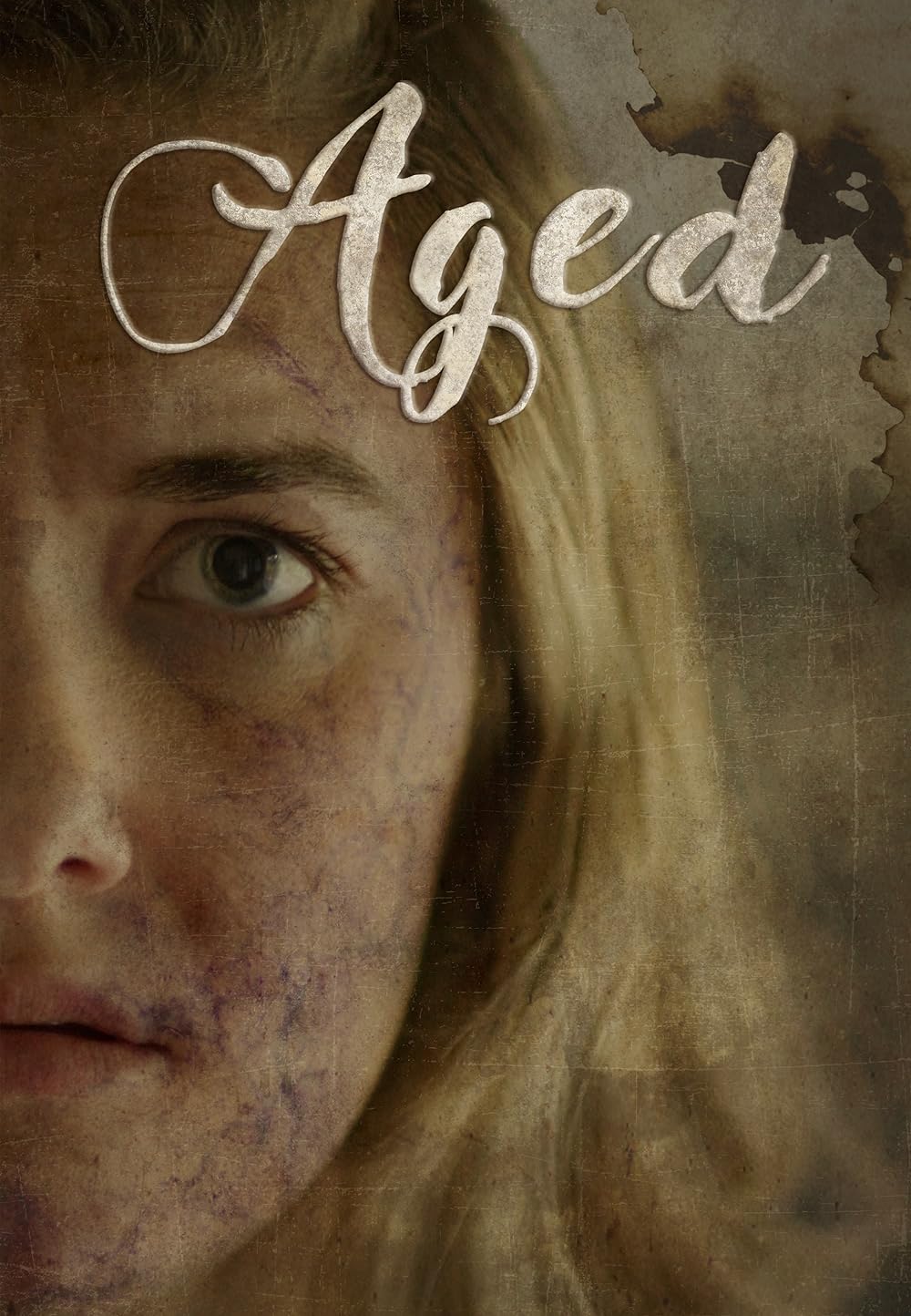
Aged – review


Director: Anubys Lopez

Release date: 2023

Contains spoilers

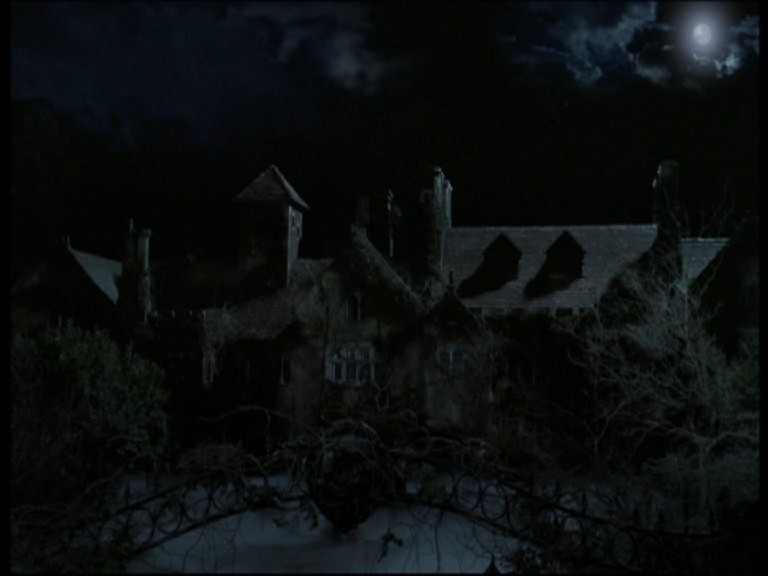
Perhaps I have been doing this for too long or perhaps punches are broadcast too far in advance but I kind of knew from just title and trailer that Aged was going to be vampiric in nature. What I didn’t know, of course, was just how we were going to get there. What we did get was a slice of American Gothic that reached back into the past to create a sense of uncanniness. Some aspects were a little on the nose but they worked if you just accepted them for what they are and accepted that our protagonist was virtually ignoring them almost wilfully.

first meeting

Starting in a Texas coffee shop, Charles Bloom (Dave McClain) drinks a coffee. Approaching him is Veronica Grey (Morgan Boss-Maltais), a young woman he has come to meet in order to offer her a job. That job is caregiver for his mother, Mrs Bloom (Carla Kidd). She has, he reports, dementia and he is looking for a live-in carer. This doesn’t seem to be her ideal career choice but he asks her to consider it – his tale makes it clear that looking after her is exhausting him.

creepy pictrues

She clearly, later, makes the choice to go with him on a temporary basis and he picks her up. The house is in the middle of nowhere (no signal) and, as they arrive, she sees the gardener, Joe (Adonis Ringo), he seems terrified and manages to slice his hand open… Charles ignores him altogether and draws her into a house that seems stuck in a bygone era. Now here we have a moment that Veronica wilfully ignores. There are pictures of an old type adorning the walls but all of them have the faces scratched away. It gives us a moment of the uncanny but, if I’d have been her, I’d have turned tail. These pictures are later mentioned in dialogue but ignoring them for most of the film seemed off-kilter.

Carla Kidd as Mrs Bloom

She is introduced to Mrs Bloom – a mention of the aging makeup; it is pretty good but obviously makeup and needed in order to de-age, of course – but when she asks to see Charles, she is told he has gone home to his family. Now he didn’t say he was his mother’s live-in carer but it was implied and I’d have again seen a red flag. The film then draws an uncanny cloak around proceedings. Veronica becomes tired and gets mysterious bruises in her sleep. Mrs Bloom talks about going to university, about a man named Henry (Kelly Kidd) who watches her (and Veronica can’t see but we do later), about how, when she is better, she’ll be able to do things.

distant figure

Veronica early on goes for a walk (looking for a phone signal) and sees a figure (too far for the viewer to identify but possibly Mrs Bloom) who runs at her and chases her back to the house. Later Veronica cannot leave the house without fainting and is eventually told that the house won’t let her leave and that it dislikes being changed… making the house an entity in its own right. We can see Veronica age (a grey streak appears in her hair) and lose time (though she is gaslighted, so whether the assertion that she has been there two months, when she thinks a week or two, is accurate is debatable). Mrs Bloom, on the other hand, begins to subtly become sprightlier.

the bath

How? My overall reaction is that it is energy (and youth) transference but there is stealing of Veronica’s blood by Henry and Mrs Bloom. This is taken to a bathtub and added to the water and roses in there. Mrs Bloom will eventually bathe in it (somehow, probably down to magic, it remains fresh it seems). It all goes down to tuberculosis and Mrs Bloom’s granddaughter (Bria D'Aguanno) dying, leaving Mrs Bloom ill, abandoned by family but unable to die. To bring death she made a deal with an evil spirit, to die she would trap another Bloom in her place. Mrs Bloom is not the original and Veronica, unbeknown to herself, is of the familial line. Mrs Bloom can regain her youth by taking Veronica’s and leaving her to remain in the house.

it won't let you leave

This was interesting just for the sense of uncanny it produced and it was this that was central to the film. There are some light jump scares but mostly the film relies on atmosphere to carry itself. Morgan Boss-Maltais really made the film, giving a strong central performance. It’s nice to see youth stealing in a film though more could have been made out of the house – it really felt like the aim was to make itself almost the central vampiric entity and they could have played more with that. 6 out of 10. The imdb page is here.

On Demand @ Amazon US

On Demand @ Amazon UK