|
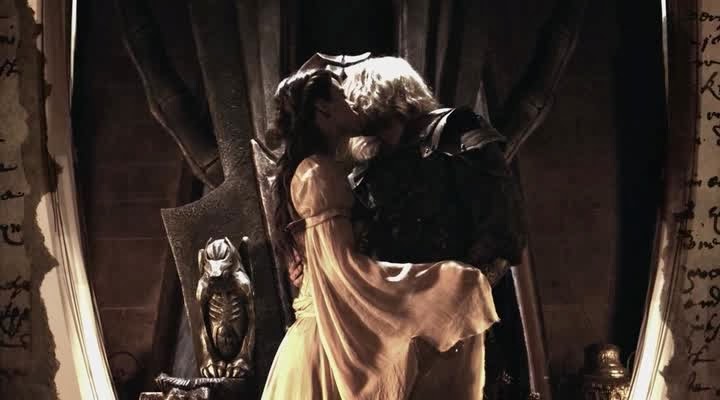
| A sketch artist rendition of Count Dracula |
There is controversy surrounding the connection between Voivode or Prince Vlad Dracula, also known as Vlad III, the Impaler or Ţepeş (hereafter referred to as Prince Vlad), and Count Dracula. As such I have decided to address this connection and will say, as a starting point, that Count Dracula – the Bram Stoker creation – is not Prince Vlad.
It is true that Bram Stoker took the name Dracula, referred in book to him as a voivode and lifted a smattering of biographical data (which was thin, to say the least, and not all of it was actually about Prince Vlad) and used said data to expand the background of the character. However this was part of an amalgam and the more explicit connections between Prince Vlad and Count Dracula came in the twentieth century.
I will offer at this point a debt to Elizabeth Miller and her book Dracula: Sense & Nonsense (D:S&N) from which many of the arguments have been gleaned.
 |
| Prince Vlad III |
You might ask how we would know that Stoker’s knowledge of Prince Vlad was limited? That is easy, we have his novel and we have his notes. We know that he consulted William Wilkinson’s An Account of the Principalities of Wallachia and Moldavia and we know of no other source researched that contained reference to Prince Vlad
EDIT - there was actually a second confirmed source that mentioned Prince Vlad and this is addressed at the addendum dated 07/06/19 at the foot of this article.
Wilkinson’s detail was scant, indeed it only refers to a Voivode Dracula – never Prince Vlad or Ţepeş – and we know that the novel never mentions the names Vlad, Ţepeş or Impaler, it never refers to the title of Prince and it never mentions the atrocities that Prince Vlad is infamous for. Stoker does mention the rank of voivode but never tackles the fact that Count is a lower rank. It may be helpful if I repeat verbatim what Wilkinson said about the Draculas (and there is a reason for pluralisation) as cited in D:S&N (p155):
“Wallachia continued to pay it [tribute] until the year 1444; when Ladislas King of Hungary, preparing to make war against the Turks, engaged the Voivode Dracula to form an alliance with him. The Hungarian troops marched through the principality and were joined by four thousand Wallachians under the command of Dracula’s son.”
This is later:
“Their Voivode, also named Dracula*, did not remain satisfied with mere prudent measures of defence: with an army he crossed the Danube and attacked the few Turkish troops that were stationed in his neighbourhood; but this attempt, like those of his predecessors, was only attended with momentary success. Mahomet, having turned his arms against him, drove him back to Wallachia, whither he pursued and defeated him. The Voivode escaped into Hungary, and the Sultan caused his brother Bladus to be named in his place. He made a treaty with Bladus, by which he bound the Wallachians to perpetual tribute.”
Most importantly (and we know it is most important because of the capitalisation used by Stoker in his notes) was the footnote to the second passage:
*Dracula in the Wallachian language means Devil. The Wallachians were, at that time, as they are at present, used to give this surname to any person who rendered himself conspicuous either by courage, cruel actions, or cunning.
 |
| Bela Lugosi as Count Dracula |
What can be taken from this? Firstly that there is no mention of a name other than Voivode Dracula but, in fact, Wilkinson has conflated Prince Vlad II and Prince Vlad III – the first entry certainly refers to the elder, more properly called Dracul, hence my pluralisation. Stoker did not necessarily know these were different men but, from this passage, he certainly will have thought that the sobriquet Dracula was commonly used. He also believed it meant Devil and this is important as we touch on how Dracula became a vampire. He also knew that Voivode Dracula had a brother but, of course, many voivodes would have had brothers. Wilkinson names him Bladus, most assume this refers to Radu – Prince Vlad’s younger sibling – but I am not proficient in names from the region nor their potential Anglicisation so I couldn’t say if this did actually refer to Radu – though I suspect it did.
So where did the connection come from? Clearly from Stoker, in the first instance, as he made a casual connection to “Voivode Dracula”. However the more explicit connections seem to start in film with the Turkish film
Drakula Istanbul’da, which in turn was based on the 1928 novel by Ali Riza Seyfi entitled
Kaziki Voyvoda, which was a reworking of Stoker’s novel but with greater play on the Prince Vlad connection and moved the action from England to Turkey. Given the history of the Ottoman Empire and the apparent impact of Prince Vlad during his reigns this seems hardly surprising at all.
From an academic point of view we can look to Bacil F Kirtley’s Dracula, the Monastic Chronicles and Slavic Folklore in 1956. However it was Raymond McNally and Radu Florescu who really brought the connection to popular Western attention. However their theories were, shall we say, flawed by some dubious academic assertions. Indeed as time moved on, later editions of their work would soften some of the looser evidence they offered regarding the connection. Eventually they would step away from the connection and the following choice quotes by Florescu are cited by Miller:
“the connection between the historical Dracula and the novel… beyond the title, is limited to four short references from a single book” (p 155) and that any connection between fictional and historic Dracula is a
“Unique and extraordinary accident” (p 182). She suggests that McNally has called claims that Stoker was inspired by Prince Vlad’s atrocities as
“silly”. (p 153) However that connection was made by the two academics in the first instance and the behemoth-like concept was out of control and became “fact” within popular concept.
 |
| Prince Vlad full length |
Some suggest that Stoker heard about Prince Vlad, in detail, from Arminius Vambery, the Hungarian scholar, who is replicated in the novel as Van Helsing’s source of information Arminius, of Buda−Pesth University. Stoker, like many writers, did use names of friends and acquaintances however. The first detail that Arminius, of Buda−Pesth University offered Van Helsing, however, is clearly lifted from Wilkinson as well as from Transylvanian Superstitions by Emily Gerard (a source we know Stoker consulted) mixed together with an author’s imagination and creativity.
We also have details from Stoker’s Personal Reminiscences of Henry Irving (1906) of two meetings with Arminius Vambery, neither of which suggest they discussed Prince Vlad or vampires. In fact Stoker states that - in the first meeting - the conversation was about Vambery's travels in Central Asia and makes specific reference to Tibet. The second occurrence was upon seeing Vambery receive a degree at Dublin University and mentions Vambery's role as a speaker - where he spoke against Russian aggression. There are also no references to correspondence with Arminius Vambery in Stoker’s notes. Later in the novel we get more detail from Arminius, of Buda−Pesth University that suggests Count Dracula
“was in life a most wonderful man. Soldier, statesman, and alchemist”. That does not match the infamous Prince Vlad – especially from the Saxon propaganda that earned him the sobriquet Ţepeş – given he was writing a book of Gothic horror, had Arminius Vambery told Stoker of anything about the reputation of the Prince Vlad you would have thought he would have used it, or at least place it in his notes for potential use. Of course I could be wrong about Vambery but there is no evidence to the contrary.
If we look to the history that Count Dracula gives us, as noted by Jonathon Harker, we hear:
“We Szekelys have a right to be proud, for in our veins flows the blood of many brave races who fought as the lion fights, for lordship.” Prince Vlad was not a Szekely, Count Dracula clearly was. There are enough misunderstandings flying around about the difference between a Wallachian (Prince Vlad) and a Transylvanian (ie they are two separate principalities). Being a Szekely Count Dracula admits to actually being a Hungarian.
He also suggests,
“What devil or what witch was ever so great as Attila, whose blood is in these veins?” Prince Vlad was not descended from Attila.
Why is this important? Because it underlines the fact that Count Dracula is an
amalgam character, that Stoker invented a character and then added details from a variety of sources to make the character interesting. I would argue that no single part is any more important than any other.
 |
| Gary Oldman as Count Dracula |
Looking at Count Dracula’s description further we see he says
“Who was it but one of my own race who as Voivode crossed the Danube and beat the Turk on his own ground? This was a Dracula indeed! Woe was it that his own unworthy brother, when he had fallen, sold his people to the Turk and brought the shame of slavery on them!” This is pure Wilkinson but also the Count claims it as an ancestor,
“one of my own race”. It could be argued that Count Dracula is plying his own past but disguising his identity and we could argue that the detail by Arminius, of Buda−Pesth University to Van Helsing suggests this. However we do not know that for certain – it is supposition – and the Van Helsing character does contradict himself at times and forget things (such as they could have destroyed the vampiric Lucy with a simple sacred bullet rather than go through the (wonderfully harrowing) staking and subsequent corpse mutilation). On face value Count Dracula suggests that he is related to the Dracula from Wilkinson not actually that Dracula.
I want to touch briefly on how Count Dracula came to be a vampire as, in order that Prince Vlad can be tied in, there are some confusing aspects to this suggested. As far as I can tell there were no legends surrounding Prince Vlad and vampirism until the connection between Count Dracula and Prince Vlad became popular. Indeed, Prince Vlad is regarded as a national hero in his homeland (though there may have been some manipulation of this during the communist era). However a whole cottage industry seems to have developed suggesting that Prince Vlad was connected with vampirism in legends from his homeland. It has to be said that, even if he had been, no source consulted by Stoker mentions this (as the only source re Prince Vlad that we know of is, of course, Wilkinson).
 |
| woodcut of Prince Vlad |
One popular suggestion is that Prince Vlad was excommunicated and this is used directly or indirectly to suggest how Prince Vlad became a vampire and thus tie the historical man in to Stoker. Firstly I have to say that I do not know if Prince Vlad was excommunicated or whether this is a modern invention, but it is the implied source of vampirism used in the “biopic” (and very historically inaccurate) film
Dracula the Dark Prince.
If he was, it was not because he “turned his back on the church” but because he turned from the Orthodox Church to the Roman Catholic Church for political reasons. As such I doubt that he would have been bothered by his excommunication as he still was a member of a Christian Church (indeed the Holy Church of Rome). It has been suggested to me that all those who followed the Pope were deemed excommunicated by Orthodox churches by rote and thus there would not be a specific excommunication. Taking that on face value it would mean that (if all excommunications lead to vampirism) that we would be overrun by our toothsome friends – there have been a lot of Catholics over the centuries.
However Stoker implied how Count Dracula became a vampire – for that we return to Emily Gerard and note that Arminius has told Van Helsing,
“They learned his secrets in the Scholomance, amongst the mountains over Lake Hermanstadt, where the devil claims the tenth scholar as his due.” Note now that we know that Stoker believed Dracula to mean devil, he also has the Count using the pseudonym of Count de Ville, and we read
“The Draculas were, says Arminius, a great and noble race, though now and again were scions who were held by their coevals to have had dealings with the Evil One”. The evidence stacks up that it was at the Scholomance that Count Dracula consorted with the devil and I do not think that it is such a stretch to offer the theory that it is the attendance at the Scholomance that was the source of the Count’s vampirism. It is therefore logical that Stoker’s use of the name Dracula had more to do with the meaning of the name that Wilkinson suggested rather than the scant history he offered.
Finally, I’d like you to look to the picture at the head of this essay. This is a sketch artist’s rendition of Dracula as described in the novel (I am unsure of the artist or the ownership and use it only for illustrative purposes under fair usage). Compare that picture to Prince Vlad’s picture further down. They are not the same man – of course they are not for Stoker never saw a picture of Prince Vlad that we are aware of.
 |
| Christopher Lee as Count Dracula |
So what does it all matter? In the grand scheme of things not much, Count Dracula and Prince Vlad are so conflated in the popular mind that you can point out all the evidence for the thin connection, as well as the lack of factually accurate evidence for the deeper connection, and people will ignore it and dogmatically stick to the view that they are one and the same. When that is an artist – be it an author, screenwriter, illustrator, director or actor – then that is fine. They are creating their own image of Count Dracula. When it is an academic it is problematic – as such works should strive for accuracy. However when someone suggests that it is what Stoker had in mind then I feel we are doing the man, and his remarkable creation, a disservice.
Ahh, you may say, but you yourself have looked at the 1982 (possibly 1976) absolutely vampire free biopic
Vlad Ţepeş on your vampire blog, and I have. I looked at it as an honourable mention because the two figures (literary and historical) are inextricably conflated. However, Count Dracula, as written by Stoker, is not (in my opinion) Prince Vlad though there is a little Prince Vlad (II and III) in him.
EDIT 12/4/18: For clarification: whilst I know Voivode was akin to warlord and its meaning hovers between warlord and our understanding of Prince I deliberately used the title Prince as it has more of a sense of meaning given warlord, in the Western European/UK language, has little meaning when it comes to rank.
As I gird my loins in preparation for the comments I would suggest that should you want further details on much of the nonsense talked about Count Dracula and, of course, the novel itself you should see Elizabeth Miller’s Dracula: Sense and Nonsense:
In Kindle @ Amazon US
In Kindle @ Amazon UK
An Addendum – 07/06/2019
Since I wrote this piece there have been discoveries/theories that have led to the question of the inspiration for Dracula being reopened. One is set around the text, which we know Stoker consulted, entitled
Roumania Past and Present by James Samuelson (the text of which can be read
here).
The reason for the excitement is that the book does mention Vlad the Impaler several times. Indeed Vampires.com suggest that it amounts to “
proving that Bram *did* know about “the Impaler” when he wrote his book!” (
citation from here) Frankly it proves only that Stoker had consulted the book, but not that he read all of it or, indeed, knew the connection between the sobriquet Dracula and Prince Vlad III. His consultation of the book was known, however, and so it behoves me to address the fact that Samuelson does mention Vlad the Impaler and his actions within his volume. We do know that he put one thing in his notes from the book – the only part of the book he does cite. Stoker wrote “
In 376 A.D. Huns subdued Dacia driving out the Goths—Huns at Attila’s death 543 A.D. by the Gepidae—a tribe of Goths. Country was afterward held by Lombards, Avars and Bulgars. Last named driven out of Thessaly etc. and back to Dacia where obtained ascendancy over Avars. 678–680. See Samuelson’s Roumania. P. 146.” (Stoker, Notes, pp220-221) We can note that page 146 of Samuelson does not mention Vlad.
 |
| Map of Roumania from Samuelson |
Remembering that Wilkinson refers to Dracula I can attest that there is only one instance of the word – actually Dracul rather than Dracula. This does not, however, refer to Prince Vlad’s father as it is a reference to ruling from Tirgovistea, which was where Prince Vlad III's court was based. It does not, however, mention the Impaler as the other entries about him do, rather it states “
Dracul (the Devil)” (p180). We know, as mentioned above, that Wilkinson suggested that Dracula meant Devil (and that does draw a connection between the two texts) but we also know that Stoker wrote the Wilkinson footnote out in full. Had he read, or noted, the Samuelson reference to Dracul as Devil he might have mentioned it in his notes or, perhaps, did not feel as though he had to because Wilkinson suggests it is a commonly given name.
Stoker placed one direct citation to Samuelson in his notes and thus we can say that he did read that page and found the historical insight potentially useful. Vampires.com quote Dacre Stoker as suggesting, “
One must realize that Bram did not include a lot of things in his Notes for Dracula which appeared in his novel.” (
citation from here) I do concede the point but equally it also means that we simply do not know whether he read any other part of Samuelson and, if he did, whether he paid heed to the references to the Impaler. Often when we research something texts are not fully read but selectively examined (Samuelson does have an index) and often skimmed rather than thoroughly read. To decide that reading any part (or even all) of that book means that he was aware of Vlad the Impaler being Dracul is to impose a theory as fact when we can, ultimately, only know for certain what is in the novel and in the notes (unless a new primary source appears). We should also note that Stoker did take copious notes and it seems more unlikely than likely that he would have neglected to note Prince Vlad’s “
horrible cruelties” (as they are indexed in Samuelson, p288) if they were forming a baseline for his fictional antagonist.
It would be remiss if I did not mention that Hans Corneel de Roos has put forward a counter-theory on the inspiration for the Count and suggests that Stoker actually had Michael the Brave in mind. Michael was of the Drăculești branch of the Basarab family – in other words a Dracula – and is mentioned in both Wilkinson and Samuelson, and is mentioned within Stoker’s notes also:
“
1600. After abdication of Sigismund of Transylvania, this principality became tributary to Emperor Rodolphus who appointed Michael VOIVODE. Transylvanians revolted & wished to recall Sigismund but were defeated by Austrians and whole province subjugated” (Stoker, Notes, pp246-247)
 |
| Statue of Michael the Brave |
It is interesting that Michael, unlike Prince Vlad, actually “
commanded nations” (Stoker, Dracula, p167) as he did reign over Transylvania, Wallachia and Moldavia. It is also worth noting that Samuelson actually included an illustration of a statue of Michael (p176). I am not personally convinced by de Roos argument (though it holds as much, if not more, water as the Vlad argument) as I still believe that, at his heart, Count Dracula is an amalgam character – not based on any one person. If you wish to examine more of de Roos theory, however, he published his paper within
Dracula: an International Perspective.