Wednesday, October 31, 2012

Nosferato in Brazil – review

Director: Ivan Cardoso

Release date: 1970

Contains spoilers

When I sit and type up these reviews I, by rote, put the words “contains spoilers”. This time I nearly added in “not really” in brackets and then decided that, rather than do that, typing this explanatory paragraph would take up some much needed wordage as there is little to actually talk about with this one.

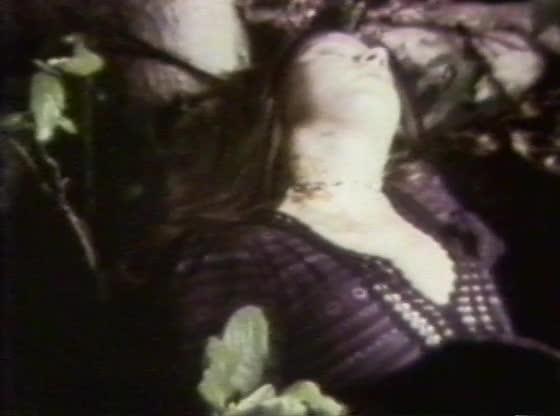
This review could be one word… if it were that word might be “bizarre” or it might be “crap”. Both are suitable for this effort. You’ll note from the screenshots that the film I watched was from a washed out VHS print, which itself was of a film originally shot on super 8. The film has no dialogue but does have occasional intertitles in Portugese. Don’t worry if you don’t read Portugese, there isn’t a gist to get. I understand that the first black and white section is historical and the colour section contemporary. Luckily the film is only 27 minutes long.

a victim
So the film is silent, sometimes completely silent and at other times accompanied by a groovy acid jazz soundtrack. In the first section we get the main pattern for the film. Nosferato (Torquato Neto) wanders along in a cape and finds a girl or two (actually in the very first scene he is already sat with her) and then attacks and chows down on her neck, leaving a puddle of tomato sauce rather than blood flowing from a wound.

swordsman
This changes at the end of the historical section when he is confronted with a swordsman (looking rather Captain Kronos like, some four years before Kronos) and they duel. The swordsman has a foil in one hand and Christ in the other – and by that I mean the figure from a crucifix without a cross. He seems to defeat Nosferato – and, with regards his misspelt name, I don’t know if that is meant to be genus or actually Dracula.

beach vampire
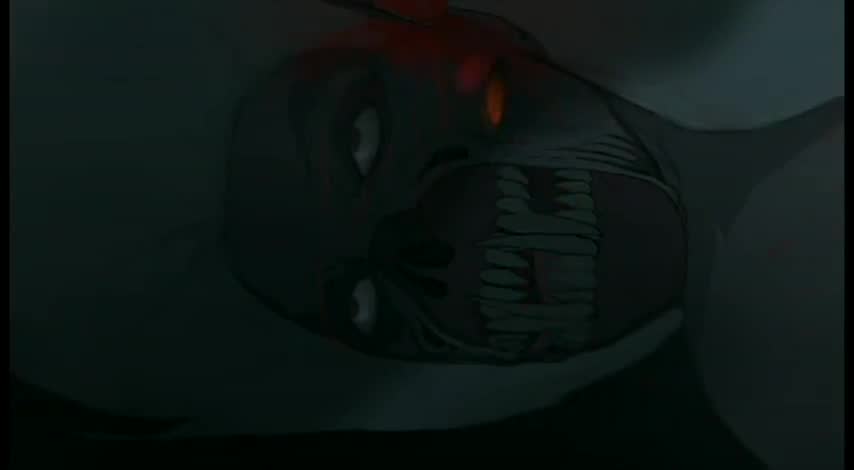
Things go much the same way in the contemporary section, though we do get stills of a cemetery interspersed with stills of the first victim and we also get Nosferato on the beach wearing trunks, a cape and sucking from a coconut. In one scene he flags a lift, attacks a girl in the back seat and then the driver calmly opens the passenger door to help him exit the vehicle. Later we get vampire women attacking men. All told there seem to be three of them, so if he is Dracula they are the vampire brides. At the end of the film he gets on an airplane and returns to Europe.

Sheesh… Absolutely, unmitigated bizarre crap. Director Cardoso would go on to direct As Sete Vampiras, the latter being better than this, which gets a magnificent 0 out of 10.

The imdb page is here.

Tuesday, October 30, 2012

Back and some Princess X

I am back from the Bram Stoker International Film Festival and, as always, had a great time with some great friends. It was an unusual year in that I had already seen and reviewed all of the vampire films that were shown and so could take my critical hat off completely and just sit back and enjoy the films. Of the non-vampire films special mention must go to Dominic Brunt’s zombie flick Before Dawn – a zombie genre classic I feel.

One thing that was new, however, was a lecture entitled Dracula’s Phantasmagoria. In this David Annwn offered as a view of the phantasmagoria including a virtual tour of Étienne-Gaspard Robert’s phantasmagoria at the Convent des Capucines. The lecture also included a magic lantern show and the Whitby Spa pavilion was likely the location of such 19th century shows, begging the question did Stoker see such a show in that very theatre?

That is something we may never answer but Annwn argues the importance of the phantasmagoria form in the development of horror and the vampire genre specifically. LeFanu specifically mentions phantasmagoria in Carmilla “I forget all my life preceding that event, and for some time after it is all obscure also, but the scenes I have just described stand out vivid as the isolated pictures of the phantasmagoria surrounded by darkness.” and Stoker, in Dracula, describes the laughter of the “brides” as “a silvery, musical laugh, but as hard as though the sound never could have come through the softness of human lips. It was like the intolerable, tingling sweetness of waterglasses when played on by a cunning hand.” – the glass harmonica being an essential part of Étienne-Gaspard Robert’s show. Certainly the magic lantern may well have been used at the Lyceum as part of the performances, the technology having been first merged with traditional theatre in a production of the Flying Dutchman. One can also say that early trick motion pictures, such as the le Manoir du Diable, were very much a continuation of the phantasmagoria tradition.

In other news, welcome back to Everlost who, at the festival, announced the decision to resurrect Vampire News. Also, I was contacted by Princess X, asking whether I would like to review her vampire orientated video for her song Gimme All (Ring my Bell). I don’t actually review music videos but I’ll happily give vampire ones a mention and even include them on the blog. In this case the music isn’t my cup of tea but I am sure many visitors may be dance music fans and the video is embedded below. Normal programming resumes tomorrow.

Tuesday, October 23, 2012

Therapeutic break


Did you see yesterday’s post?

Anyone who did, and who has the merest hint of humanity in their soul, will realise that after that flick I need some therapy (even a slice of Cockney’s Vs Zombies couldn’t quite get the plastic taste from my mouth).

Just as well that I am off to the Bram Stoker Film Festival tomorrow (travelling tomorrow the festival starts on Thursday). Four days of horror films and some cracking vampire movies slated to play, as well as meeting up with very good friends old and some new friends too.

As a result the blog will not be updated (until Halloween most probably) but, as always, if you are at the festival do come over and say hello.

Monday, October 22, 2012

Honourable Mention: Monster High: Ghoul’s Rule

Oh Lawdy, lawdy but I do watch some absolute rubbish for the sake of this blog. How low can a toy company like Mattel go… pretty darned low it would seem as they take the good name of monsterdom and vomit their own special brand of kinder-capitalism across it. You know, I wouldn’t mind so much but when those bastions of Spanish pop-horror-punk (and stars of not one but two Jess Franco movies) used the name Barbie the po-faced company took legal action, hence the spelling difference. To do that and then pee all over the monsters of yore is just not cricket.

The reason for the mention is mainly the character Draculaura (Dee Dee Green). Pure laziness forces me to simply quote the Wikipedia description of the character (accessed 20/10/12) “Draculaura is the daughter of Count Dracula. She was 1,599 years old and is now 1,600 years old as of Valentine's Day, and her pet is a bat named Count Fabulous. Although a vampire, she is a vegan and does not drink blood, and is scared to say the word "blood" and faints when she hears it. She has fangs and pale pink skin, and is very friendly.
Clawdeen and Draculaura
She likes to write stories about her friends and loves to take long walks under the sun (with an umbrella, of course). She is dating a werewolf named Clawd Wolf who is also Howleen and Clawdeen's big brother.” Incidentally, I have no intention of adding a meta-tag of vegan vampire, so she has been relegated to vegetarian for the sake of the blog.

vegan vampire
Her in-flick story is a sub-plot about double-dating (or failing to) with Clawdeen (Salli Saffioti), which leads to forcing Clawdeen into speed dating… it is just so, monstrous… It seems that Clawdeen has never dated before and thus is scared (oh, the humanity, or not). The other Draculaura moment was a sepia toned memory of being driven out of the Old Country by normies, who saw her looking blood splattered (it was tomato) and assumed the worst. This feeds into the general paranoia vis-à-vis normies attacking the monsters on Halloween.

Thad sparkles
There is a potential further vampire character in the form of Mr Rotter (Cam Clarke) who has a Bela Lugosi-esque accent and also Thad (Evan Smith), who is Draculaura’s cousin and the subject of the attempt to get Clawdeen dating. If you thought it couldn’t get any worse then, hold on to your hats… he sparkles. Yup, that little trope has been added in to a programme ‘inspired’ by profit… I mean classic monsters.

And now I will go and shower and scrub, so very hard, until the memory is scoured from me… for those of you who might care, the imdb page is here.

Saturday, October 20, 2012

Kiss of the Butterfly – review

Author: James Lyon

Release date: 2012

Contains spoilers

The blurb: "The smell of blood is in the air, I sense it even now. People thirst for it; the entire country is mad with desire for it. And now we are going to war with our brothers because they look like us, and because we can smell our blood coursing through their veins. It is madness. I know not what will come of it. I had hoped to celebrate one more St. George’s Day together with you, but it is not to be. I fear we shall not see each other again in this life. For now I grow ever colder, the sun can no longer warm me…

A mysterious letter starts a university student on a journey into the war-torn lands of rapidly disintegrating Yugoslavia. Naively trusting his enigmatic professor, the student unwittingly descends into a dystopian crucible of decay, destruction, passion, death, romance, lust, immorality, genocide, and forbidden knowledge promising immortality. As the journey grows ever more perilous, he realizes he must confront an ancient evil that has been once again loosed upon the earth: from medieval Bosnia to enlightenment-era Vienna, from the bright beaches of modern-day Southern California to the exotically dark cityscapes of Budapest and Belgrade, and to the horrors of Bosnia.

“Kiss of the Butterfly” is based on true historical events. In the year of his death, 1476, the Prince of Wallachia -- Vlad III (Dracula) -- committed atrocities under the cloak of medieval Bosnia’s forested mountains, culminating in a bloody massacre in the mining town of Srebrenica. A little over 500 years later, in July 1995, history repeated itself when troops commanded by General Ratko Mladic entered Srebrenica and slaughtered nearly 8,000 people, making it the worst massacre Europe had seen since the Second World War. For most people, the two events seemed unconnected…

Vampires have formed an integral part of Balkan folklore for over a thousand years. "Kiss" represents a radical departure from popular vampire legend, based as it is on genuine Balkan folklore from as far back as the 14th century, not on pop culture or fantasy. "Kiss of the Butterfly" offers up the real, horrible creatures that existed long before Dracula and places them within a modern spectrum.

Meticulously researched, “Kiss of the Butterfly” weaves together intricate threads from the 15th, 18th and 20th centuries to create a rich phantasmagorical tapestry of allegory and reality. It is about divided loyalties, friendship and betrayal, virtue and innocence lost, obsession and devotion, desire and denial, the thirst for life and hunger for death, rebirth and salvation. “Kiss” blends history and the terrors of the Balkans as it explores dark corners of the soul.

The review: Well it is a good, long blurb that probably cuts down the length of the review somewhat… Actually, that is rather unlikely because, as regular readers know, I love to delve into the lore contained within the novels and films I review and this is just teeming with lore.

To give a very quick overview, the novel is set during the Bosnian War as student Steven Roberts is encouraged to travel to the former Yugoslavia by his teacher Marko Slatina. He is to study the ethnography of the region – the folklore – but the path he has been set on keeps returning him to the myth of vampires and the Order of the Dragon. Of course we have been to this setting before in the 1993 film Pun Mesec Nad Beogradom, or Full Moon over Belgrade, so the concept of the war and vampires and draft dodgers, will be familiar to any who have had the opportunity to see the film.

However Lyon’s book goes much deeper into Balkan myths and, in many ways, is a book of two distinct parts. For the first half of the book (literary interludes aside) we travel with Steven as he explores the myths of the region, comes to terms with being in a nation at war and also tries to come to terms with his own personal demons (the loss of his faith, in organised religion at least, and the premature death of his young wife). This half of the book feels academic and possibly had a, at least distant, kinship with The Historian (though I found this much better researched and written).

The second half of the book, as Steven discovers that the things he has researched are real, organised and not enamoured with prying eyes, sees the writing style shift up a gear as the action springs to life and supernatural events unfurl around the main characters. However the vampire is allegorical as well as real and this is seen clearly early in the novel when Steven hears a Serb policeman state “The Moslems have all become Turks, they have become vampires who want to suck our Christian blood”.

Despite the use of allegory within the novel, ultimately we are dealing with an actual phenomena and one that draws its lore from traditional Balkan vampire mythology.It needs to be noted that, because of the involvement of the Order of the Dragon, we get an appearance within the text of Vlad Ţepeş but actual vampire cases, such as that of Peter Plogojowitz, are also mentioned. The vampires are shape-shifters – often taking the form of butterflies but also able to become werewolves (wolf-man type) or anything else they should want to become. We have seen several times the idea that a vampire’s soul takes the form of a butterfly. Here we hear that in Balkan mythology all souls take the form of butterflies.

In their natural state the vampires are “simply large inflated bags of skin, and as they feed they swell up. If they’ve gone without feeding for long periods of time, then they appear emaciated. So the typical well-fed vampire will appear bloated or inflated.” The vampire’s powers are connected with their shroud – hence the need to keep it safe. We hear they must go to their grave on Good Friday and that each time a stake (that must be hawthorne) kills a vampire it becomes empowered, a multiple kill stake being very powerful indeed.

The vampire is disorientated and vulnerable for the first 100 days after reanimation but after that gathers its wits and becomes much more dangerous. They can gather into groups of 12 – 12 being a quorum. As a quorum they are very powerful, much more than the sum of their parts, however, put more than 12 vampires into a room together and it will kill them (as they turn into gloop). It is the evil influence of a group of vampires that had caused the Bosnian war. We also hear of vampirovic or kresnik – what we more commonly refer to as dhampir – the child of a vampire and a mortal, who are immortal hunters of vampires. Interestingly, if the vampirovic has a child then they lose their immortality.

In many respects I have only scratched the surface of the lore Lyon invokes and, for the lore alone, I would recommend this book. But more than that, I really did enjoy it, very much. These were a breed of vampires steeped in evil and saturated in traditional lore; dangerous, deadly, obsessive and… well let us just say that Lyon’s tale has clearly only just begun. 8 out of 10.

Thursday, October 18, 2012

The Thompsons – review

Directors: The Butcher Brothers

Release date: 2012

Contains spoilers

Directors Mitchell Altieri and Phil Flores, also known as the Butcher Brothers, are back with a sequel to the rather good 2006 film The Hamiltons. Now, I was all concerned about reviewing the Hamiltons because their vampire nature was a twist at the end of the film. No such worries in this film as we already know (so the fact it takes main character Frances (Cory Knauf) a while to tell us is a little silly).

What was good about this was the fact that the original players of the Hamilton clan were back – mostly. As well as Francis we have David (Samuel Child), eldest brother and patriarch (as their parents are dead) and the incestuous twins Darlene (Mackenzie Firgens) and Wendell (Joseph McKelheer). Finally we have a change of actor for youngest brother Lenny (Ryan Hartwig) but that isn’t a huge issue as Lenny was barely in the original film.

in a crate
What is different about this film – other than a noticeably higher budget and relocation to England – is that where the first film was a twisted coming of age film that concentrated on a slice of life and had an indiscernible beginning and end to some degree, this has a story. It begins with Francis trapped in a crate and then he tells the story – in a non-linear way – of how he got in the crate. It begins, in Francis’ telling, with a journey North East from London.

wear another's face
He is looking for others of his kind and has been told to ask for the Mandersons in a town called Ludlow. His car breaks down – and we get a moment of shapes moving inhumanly fast in the trees and then a couple of backpackers being hunted down by men in boiler suits wearing stolen, bloody faces. It is a strange old moment that sets a scene – slightly – but isn’t referred back to in a meaningful way.

Cory Knauf as Francis
He reaches Ludlow and goes in the pub. He asks the woman (Selina Giles) behind the bar about the Mandlesons but she doesn’t know who they are. The daughter and waitress, Riley (Elizabeth Henstridge), appears to take a shine to him but then a cop comes in (who refers to the woman as Mother and her husband (Daniel O'Meara) as Father, but I suspect that was a honorific). He has a wanted sheet with blurry pictures of the Thompsons (a name the Hamiltons had been going by) and Francis ends up breaking his neck. Grabbing a shotgun, he takes the pub hostage and tries to call Darlene and Wendell (who are in France and indulging their vices). The sons Cole (Sean Browne) and Ian (Tom Holloway) arrive, make Francis think he has the upper hand and then flash fang, red eye and stick the stock of the shotgun hard into his face.

injured Lenny
The reason they are looking for their own kind is due to a robbery at a gas station in the Mojave Desert that went wrong. The family were actually just bystanders but Lenny was shot and the twins and Francis lost control and killed everyone. The event was caught on cctv and the press are calling it the vampire killings (without realising vampires are involved). They have fled the US and are looking for someone with knowledge of how to heal Lenny. How they got out of the country, as fugitives with an injured child, and made it to France and the UK is anyone’s guess – and left as that.

a maw of fangs
The family at the bar are vampires, as we know, and release Francis once he comes around. Is it all going to go horribly wrong – probably (and, of course, we haven’t even said how Francis ends up in a crate) but that is as far as I am going to go in the story. The lore, however, is somewhat different. We never really saw anything too vampiric in the first film. In this the vampirism is out and proud. The Hamiltons have standard fangs. The Stuarts have double fangs, except for Father Stuart who has a whole maw of fangs.

Riley and Francis
The Stuarts have taught themselves to eat food so as to give a pretence of humanity (human food makes the Hamiltons sick) and seem to be able to move at breakneck speeds – something the Hamiltons cannot do. Riley is a daughter of the clan but has not turned. As she is a young adult she has passed the oldest age a vampire goes to before turning and will not do so now. As such this leads us to believe that the family are pureblood vampires (born not turned) but not a separate species.

the twins
The story is okay but there are logical holes (such as the passage over the Atlantic) and whilst the story focuses on Francis (and his coming to terms with what he is at a more mature level than the coming of age dealt with) the lack of focus on the other family members (necessary for the story) was annoying as the first film showed us that they all had great stories to tell. If you haven’t seen the first film then all the other family members will seem terribly two dimensional.

Mackenzie Firgens as Darlene
I did enjoy this. A lot of the issues hit me after the fact not during the film. I think this is above average. I liked the early non-linear structure that added a level of interest to a fairly thin story but I think much more could have been done with it. 5.5 out of 10.

The imdb page is here.

Tuesday, October 16, 2012

Vamp or Not? Odysseus and the Isle of Mists

This was a SciFi channel release from 2008 that was directed by Terry Ingram. When it aired in the UK it used the name Odysseus and the Voyage to the Underworld but that title is somewhat inaccurate and the Isle of Mists title is much better suited to the film.

Putting this in context, I had this recorded to watch and never got around to it. Then I was approached on Facebook and asked if I had ever looked at the film as either an Honourable Mention or a ‘Vamp or Not?’ The gentle prompt had me looking at the film and, in honesty, I think I could actually head straight to a review of this but I like the idea of the ‘Vamp or Not?’ as an exploration of what they did with their lore seems proper.

The story is being told by Homer (played old by Perry Long and young by Randal Edwards, Lost Girl) who is recording the lost chapter of the Odyssey… strangely as, in this, Homer is travelling with Odysseus (Arnold Vosloo) and bleats on about recording everything and so why this chapter is lost is perplexing. We will return to old Homer at the end of this discussion.

Arnold Vosloo as Odysseus
Odysseus and his men are still searching for their home in Ithaca. One weakness of the film was the fact that there was an assumption of knowledge of Odysseus and the Odyssey, indeed there was even some assumption of knowledge of the Illiad – despite the fact that the story portrayed had little in common with the original Greek stories itself. The upshot of this is that references are made that some viewers may not get and there was a laziness in the characterisation that gave an assumption that the characters’ dynamics were known and meant there was little in the way of character dynamics in real terms.

Be that as it may, the ship is going close to the Sirens and Odysseus orders his men to put wax in their ears, to protect them from the Siren’s song, unfortunately there isn’t quite enough wax and he has himself lashed to the mast. The song begins but Odysseus realises they are under attack by winged bat-like creatures and orders himself unlashed (how did anyone hear his order?), they fight and then the ship wrecks.

Eurylochus and Christos
They wake on the beach of the Isle of Mists. Close by are skeletons hung on frames, handily giving them access to the dead men's weapons. One of the men called Christos (Michael Antonakos, Blood Ties) has the second sight and sees them all dead. When Odysseus orders the men forward Christos refuses to go and abandons his king. This leaves Odysseus with Homer, Eurylochus (Steve Bacic, also Blood Ties), Perimedes (JR Bourne) and a couple of guys equivalent to Star Trek red-shirts. That night they are attacked, the creatures seem to avoid shields but care nothing for blades. In the morning they are pretty much done for, just as Christos foresaw.

healing the wounded
Eurylochus has gouges down his face and his guts are hanging out, Perimedes has a snapped ankle and is haemorrhaging blood, Homer has a long piece of wood through his stomach and Odysseus is down for the count. One of the creatures feasts on a ‘red-shirt’ and, when Odysseus cries out, it turns its attention to him. A sudden noise chases it off, it is the Siren (Stefanie von Pfetten), she heals the men with her magic and explains that she too is trapped but has a haven where the creatures cannot go. She wants an alliance to get off the island but does not give her name.

revealed as Persephone
As things go along Odysseus gets a vision of Athena (Sonya Salomaa, The Collector: The Vampire) and discovers that the ‘Siren’ is actually Persephone. Far from being the embodiment of the spring and summer seasons, she is an evil Goddess who wanted to enslave mankind and has been bound to the island by the Gods through the Hellfire Cross – a sword, handily. She cannot touch the cross, only a mortal can do that.

pit of blood lure
The bat-creatures are her children and it is suggested that they are neither alive nor dead and the word undead is mentioned. They can only be killed by thrusting something that was once alive and is now dead through their heart – wood, of course, is that. A shroud of death can hide a mortal from them (they discover via Christos, who then promptly is killed) and they thirst for blood. Odysseus and the guys lure one with a pit of blood and kill it (it dusts). Whilst they will attack in the day, they are stronger at night. Perimedes is attacked by one, which bites his neck to suck his blood, and he cries that it is stealing his soul – he has Odysseus finish him. My, it is all sounding very vampiric.

risen as a vampire
Of course they defeat Persphone, whose children die as she is defeated – though only Odysseus and Homer actually make it – but I want to return to old Homer who mentions creatures contemporary to him who attack by night, ripping throats out. He suggests they fear the sign of the cross (reminiscent of the hellfire cross) and can only be killed with a stake through the heart. He wonders where they came from and we cut to a risen Perimedes, who has long fangs and turns into a bat creature. It seems the bat-creatures, as well as being vampiric, have caused the plague of vampirism. Interestingly Persephone could take bat-creature form and so we wonder whether her children had human forms.

Perimedes is, clearly, a vampire – seen in the dying embers of the film. As for the creatures they are certainly vampiric, and I would say another species version of a vampire. They can pass their natural state on as a curse and are described as undead. This is definitely Vamp.

The imdb page is here.

Sunday, October 14, 2012

Marianing – review

Created by: Niko Salazar

Release date: 2012*

Contains spoilers

*I have put 2012 as the release date but I am unsure and there is no IMDb page at the time of review. This animated film was posted to YouTube in 2012, however.

confronting the aswang
Those that visit this site regularly will know that I have a particular soft spot for the legend of the aswang. In fact that is a misnomer as the aswang mythologies are incredibly varied – aswang being both a genus of Filipino vampire and a catch all name for a variety of creatures. Be that as it may, I get all excited if a piece of literature or film includes the aswang in one form or another.

iconic
This is a short film and I do not want to give too much away. It is silent, beautifully drawn and animated and concerns a hunter saving a young woman and a young man from a group of aswang. Given that it isn’t long, some 8 minutes in all, I encourage you to pop over to the YouTube Page and give it a watch for yourself.

firefly escapes
I do want to cover one little aspect though, as it was a fascinating little bit of lore. We see an aswang, dead upon the ground with a machete buried in its head, and the mouth reddens. It is not blood but the emerging of a firefly. Now nothing is said but I immediately cast my mind to the Slavic myths of a vampire’s soul escaping from its executed body in the form of a butterfly. This is covered in depth in my review of the film Leptirica. Now I don’t know for certain that this firefly represents the aswang’s fleeing soul, but it felt like that as I watched the film and the parallels are wonderful.

A marvellous piece of short animated art. 7.5 out of 10.

Saturday, October 13, 2012

Music: The Dark Shadows

On Thursday I went to Misery of Sound, where three great bands were playing. Lesbian Bed Death were the first up, and I have featured their music before, click here for their vampire orientated video Moonlight. Next up were the Speed Kings, rock n roll and a great album to boot.

Headlining were The Dark Shadows. Sharing their name with a vampire genre institution, this great Aussie all-girl outfit also have a song called Sleeping with a Vampire… As the lyrics tell us:

You can Hear him call from miles around
He acts like a king and wears a crown
Prince of Darkness, Master of Pain
He’ll make you his bride
When he calls your name.

The song is embedded below:


Friday, October 12, 2012

Empusa – review

Director: Jacinto Molina

Release date: 2010

Contains spoilers

For those not in the know, Jacinto Molina are the forenames of Spanish horror legend Paul Naschy. I mentioned back in 2007 the fact that the film was being worked on, following Naschy’s death in 2009 I suspected that the film might be lost to the mists of time. I was pleased, therefore, to discover that it has become available for download.

The premise of the film always promised to be a little strange, an empusa is said to be a “cross between a vampire, a snake and a seagull”. Actually that belies the lore connections. Empusa was the name of the ship that transported Orlock in the original German intertitles of Nosferatu. More so Bane tells us (in the Vampire Encyclopaedia, p60) that Empusa is a variant of Empouse, a type of Greek demon often classed as a vampire who were attendants to and daughters of Hecate. The director Emilio Vieyra used a seagull motif, as opposed to bats, in the film Blood of the Virgins. Incidentally the film Stardust has three witches, Lamia, Empusa and Mormo… Mormo, like Empusa is a variant of Empouse. However, we will look at lore again later… onwards with the film…

find a hand
It begins in black and white and on a beach walk old friends Abel (Paul Naschy) and Victor (Antonio Mayans, Revenge in the House of Usher & Snakewoman). They bicker, both Abel’s lost fame (it later turns out he used to be an actor, he now makes a living as an occult researcher/tarot reader) and his lover Natalia (María Jesús Solina) are mentioned. Indeed, through the film these two bicker and at first it is fun, lively dialogue but it quickly wears thin and we wonder why they are actually friends. Be that as it may, they find a hand and severed forearm in the sand. Victor wants to go to the police but Abel argues he should take the arm home (along with its strange tattoo) for two days and do research on it, then they will return it and call the police. They leave and the film melts into colour as a topless girl, Cristabel (Cristina Carrión), emerges from the sea.

examine the mark
At home Abel receives a phone call from Natalia and his dialogue reveals him to be an old letch who consumes a diet of coffee, pills and absinthe. Be that as it may, his research has led him to the empusa. The empusa is a witch that destroys their victim and leaves upon them the mark of Lilith (the tattoo), worships the goddess Isathar (or so the subtitles said, I assume that they meant Ishtar) and enter the land of the dead. He also mentions Necurat – the accursed name, but this isn’t mentioned again. A quick look at the Urban Dictionary tells us: “Ancient romanian origin. Necurat means "dirty soul" and was used as euphemism to avoid words as "vampire" or "witch" -or any other supernatural or evil creature- which was belived (sic) you'd run into if you name 'em”.

Abel and Cristabel
Okay, I could go on but I won’t do so in great detail. There is an unbelievable amount of dead wood in the script, including a sub-story about a dangerous Baron (Paco Racionero) who is murdered, which goes nowhere. There is the meeting of Abel and Cristabel (presumably named for the Samuel Taylor Colleridge poem) who claims she is from Greece – who is an empusa – and then with Justine De Winter (Paco Racionero) who is credited as Lilith, who appears to be a vampire at war with the empusa.

Victor being grabbed
In the town there are many killings, the victims all have their right arms cut off, and also an attack on tourists by vicious seagulls. Abel is captured by Cristabel (via the medium of eye mojo) but then released unscathed (and manages to change clothes twice, between being caught, waking and then waking on release). Victor himself is grabbed by a taloned hand and then has his arm cut off (as well as his privates) and is fed upon. His rotting shade (think Jack from American Werewolf in London) then visits Abel and helps him by possessing his printer and printing out a map to the empusa lair and giving him a musical score that, if played, causes the vampires pain.

blood at mouth
We get three types of vampire. The police lieutenant (Saturnino García), commissary (Marco Sanz) and priest (Alfonso Dorbe) all indulge with Cristabel (off screen) and become second-class vampires. These are sensitive to light and more like your a-typical vampires. A stake through the heart would kill. It has to be said that it seems (given the use of comedy soundtrack) that the scenes with these characters were meant to be comedic relief – though they weren’t that funny. The priest had also given Abel the 7 daggers of Zion.

stabbed by a dagger of Zion
Abel uses these to kill female vampires in the lair that are described as vricolacas (according to to the subtitles, presumably a misspelling of the Greek vrykolaka). There is nothing remarkable about these except to say that a dagger of Zion in the heart will kill. One vampire killed like this comes back as she was not actually vrykolaka but empusa. Lilith, who takes the form (unseen) of a panther, is killed by heaving the pendant she wears thrust in both her eyes. That action seems to burn them and makes her vanish into smoke.

stake in the forehead
As for the empusa it seems that a stake into the forehead is the order of the day. Yes it’s all jolly japes but Abel is the saviour of the day… or is he… with a false ending that is cheese itself and then another ending, which is even cheesier it is not the greatest cinematic event ever. A shame really as it is Naschy’s last outing (there was also a two part Lovecraftian film he had worked on, that I have not seen, which I trust is better than this.)

the bottom line... its a Naschy film
Other than Victor and Abel (whose bickering eventually grates) there isn’t a single piece of decent acting in this. The comedy pieces are just not funny (or at least not intentionally so) and the filming looked cheap and actually reminded me of some of the later Franco films – not a good thing, believe me. And yet… it is Naschy and it has to be watched for that reason if no other. There are plenty of pert breasts on show, some outrageously bad plotting and effects and a barrel-ful of unusual lore, mostly used out of context. Oh. And the movie poster is nice. 3.5 out of 10 – go and get it anyway.

The imdb page is here.

Wednesday, October 10, 2012

Ancient Blood: The Amazon (The Chronicles of Vamazonia) – review

Authors: Jack Franklin & Bob Nailor

First published: 2012

Contains spoilers

The Blurb: An evil, 500 years in the making, lurks in the jungles of Brazil. Today it wants to be free.

Time has allowed evil to lurk and grow in the jungles of Brazil for over 500 years. Today that evil wants free. What can a young woman do when confronted with the reality of horror? Ana is an anthropologist and so intent on being one with a lost tribe she will do anything, even hunt human prey.

The review: Setting a vampire novel in the Amazon Rainforest makes this tome immediately unique and attractive (even if I am, admittedly, a little doubtful about the vamazonia label, which sounds a little bit off). However it has to be said that this does not entirely draw the book away from the more familiar Balkan roots of the genre, indeed the main vampire – met later in the book – is Ejup Mikić a Serbian who escapes to the new world with the conquistadors. Interestingly the native Itotia, a pale skinned warrior woman, recognises him as vrykolakas – a Greek name for vampires. How she recognised him, or knew the term, is not explored in this volume.

Ejup installs himself as the God of the matriarchal tribe, their lost society based around what appears to be the mythical city of El Dorado, and rumours abound amongst the nearby tribes and river towns of mulher morcego or 'the women who are bats'. Occasionally a body would turn up in the river, a body the wildlife would shun.

When illegal logging reveals geoglyphs and a tower with a golden roof, anthropologist Doctor Ana Carvalho is sent with a team to investigate by the United World Federation. However the UWF is a front for the Order of the High Priest of Uriel, ostensibly a Catholic order but made up of all religions. They know that Ejup is there and this is where the book stumbled a little for me.

Firstly the team seemed, well… unprofessional throughout. The authors answer this later on when Ana realises that they have not been chosen for their intellect or field prowess but their physical attributes. But mainly it is clear they have been thrown into the lion den and given that the UWF director, Gianni Rossi, is (secretly) Ana’s father we wonder why. Surely sending in trained hunters would have been more sensible? Perhaps more of the rationale will be offered in further volumes.

The vampires themselves are old fashioned balls of lust – both sexual and bloodlust. Sunlight can be too strong for them (not a huge issue under the rainforest canopy) and their society (as usurped and turned by Ejup) is matriarchal, with men (bar Ejup who has set himself up as a God) the domestic servants and stud herd. They can turn into bats, but giant man-bat types. Religious artefacts burn and immolation and staking seem to be the chosen method of despatching them. We are shown a vampire hunting kit that includes wooden stakes from the olive trees of the Mount of Olives, the hammer that killed Ejup’s sire and a crucifix that was held in the dying grasp of Saint Francis of Assisi – however it is readily admitted that a tent stake and hammer from a hardware store would do the job just as well.

This was interesting because of the setting and because of the old fashioned, evil vampires. Issues about motivation, as mentioned, aside, it was a good old yarn. 6.5 out of 10.

Monday, October 08, 2012

The Harsh Light of Day – review

Director: Oliver S. Milburn

Release date: 2012

Contains spoilers

A UK vampire film, which is director Oliver S Milburn’s first feature length outing and… well it is a mixed bag to be fair. I liked the story, sort of, but found myself struggling with some of the technical and thespian aspects.

That’s not to say that I want to damn the film in the first paragraph. It had something to offer but I found myself losing sympathy with the movie as I watched it – at least a tad. It is, however, better than many other micro-budget efforts.

dark corners
The start of the film sees us flashing between scenes. Images of hoodies on estates juxtapose with a book launch for the book Dark Corners, an exploration of the supernatural by writer Daniel Shergold (Dan Richardson). Through this we see snippets of his speech, he thanks collaborator Sean McMahon (Lockhart Ogilvie) – a person not at the launch and subjected to Dan’s late night phone calls and internet chats through the writing of the book. He thanks Maria (Niki Felstead), his wife.

mask and hoodied assailant
We see them driving to their countryside home, and the hoodies driving looking for somewhere. They stop at one house but do not enter, there is no one in. This then is no group of lads looking to rob a house. After celebratory rumpy pumpy, Dan awakens. He thinks he can hear movement in the house. He gets down the stairs and a bat connects with his face, wielded by one of the hoodies. The three wear masks and a struggle occurs between one of them and Dan as they race to the bedroom, which sees Dan thrown down the stairs with a sickening crunch. Unable to use his legs he drags himself upstairs, serenaded by Maria’s screams, where he sees one of the hoodies above Maria who kills her with a crowbar. One of them has filmed everything. It is a powerful opening with overtones of a Clockwork Orange type world.


Infurnari turns Dan
Dan awakens, he is on a couch, a wheelchair is by him. He has lost the use of his legs, the police never caught the hoodies though the press is still interested in the case. He is being cared for by a woman named Fiona (Sophie Linfield) but he is a wreck. He has nightmares that make him pee himself, he drinks too much and ignores phonecalls. McMahon is trying to call him and, eventually, he does take a call. McMahon tells him that he is sending a man called Infurnari (Giles Alderson, Night Junkies) to see him with an offer of help, he should just hear him out. Infurnari arrives (at the end of the movie we get the impression that he and McMahon are one and the same despite McMahon’s voice work being done by a different actor). He tells Dan he can help him get revenge but all things have a price. Infurnari is a vampire, of course, and the turning process was a marvellous parade of nightmarish images.

Dan's revenge begins
We cut briefly to the hoodies (sans masks and hoods). They are Tom (Paul Jaques), his brother Steve (Matthew Thom) and friend Randall (Wesley McCarthy). This scene was problematic for two reasons for me. The filming quality (which was not of a large budget quality to begin with) went weird for a while during it, throwing you out of the movie somewhat. Secondly because we discover that the guys attacked Maria and Dan at random to sell the video to someone (never seen) who collects and sells such videos. I think, honestly, it would have been more impactful had the attack been just an outpouring of ultraviolence à la Clockwork Orange. Be that as it may, we then follow Dan as he turns and discovers what he is and then gets his revenge.

first feed
The vampirism cannot be passed through bite (it isn’t a disease). Animal meat/blood can keep a vampire alive but they really need human blood. He gets the ability to walk back and nearly attacks Fiona, sending her away. Infurnari throws himself in front of her car and breaks her neck (she knows too much) and brings her back as Dan’s first meal – so the victim need not be alive. Dan has a reflection, garlic doesn’t burn his skin (he can’t eat it, but can’t eat any human food) and crosses/holy water have no effect. Sunlight, on the other hand, is deadly (at first, as he turns, it also seemed to take his regained ambulatory legs but later it definitely burns), hence the title. His memory is sharper and he can build complex visions from scent – hence he is able to tracks down the hoodies.

Dan Richardson as Dan
I’ve mentioned the film quality going splink but the bigger problem to me was in the script's dialogue and the delivery thereof. I liked the story, the ideas that were built and the visual representation of some of these (such as the turning scene). However the dialogue felt a little stagy and the delivery was weak. Whilst Dan Richardson wasn’t awful I felt that he wasn’t strong enough to carry the film and it was him that needed to do so. The narrative made us sympathetic to the character but the acting threatened to undermine that as it was, at best, a little flat and, at worst, the character came across as whiny – though the story gave him enough to whine about.

some gory moments
If it is not a spoiler too far I felt the coda carried an ending that is overused, depicting what I realised (as I watched it) is in danger of becoming, what could be termed as, a politically correct way to end a vampire tale. The vampire society that Infurnari hints at seemed fascinating but was not expanded upon. However perhaps the hints were enough and the ideas worked because we weren’t able to scrutinise them.

All in all this wasn’t the worst vampire film to have emerged in the last few years. It has some excellent moments within it but stumbles over its budget (which is what I am putting the odd poor quality moments within scenes down to) and I had problems with the lead performance, which was just too flat in my opinion. 4 out of 10.

The imdb page is here.