Thursday, May 31, 2007

No Dominion – review


Author: Charlie Huston

First Published: 2006

Contains spoilers

Joe Pitt returns in the sequel to Already Dead. To recap, Joe Pitt is a vampire – someone who has contracted the virus. He is a rogue, not aligned to the various clans that rule Manhattan. This makes him barely tolerated in the Society held territory he lives in and persona non grata in the territories of the Hood and the Coalition.

In this volume, low on blood stock and cash, Joe is looking for work and ends up doing an ‘on the quiet’ job for Terry Bird, leader of the Society. A new drug has hit the streets, one that can effect the infected and Terry wants to know where it’s coming from. In fact Joe has come across a user of this drug already, at the very head of the novel when the strung out junky tried to push his head through safety glass in a bar room brawl.

Having tracked down a user, a new fish (as the newly infected are called) who calls himself The Count and wears Chocula and Buffy T-Shirts, Joe realises that his search will take him to The Hood, straight through the Coalition territories and into the territory controlled by DJ Grave Digga.

These books are, first and foremost noir novels, with vampyres. The vampyres are infected, rather than truly supernatural creatures, though in the first novel Hutson introduced a truly supernatural element in the form of a wraith. This has a much more traditional noir premise at the heart of the plot than perhaps the first book did but Hutson still manages to sneak some of the more supernatural elements into the background via the Enclave and their mysterious leader Daniel.

The book fairly rockets along and has well drawn characters, the prose gripping you and keeping you turning the pages. I still have a little bit of an issue with how Hutson writes his dialogue – have a look at the Already Dead review for an example – but it is just because it is presented in an unusual style and takes some getting use to. That said the actual content of the dialogue is fantastically written and each character has a distinct voice that prevents the confusion that might have occurred because of the writing style. This is a personal issue and shouldn’t (indeed, for me, didn’t) spoil the enjoyment of the book.

If I am going to be fair, that unusual style actually enhances the noir feel. The dialogue is there, voices hanging before us and the narrative (in the voice of Pitt) almost becomes the voice over narrative of the film noirs of old.

What we do get in this novel is a deeper understanding of the political structures of the Clans and the intricate chess game that the Clan leaders play. This is tempered by Pitt’s own loathing of the Clan structure and desire to be independent.

Excellent pulp noir, this is well worth your time and effort. 7.5 out of 10.

Wednesday, May 30, 2007

No Vampire – a Caution

Some of you may have read Brian Lumley’s Necroscope series, or part of it. The books (at first) concentrated on Harry Keogh, the Necroscope, a young man who could talk to the dead. He was pitted against the Wamphiri – Lumley’s version of the vampire and a rather nasty version too.

The series is long running. Necroscope ran for five large volumes, followed by the three volume series Vampire World, two Lost Years books and a trilogy sometimes called E_Branch and at other times called Necroscope. The common thread was the wamphiri and their alternate universe home starside/sunside.

A new Necroscope novel has been released, with a new Necroscope, entitled the Touch. The good news, it is typical Lumley pulp horror with a Lovecraft edge (not surprising as Lumley also writes Mythos material). The bad news, not a vampire in sight. We get a wolf whose lineage is starside/sunside and a brief mention of the wamphiri by members of E-Branch – that’s about it. The book goes back in time, from where the E-Branch series ended, to just a few months after Harry’s death.

One to watch out for if you are invested in the series, as I am – but no vampires I’m afraid. I was tempted to ‘Vamp or Not?’ this, but it is clearly not vampire, despite the wamphiri like cover and a quote by H R Geiger that mentions vampires.

Vampire Diary – review


Directed by: Mark James & Phil O’Shea

Release date: 2007

Contains spoilers

Sometimes a film comes out of nowhere and pow… straight in the kisser. This is one such film. Almost documentary style it could almost be said to be Man Bites Dog (1992) meets the Urban Gothic episode Vampirology. That feel of vampirology is fitting as the film does feature Keith-Lee Castle who played the vampire Rex in that episode (Castle also played Renfield in Lexx and Count Dracula in recent kids show Young Dracula – so he really isn’t a stranger to the genre).

The film is set in the London vampire/Goth scene and filmmaker Holly (Morven Macbeth) is doing a documentary about ‘weekend vampires’. The group of friends she is basing this on call themselves the Kindred (a Vampire the Masquerade reference) and are Eddie (Keith-Lee Castle), Adam (Jamie King), Haze (Kate Sissons) and Brad (Justin McDonald). As she films them she realises that she, in turn, is being filmed by a mysterious woman.


The use of the documentary, the woman’s – we soon discover to be Vicki (Anna Walton) – obsessive use of a video camera and Holly’s video diary means that much of the film is portrayed via hand held camera and it works really well that way, with different levels of quality and filmic techniques that enables the actual filmmakers to use digital equipment and for it to work as part of the film.

After the club the Kindred are round at Holly’s and, when Eddie comes in, so does Vicki. After all the others have left Vicki is still there. She has only just arrived in London and has nowhere to stay. Holly is going to throw the stranger out but then, in return for agreeing to be in her film, she allows Vicki to stay. That night we see footage of Vicky filming Holly asleep and then she goes out.


The next night Holly takes Vicki to meets some ‘sangs’, vampire scene people who actually drink blood – rather than just dressing the part. Again Vicki sneaks out once Holly is in bed and we cut to camcorder footage of Vicki with blood on her mouth. The news, the next day, has a report that Eddie has been found murdered and we discover he was completely drained of blood. Haze suggests that Holly should find a real vampire to do her film on, convinced that they really exist.


The two girls become lovers, despite the fact that Holly was straight and Brad vanishes. Eventually Holly finds out that it was Vicki who killed Eddie and ends up helping her dispose of Brad’s body. Brad, however, was not dead and Vicki has to finish him with a bolt gun before they dump him in the Thames.


One might wonder how Holly ends up complicit in this but as the film progresses we discover that she is really damaged goods. She had a boyfriend, became pregnant with a baby he did not want, lost the baby and the man. She used to cut herself as a child and hints that her childhood was far from happy. It is also clear that Vicki selected Holly, she uses her camera to meet people and select those she wants to meet.

We learn that Vicki’s mother, also a vampire (the hint being they are a separate species), would be visited by vampire males who would impregnate her and leave. Vicki’s earliest memory is of having her fangs (four of them) pulled. She has travelled the world, a transient looking for blood who left home because she was of a breeding age. In Spain she was raped by a male vampire and is pregnant – and so is feeding for two.

We can never be sure if she is a vampire or a psychopath. She certainly consumes a great deal of blood and her attacks are sometimes quite desperate. We see one attack in broad daylight in a supermarket car park. She tends to use a bolt gun (the same as used in abattoirs) to take her prey down – this she says is to cause the victim minimum suffering but strongly shows how she considers humanity no more than food stock.


The film is incredibly visceral, the footage of the attack on Eddie is guaranteed to bring a tear to the eye of any male viewer. It is a combination of the visceral nature, the documentary style and the almost Stockholm Syndrome reaction of those around Vicki that reminded me of Man Bites Dog – though as edgy as this is it could never touch the earlier film for sheer nastiness.

She does not seem to be able to eat normal food - throwing up having tried steak - and there is a section that is quite silly, when the two girls, dressed as nurses and wearing blonde wigs, are raiding hospitals for blood. I say it is silly because it comes across as slightly botched and amateurish, but then again, in reality, it would be.


Acting wise the mainly young cast do really well but special mention must go to Anna Walton. A very beautiful young actress, she manages to give off an air of mystery and, at times, desperation that suits the role to a tee. She is the highlight of the film – which given the fact that she is the focus of the film is no bad thing. There is one moment when Brad is talking to her about blood drinking and tells her the ‘real’ vampires call it exchanging. Walton raises an eyebrow that says more than any dialogue could.

The soundtrack was wonderful – at least from my point of view. We are in the Gothic scene so tracks by such bands as the Fields of the Nephilim, NFD and Voices of Masada – to name but a few – really fit the mood and setting of the film well. That said it was just like looking at a track listing of my MP3 player!


We see little of police activity, just things on TV including – eventually – a photo-fit of Vicki, but there was one aspect to this part of the story that was weak. We know the police are looking for her, through comments by those who know Holly but we wonder exactly why the police were not knocking on Holly’s door. That forces the viewer to make a step of separation from reality, slightly difficult as the film tries to be serious and realistic, and is perhaps in the vein of such modern serial killer works as American Psycho. The coda to the film is a little confused, but one feels deliberately so, trying to build an air of mystery.

A great little independent, which ties in the vampire scene with actual vampires. A trailer can be found here. 7 out of 10.

The imdb page is here.

Tuesday, May 29, 2007

Corpse Master- review


Release Date: 1987

Director:  Lau Bing-Gei

Contains spoilers

The reason this film has no director listed is because I can find no corresponding film on imdb to the title, nor can I find a similar film listed on there starring Bill Tung (who is listed as being in the film on the DVD box). The film is somewhat confusing and it is one in which reading the DVD blurb will throw you a complete blind curve as it seems to have been written for a different film! EDIT (24/9/16): details added iro Magic Story (1987) on the HKMDb as this seems to be the actual film.

The film starts with a vampire rising and it is of the kyonsi variety, in other words the traditional Chinese hopping vampires. Two more rise, a female (Lam Sau-Kwan) and an old lady (Benny Lai Keung-Kuen). They look into an empty coffin. Now this is important plot wise (having sat and thought about it, as the film tries its damnedest not to give away anything that might be construed as a plot).

Anyway, as I say these are Kyonsi and the rules for dealing with them are entirely different than the rules for dealing with Western vampires. Those rules were fairly much definitively defined in Mr Vampire. This film does seem to curiously mix the traditional rules with western vampire rules. At the end of the scene, the three kyonsi jump in the air and turn into animated bats that fly out of a cartoon castle.

The plot exposition is poor, to say the least, but it seems that in the town there is Ahua, who works for a Doctor (Bill Tung) and is in love with Ahua (Gei Fong-Ling), the Doctor’s daughter. The Doctor wants to get hold of a vampire to do research on and has Akui stood in a box (!), waiting to trap a vampire. Strangely the young man holds a stake and mallet, tools taken directly from the western tradition.

He is approached by a child Kyonsi, but doesn’t realise it, believing the child to be mortal. He sends the child, who we later discover is called Ding-Dong (Siu Kei-Kei), away and the child drops a watch. A worker picks the watch up and is then attacked by the three vampires.

Meanwhile the corrupt police captain(Mai Kei), his aide and a Taoist priest, Mao Shan (Mars), are conning folks out of money for charms and trying to capture a vampire for a $500 reward. Mao Shan uses mainly traditional Chinese methods, except he also uses garlic from the western tradition.

Ding-Dong befriends Akui and it seems for awhile that the child only believes he is a vampire. There is a really strange moment where he finds some red cheeked children (ghosts?) and plays with them whilst a pop song plays. As things progress, however, we discover that Ding-Dong is Kyonsi and he almost dies because he sees the sun which starts the decomposition process. The Doctor saves him by electrocuting him via Akui.

Throw in some hopping martial arts and a lot of slapstick and that is about the long and short of it. The vampires keep attacking anyone with the watch, it acts like a beacon, there is also a remote control Kyonsi constructed by the doctor and very little that makes any form of sense.

We get more turning into bats later, but they are rubber rather than animated with glowing red eyes and some discussion that if a bat flies over a corpse the electromagnetic forces create a vampire bat – hmmm…

It was only towards the end, when the female Kyonsi is trapped and killed that I put two and two together. I suddenly remembered the empty coffin from the film’s introduction and realised that the three vampires are looking for their child. The film does not tell us this, it was a look the female kyonsi gave that made me think it. Perhaps I’m wrong, but it gave the film a little shape to believe this was the plot.

For that is the biggest problem, along with poor acting and unfunny slapstick. The film as it stands has no real plot. This is a sub-Mr Vampire rip off, with the addition of a child Kyonsi. Lost to imdb and with an unrelated blurb on the DVD, it was a bizarre experience altogether. 1 out of 10.

Monday, May 28, 2007

Vamp or not? Satan’s slave


This 1980 Indonesian film directed by Sisworo Guatama Putra is a real mismatch of various horror genre staples. According to the DVD box it is the Indonesian version of Phantasm (1979). In truth it is way too long since I have watched that movie to be able to comment on any similarities in the content, but there are no silver balls – I know that much. It also has a strong haunted house theme, an undead theme that fluctuates between zombie and vampire and a witchcraft/Satanic overtone. Again, according to the blurb this is one of the first movies to use Islamic belief as a way of dealing with the undead. That said the story synopsis on the box bares little resemblance to the plot of the film I saw.

Given there is no cast list I will be unable to match actors with characters. Essentially however, we begin at the funeral of Mrs Murnato. Her death has left behind the father, a successful business man, and two kids, Rita and Tommy. The night after the funeral Tommy sees his mother float to the window, stylistically based on Salem’s Lot I feel. She calls his name and gestures for him to follow, which he does. This is seen by Rita.


The next day Rita visits the grave and sees Tommy, but he runs off. His friends suggest that he see a fortune teller who warns him of great danger and says that he must rely on black magic. Back at home strange things are happening. The phone keeps ringing and asking is it is Tommy’s house, a picture falls, Tommy’s nose bleeds. Then Rita’s boyfriend Herman shows up and invites her to a party. During their conversation he mentions that for 40 days after death the spirit of a dead person will walk the house.


Before Rita goes to the party a woman, Darminah, turns up. She is a housekeeper sent by an Agency, though we recognise that she is the fortune teller. When Rita returns from the party she becomes quite bitchy with asthmatic gardener Karto, who wants them all to pray for her mother. She then sees her mother and Darminah makes an enigmatic appearance. A man is also trying to contact the father, but we don’t know why.


Tommy has visions of devils and being sacrificed by Darminah and so goes to get more occult books, but the man trying to see the father, a priest we discover, gives him a pamphlet on Islam. Tommy tries to pray but the windows fly open and his mother beseeches him to stop. Due to interference and snooping Karto is killed, made to look like he hung himself.


Hermann is going to get a shaman to exorcise the house and is killed for his trouble. Suddenly the family have the undead corpses of the mother, Herman and Karto to deal with. Now the undead are somewhat zombie like, though they do occasionally speak. Of them all Herman is the most vampirish. He has fangs and later tries to bite Rita’s neck. He can also become insubstantial.


As the story progresses we see that the dead are raised by Darminah and that she appears not to be human – perhaps some sort of devil, certainly punishing those who are unbelievers. Her raising of the dead and subsequent control is more zombie like (traditional rather than Romero) than vampire like and she also speaks later of taking the souls of the unbelievers – control of the soul to control the corpse is very voodoo. The evil is defeated by the priest using the power of prayer, causing the dead to collapse and Darminah to burst into flame. Of course the use of holy icons (or prayer in this case) is much more applicable to the vampire genre than the zombie genre.

The DVD has some pixilation issues, the screen a few times just become a mass of coloured pixels. From what I can gather this is a transfer issue and not the fault of my actual disc.


The film itself is very pro-Islamic - those who do not believe in Allah will be attacked by evil - indeed the last section of the film is very heavy handed about this. There is nothing wrong with it being pro-Islamic but the last scene did irk due to the ham-fisted, preachy, almost propaganda way it was dealt with. That said the logic of the film’s premise is weak. Karto believes and tries to get the family to pray, yet he is still killed and raised as one of the undead.


I should mention a shaman who is called in to exorcise the house towards the end of the film, who calls to the God Batara. One assumes this is in reference to the Balinese god of the underworld Batara Kala, who was also the creator of light and the Earth. Given the shaman fails, and later Islam succeeds, one wonders whether this was intended as propaganda to suggest that the film viewers in Indonesia should embrace Islam and forget the old traditional God forms.


A fascinating, if religiously unsubtle movie, but is it Vamp? I’m tempted to say no. The undead have aspects of ghost, zombie and vampire. Herman is the most vampiric but his fangs are only there on the first visit. The attempted bite is in a typical vampire style, but may just have been convenient or, more likely, was simply referential to the many styles the film apes. The undead speak the names of the family, but we can never be sure if that is not Darminah speaking through them. This is much more zombie/ghost with a splattering of vampire hue.

The imdb page is here.

Sunday, May 27, 2007

The Harlequin – review


Author: Laurell K Hamilton

First Published: 2007

Contains spoilers

The Harlequin is the fourteenth book in the Anita Blake Vampire Hunter series and, unusually, the name of the novel is not taken from an establishment featured in the novel but from a group – The Harlequin are the vampire equivalent of the police, or probably more accurately the secret services.

Those who read my review of book thirteen, Danse Macabre, will know that I had some issues with where the series was going stylistically. Both that volume and the previous had become plot light and erotica heavy. Given the fact that the books are written from Anita’s point of view and she is now a succubus (as well as Federal Marshall vampire executioner, virtual panwere, necromancer and vampire human servant, amongst an ever growing list) we are never going to escape that. This book has several explicit sex scenes.

That said, my problem with that was not the scenes per se but the fact that the books seemed to contain nothing but them and that the plot was none-existent. I am pleased to report that, whilst still there, the scenes are fewer in number, with some actually plot important, and there is a story – and it is a good one.

In St Louis there are two groups of vampire, those blood-oathed to the Master of the City, Jean-Claude, and those who are the congregation of the Church of Eternal Life who are not blood-oathed at all. Jean-Claude had given Malcolm, leader of the Church, an ultimatum that the congregation must be blood-oathed. During the time given for Malcolm to comply, the Harlequin come to town.

Powerful vampires, their face hidden behind masks, it is forbidden to speak of them. They send Anita a white mask, a sign that they are there to observe only and yet strange things start to happen, as though they are interfering. We do see a great new vampire power, the power to intensify an emotion, create doubt from a seed in the back of the mind or amplify anger, turning allies against each by exploiting the kernels of conflicted emotions we all carry.

Anita decides to bring in back-up she trusts, in the form of Edward, the human, almost sociopathic, free-lance vampire killer. This will, I am sure, please fans of the series (as it did me) as Edward is a fantastic and mysterious character, actually scarier than the monsters, who is a series favourite.

The story is fast paced and concludes satisfactorily and, all told, Hamilton is back on form. She has begun the expected conflict with Marmee Noir (the Mother of all Darkness) in an excellent way and I look forward to where that is taken in future volumes. The prose, as usual, are great – but that said this has not really been an issue in the last few volumes either, Hamilton’s writing is solid and very readable. But are there any issues with this new addition to the Blake story? Frankly, yes, but not to the level of the last two volumes.

Edward is a great character, as I said, but there seemed to be a move to humanise him, due to the fact that he is now in a relationship with responsibility for a couple of kids. It did seem a strange way to take the character and, perhaps, the problem was more my expectation. That said we also get the appearance of truly human monster Olaf, and they balance each other quite nicely.

If I am to be honest, the externalised internal-conflict that several of the main characters find themselves in with their own lives and morality is getting a little stale. The main focus of this is Richard, leader of the local Werewolves and Anita’s on again off again boyfriend. As the book reaches its conclusion I believe that Hamilton brought that aspect to a conclusion also, but we shall see in future volumes. Of course we couldn’t escape this internal discord from the main characters as the power the Harlequins are using amplifies such feelings, but I hope that Hamilton eases the focus off them a little in the future.

Minor problems, however, given that as a whole the main thing I can say is that Hamilton is back, with plot and everything. A worthy addition to the series, though perhaps not quite reaching the heights of the best books in the cycle. We are definitely getting back there, however. Just a thought, in case Hamilton reads this, we have had the spin-off novella Micah, if Hamilton were to do any more spin off books then I for one would love to see something focused on Edward and something else focused on Olaf.

7 out of 10.

Saturday, May 26, 2007

New (ish) to DVD

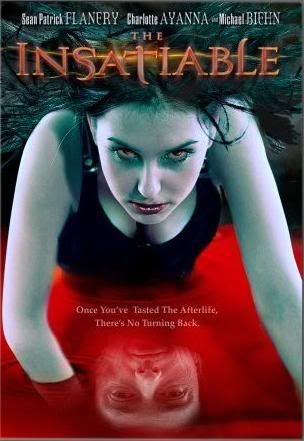
New vampire film, the Insatiable, comes to DVD in the US on 18th September. The plot summary on imdb says: “Harry Balbo (Flanery), a fearful salesman of pieces for pipes, runs into a violent crime in a alley. He thinks he has seen an assassin that cuts off heads, in fact he's dealing with a vampire woman (Ayanna) who is able to decapitate a man and disappear. Nobody believes him, neither the police. Harry, obsessed by the woman, soon contacts a neighbor named Strickland (Biehn), which is a vampire-hunter, because he wants to find her. They begin to track the zone where she hunts to locate her refuge...”

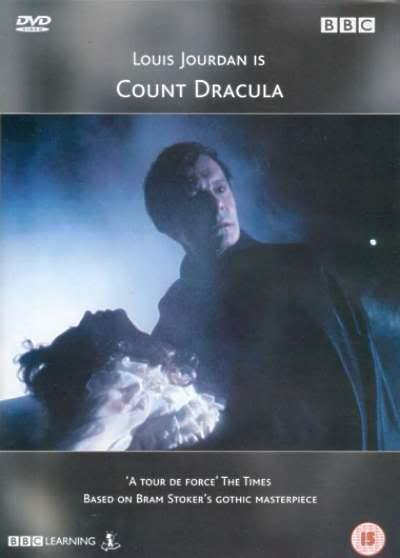
Also to DVD, though not for the first time, is the BBC production Count Dracula, released in the UK 3rd September.

An excellent production that stars Louis Jourdan as the Count this has been on DVD before. The BBC did release it and then withdrew the DVD after three months. The cover shown is the original release cover.

To Die For – review


Director: Deran Sarafian

Release date: 1988

Contains spoilers

Ahh the eighties, a decade with its own inimitable style. Not that the style was particularly good, by any stretch of the imagination, and this film reeks of the eighties. That doesn’t mean it is a bad film, but you really can tell which decade it was made in.

The film is primarily a tragic love story, with vampires of course, and owes a huge debt to Bram Stoker’s novel. It takes the premise hinted at in the novel that Dracula and Vlad Tepes (Brendan Hughes) were one and the same. It also takes the premise that Stoker only got half the story correct and that Dracula was not slain. Actually, the way they used Dracula as a background worked really nicely in this, which is no bad thing of course.

Kate (Sydney Walsh) is at a party on a yacht with nominal boyfriend Martin (Scott Jacoby), as the film progresses we discover that he loves her but she doesn’t really think of him in that way. She has noticed a silent stranger. The stranger, who is Vlad, is accosted by a friend of Martin called Rich (Lloyd Alan) but extracts himself. Kate and Vlad find themselves alone and are soon kissing passionately. He suggests getting out of there and she goes to get her coat, all observed by a sunglasses wearing man whom we later discover to be another vampire called Tom (Steve Bond). When she has her coat Vlad has vanished and, disappointed, she goes home alone.


Out in the marina car park Rich is taking drugs in his car. A monstrous face appears at the window and the car door is ripped off. The creature seems to have vanished and then launches through the windshield and attacks Rich, only pausing when Kate goes to her car so as not to be discovered. A little note about the monster form of the vampires. The effects are a little rubbery, especially when you see them full on, but in scenes like this a judicial use of close ups, darkness and cuts makes them not to bad in the main. I say in the main because the hands never lose their rubbery, and thus wobbly, nature.


Kate lives at home with naive roommate Celia (Amanda Wyss), who has just got engaged to bookish student doctor Michael (Micah Grant). Kate is a realtor but longs for love. She is passed a new client who wants to be shown a property (a castle in fact, well it is LA) and of course it is Vlad. Vlad even offers Celia a job as secretary, via Kate.


Vlad is torn between the love he feels for Kate and the fact he wants to keep her away. Tom had a mortal love who was killed by Vlad and intends to get revenge by killing Kate. Celia is seduced by Vlad and turned into a psychotic harridan and Michael figures out the truth through a book (Vlad Tepes: Prince of Walachia) that he steals from Vlad – and let us thank eighties fashions for being so baggy that you can hide large hardback books in your suit jacket unseen. There is an inevitable series of showdowns.


A lot of the lore that we are told comes from the book. We get parts read out, which are based on Stoker’s prose and also see extracts that inform us, for example, that a victim only turns if the heart stops for lack of blood. This takes us neatly to Celia, easily the best character. At first she is a bubbly, naïve girl who is bitten by Vlad. This makes her obsessed by Vlad, jealous of Kate and a foul-mouthed psycho all round. It is a fantastic performance – in fact the best in the movie – but she isn’t a vampire. Later, as a punishment, she is brutally injured and then, in hospital, turned and this leads to a cracking slaying scene that I’ll mention momentarily.


The vampires seem unaffected by the cross but must avoid sunlight. They either develop fangs or go into monster mode with brimming maws of teeth. There is certainly telekinesis going on. There is also a loose camaraderie but definite grudges and game playing amongst the vampires.


To kill a vampire the standard methods must be employed and we get two fantastic slayings, the highlight being the second death of Celia. Newly killed, Martin and Michael sneak into her room with Martin quoting Stoker (the killing of Lucy scene). He gives Michael a stake but the sceptical Doctor is unable to use it and so Martin goes to work cutting her head off. Whilst decapitation is nothing new, and the effects are a little patchy, this is a wonderfully visceral scene. Part way through Celia turns, grabs Martin and Michael has to stake her. This causes her to dissolve into a desiccated corpse state, light up brightly and then vanish entirely. The scene made me sit up and take notice, particularly during the attempted decapitation.


The other scene is in the climax between Vlad and Tom, when Tom is levitated and then dropped onto a spiked bedpost. I have read complaints of death by bedpost but I liked the scene as, as well as a staking, the scene was an impalement scene that tied in well with the Tepes aspects. That said we do get a death by sunlight which looks fairly poor as the scene is lit brightly, thus the joins are easier to see and the unfortunate use of claymation does nothing for the film.

There is a nice referential to Dracula when we see Vlad bite Kate and then feed her from his chest.


Acting wise I have already mentioned Wyss’ performance as Celia. At first glance Hughes seems wrong for the role, he is too boyish and slight, but there is an inner presence that shines through and he ends up being fantastic in the role. The rest of the cast are functional enough, though I didn’t buy the character of Kate – a problem more with the way the character was written than portrayed.

This is a tragic love story and it drips with melodrama, probably unfortunate as melodrama and yuppie society don’t mix to well and so it does push the melodrama towards soap opera. That said there are some great ideas and individual scenes, let down by budget and effects to a degree but liveable. Wyss’ performance is worth the entrance fee alone. In short you could do a lot worse, 5 out of 10.

The imdb page is here.

Friday, May 25, 2007

Holy... water, batman

From the Fortean Times FT224, first published in The Sun 7th March 2007:

"Bottles of drinkable Holy Water being sold in the US warn: 'if you are a sinner or evil in nature, this product may cause burning or rashes'"

So any wannabe vampires out there be warned... I'm surprised they don't also say "This product may contain nuts"!

Daughters of Darkness – review


Director: Harry Kümel

Release date: 1971

Contains spoilers

I’ve read some comments about this classic film, that suggest it is not a supernatural vampire film, but simply about folk who drink blood. All I can think is that the edited version of this film must cut out some important aspects, as it is clear, through the film, that whilst the main character is based on Erzsébet Báthory she clearly is a supernatural, traditional vampire. That said the film is anything but a traditional vampire film.

Much like the blood spattered bride , this is a psycho-sexual drama, though the content is dissimilar. It contains improbabilities that, whilst they could have been problematic, simply add into the dreamy, nightmarish weave that is drawn around us.

The film begins with newly weds Stefan (John Karlen) and Valerie (Danielle Ouimet) on a train. In a beautifully bathed blue shot, they make love. However, as the film progresses it becomes apparent that not only have they been wed for just a few hours but that they barely know each other. It also becomes apparent that what hides below the civil surface is ugly and twisted. This is exemplified by a conversation they have. She asks does he love her and he evades the question. When she insists on an answer he says no and asks if she loves him. She answers in the negative and he says that makes them perfect for each other. At first glance this could be playful banter but something tells us that it is deeper than that.

The train halts, because of a derailment further up, and Valerie worries that they will miss the ferry to England. Stefan seems less than concerned and, it becomes apparent that he does not wish to travel to England, nor tell his mother about the wedding. When they get to an Ostend hotel she insists that he calls her. He gives the concierge (Paul Esser) the number but it is a note that says that the concierge should pretend that no-one answers.

Also arriving at the hotel is Countess Elizabeth Bathory (Delphine Seyrig) and her companion Ilona (Andrea Rau). Pierre – the concierge – recognises Bathory and says so, but also states it is impossible, it was forty years previously when he was only a bell-hop and Bathory has not changed. She suggests it was her mother but then calls him by name, something he had not offered, which causes him to start.

Bathory turns her attentions to the young couple, manipulating them with her sights firmly set on Valerie but using Stefan’s inherent sadism and sexual confusion. We see his sadism build over time. The couple travel to Bruge and see an exsanguinated murder victim, Stefan is fascinated but as Valerie tries to pull him away he, almost subconsciously, brutally knocks her over.

Later he and Bathory upset Valerie by talking about the deeds of Elizabeth’s ‘ancestor’ Erzsébet Báthory. As they describe between them her crimes, Bathory strokes his chest from behind and he seems lost in a passionate daydream, despite Valerie’s protests.

His sexual ambiguity,
which I mentioned earlier, comes in the form of his mother (Fons Rademakers), whom he does telephone eventually. Mother is a man and it is obvious that they have an intimate relationship. The conversation, and subsequent questions by his bride about ‘her’ reaction to the news of their marriage, leads to Stefan brutally beating his wife with a belt.

The ins and outs of the story are less important than the clever manipulation that Bathory enters into with Valerie and Stefan.
This leads to her (somewhat jealous) companion being sent to Stefan and, ultimately loosing her life. After sleeping together, Stefan is in the shower. Ilona looks at him and he tries to pull her in, which she desperately tries to avoid. This is important as it might explain why she dies. Ostensibly she cuts her hand on a cut throat razor and then, presumably, falls onto the same razor. As a vampire this should not be an issue but two things spring to mind. We have had a throwaway line about vampires and running water, which she tried to avoid. Perhaps it weakened her. Bathory has also told her that she lives because of her, maybe she was sacrificed.

The deaths in the film are a little odd. Not the murders we heard of in Bruge, but as well as Ilona’s death there is Stefan’s untimely demise. At this point Valerie is subject to Bathory’s will and has been bitten. During a struggle with Stefan a cut glass fruit bowl breaks in half, each side cutting a wrist, which the ladies drink from. It is an odd death, but the atmosphere of the film has so engrossed the watcher at this point that it doesn’t matter.

I mentioned the running water, garlic is mentioned but is not used in the film and the Countess has a hatred of sunlight (and bright artificial light). Fire can destroy a vampire. One interesting comment came when Bathory discusses her ‘ancestor’ and says that, back then, the holy king of France and even the pope drank blood to stay young. During the same conversation, when Valerie remarks that any woman would sell her soul to remain young and asks Bathory her secret the vampire replies that it is all to do with diet and plenty of sleep.

Outstanding performance came from Seyrig as Bathory. She is manipulative and intelligent, playing the innocent to the hilt. In many respects she seems like a prototype for Miriam in the Hunger - but I’d put Bathory against Miriam any day. It seems strange that Stefan is, to all intents and purpose, the hero of the piece as he is thoroughly dislikeable. You begin to feel that Valerie will be better off with the infamous Countess than with her deceitful and sadistic spouse.

There is a policeman whom I have not mentioned yet, played by Georges Jamin, and it seems at first glance that he and Pierre are severely under-used in the film. However, they are nothing to Bathory and thus nothing within the film, serving merely as ciphers to give us pieces of lore and information.

The star of the show, however, is the cinematography. The film is a work of art and the story weaves that art around the viewer like a dream filled wih iconic imagery. The film might leave some cold, but I thoroughly enjoy it. That said, I must admit that I dislike the coda and think that the film could have ended without the ‘several months later’ section – a minor quibble. 7.5 out of 10.

The imdb page is here.